
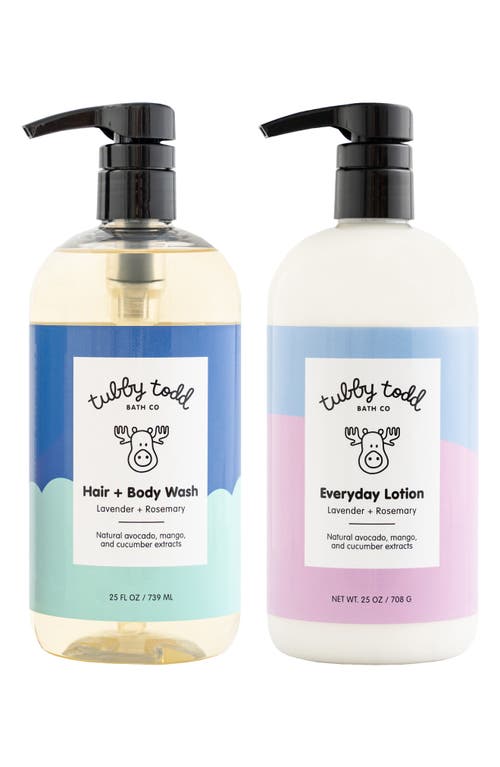
Tubby Todd Bath Co. The Wash and Lotion Bundle Lavender and Rosemary
Analysis updated July 2026 · How Scout scores
At a glance
Summary
This product contains a mix of beneficial and potentially harmful ingredients. It includes natural extracts like chamomile and honeysuckle, which provide soothing and antioxidant benefits. However, the presence of fragrance and phenoxyethanol, which can cause irritation and allergic reactions, lowers its safety profile. The product is moderately processed, which also impacts its overall rating.
Key ingredients 43
chamomilla recutita (matricaria) flower extractVery Good
Chamomile extract is known for its soothing and anti-inflammatory properties. It helps calm irritated skin and reduce redness. It is rich in antioxidants.
Risks
Rare allergic reactions in sensitive individuals.
Benefits
Provides soothing, anti-inflammatory, and antioxidant benefits.
camellia sinensis leaf extractVery Good
Green tea extract is rich in antioxidants, particularly EGCG, which helps protect the skin from free radical damage. It has anti-inflammatory properties and helps soothe irritated skin. It is well-tolerated by most skin types.
Risks
Minimal risk of irritation.
Benefits
Provides strong antioxidant and soothing benefits.
persea gratissima (avocado) fruit extractVery Good
Avocado extract is rich in fatty acids and vitamins that nourish and hydrate the skin. It helps improve skin elasticity and barrier function. It is well-tolerated by most skin types.
Risks
Minimal risk of irritation.
Benefits
Provides excellent nourishing and hydrating benefits.
butyrospermum parkii (shea) butterVery Good
Shea butter is a natural fat extracted from the nuts of the shea tree. It is known for its moisturizing and anti-inflammatory properties. It helps improve skin barrier function and is well-tolerated by most skin types.
Risks
Minimal risk of irritation.
Benefits
Provides excellent moisturizing and skin barrier benefits.
carthamus tinctorius (safflower) seed oilVery Good
Safflower seed oil is rich in linoleic acid, which helps maintain skin barrier function. It is known for its moisturizing properties and is suitable for most skin types. It is generally well-tolerated.
Risks
Minimal risk of irritation.
Benefits
Provides excellent moisturizing and skin barrier benefits.
persea gratissima (avocado) oilVery Good
Avocado oil is rich in fatty acids and vitamins that nourish and hydrate the skin. It helps improve skin elasticity and barrier function. It is well-tolerated by most skin types.
Risks
Minimal risk of irritation.
Benefits
Provides excellent nourishing and hydrating benefits.
theobroma cacao (cocoa) seed butterVery Good
Cocoa butter is a natural fat extracted from cocoa beans. It is known for its moisturizing and emollient properties. It helps improve skin barrier function and is well-tolerated by most skin types.
Risks
Minimal risk of irritation.
Benefits
Provides excellent moisturizing and skin barrier benefits.
coco-glucosideGood
Coco-glucoside is a mild, non-ionic surfactant derived from coconut oil and glucose. It is used for its gentle cleansing properties. It is biodegradable and considered environmentally friendly.
Risks
Minimal risk of irritation.
Benefits
Provides gentle cleansing and is suitable for sensitive skin.
disodium cocoyl glutamateGood
Disodium cocoyl glutamate is a mild surfactant derived from coconut oil and glutamic acid. It is used for its gentle cleansing properties. It is suitable for sensitive skin and environmentally friendly.
Risks
Minimal risk of irritation.
Benefits
Provides gentle cleansing and is biodegradable.
lonicera caprifolium (honeysuckle) flower extractGood
Honeysuckle flower extract is used for its soothing and anti-inflammatory properties. It is rich in antioxidants. It helps calm irritated skin.
Risks
Rare allergic reactions in sensitive individuals.
Benefits
Provides soothing and antioxidant benefits.
sodium cocoyl glutamateGood
Sodium cocoyl glutamate is a mild surfactant derived from coconut oil and glutamic acid. It is used for its gentle cleansing properties. It is suitable for sensitive skin and environmentally friendly.
Risks
Minimal risk of irritation.
Benefits
Provides gentle cleansing and is biodegradable.
lonicera japonica (honeysuckle) flower extractGood
Honeysuckle flower extract is used for its soothing and anti-inflammatory properties. It is rich in antioxidants. It helps calm irritated skin.
Risks
Rare allergic reactions in sensitive individuals.
Benefits
Provides soothing and antioxidant benefits.
glycerinGood
Glycerin is a humectant that attracts moisture to the skin. It helps maintain skin hydration and improves barrier function. It is well-tolerated by most skin types.
Risks
Minimal risk of irritation.
Benefits
Provides excellent moisturizing and skin barrier benefits.
citrus grandis (grapefruit) fruit extractGood
Grapefruit extract is rich in antioxidants and vitamin C. It helps brighten the skin and provides a refreshing scent. It is generally well-tolerated.
Risks
Potential for photosensitivity if used in high concentrations.
Benefits
Provides antioxidant benefits and helps brighten the skin.
echinacea angustifolia extractGood
Echinacea extract is known for its anti-inflammatory and immune-boosting properties. It helps soothe irritated skin and may support skin healing. It is generally considered safe.
Risks
Rare allergic reactions in sensitive individuals.
Benefits
Provides soothing and potential healing benefits.
lavandula angustifolia (lavender) flower/leaf/stem extractGood
Lavender extract is known for its calming and soothing properties. It helps reduce redness and irritation. It also provides a pleasant fragrance.
Risks
Potential for irritation in sensitive individuals.
Benefits
Provides calming and soothing benefits.
macrocystis pyrifera (kelp) extractGood
Kelp extract is rich in vitamins and minerals that nourish the skin. It helps improve skin texture and hydration. It is generally well-tolerated.
Risks
Minimal risk of irritation.
Benefits
Provides nourishing and hydrating benefits.
rosmarinus officinalis (rosemary) leaf extractGood
Rosemary extract is known for its antioxidant and anti-inflammatory properties. It helps protect the skin from environmental damage. It also provides a refreshing scent.
Risks
Potential for irritation in sensitive individuals.
Benefits
Provides antioxidant protection and soothing benefits.
cucumis sativus (cucumber) fruit extractGood
Cucumber extract is known for its soothing and hydrating properties. It helps calm irritated skin and reduce puffiness. It is generally well-tolerated.
Risks
Minimal risk of irritation.
Benefits
Provides soothing and hydrating benefits.
mangifera indica (mango) fruit extractGood
Mango extract is rich in vitamins and antioxidants. It helps nourish and hydrate the skin. It is generally well-tolerated.
Risks
Minimal risk of irritation.
Benefits
Provides nourishing and hydrating benefits.
sodium pcaGood
Sodium PCA is a humectant that helps attract moisture to the skin. It is a component of the skin's natural moisturizing factor. It is well-tolerated by most skin types.
Risks
Minimal risk of irritation.
Benefits
Provides excellent moisturizing benefits.
tocopherolGood
Tocopherol, or vitamin E, is an antioxidant that helps protect the skin from free radical damage. It also has moisturizing properties. It is well-tolerated by most skin types.
Risks
Minimal risk of irritation.
Benefits
Provides antioxidant protection and moisturizing benefits.
tocopheryl acetateGood
Tocopheryl acetate is a stable form of vitamin E used for its antioxidant properties. It helps protect the skin from free radical damage. It is well-tolerated by most skin types.
Risks
Minimal risk of irritation.
Benefits
Provides antioxidant protection.
lavandula hybrida oilGood
Lavandula hybrida oil is known for its calming and soothing properties. It helps reduce redness and irritation. It also provides a pleasant fragrance.
Risks
Potential for irritation in sensitive individuals.
Benefits
Provides calming and soothing benefits.
lavandula angustifolia (lavender) oilGood
Lavender oil is known for its calming and soothing properties. It helps reduce redness and irritation. It also provides a pleasant fragrance.
Risks
Potential for irritation in sensitive individuals.
Benefits
Provides calming and soothing benefits.
waterNeutral
Water is a common solvent used in cosmetic formulations. It helps dissolve other ingredients and provides a base for the product. It does not have any direct benefits or risks.
Benefits
No direct benefits, but essential for formulation.
sodium lauroyl methyl isethionateNeutral
Sodium lauroyl methyl isethionate is a mild surfactant used for cleansing. It is less irritating than traditional sulfates. It is generally considered safe for most skin types.
Risks
May cause mild irritation in sensitive individuals.
Benefits
Provides gentle cleansing without stripping natural oils.
cocamidopropyl betaineNeutral
Cocamidopropyl betaine is a surfactant and foam booster derived from coconut oil. It is commonly used in personal care products for its mildness. It is generally well-tolerated by most skin types.
Risks
Potential for mild irritation or allergic reactions in sensitive individuals.
Benefits
Enhances foam and cleansing properties while being gentle on the skin.
disodium laureth sulfosuccinateNeutral
Disodium laureth sulfosuccinate is a mild surfactant used for cleansing. It is less harsh than traditional sulfates. It is suitable for sensitive skin.
Risks
May cause mild irritation in very sensitive skin.
Benefits
Provides effective cleansing with reduced irritation potential.
sodium chlorideNeutral
Sodium chloride, or table salt, is used to thicken and stabilize formulations. It is generally safe in cosmetic products. It does not have direct skin benefits.
Risks
Excessive use may lead to dryness.
Benefits
Helps stabilize and thicken formulations.
guar hydroxypropyltrimonium chlorideNeutral
Guar hydroxypropyltrimonium chloride is a conditioning agent derived from guar gum. It is used to improve the texture and feel of hair and skin. It is generally considered safe.
Risks
Minimal risk of irritation.
Benefits
Improves texture and provides conditioning benefits.
citric acidNeutral
Citric acid is used to adjust the pH of cosmetic formulations. It is also a mild exfoliant. It is generally safe for most skin types.
Risks
May cause irritation in sensitive skin if used in high concentrations.
Benefits
Helps maintain product stability and provides mild exfoliation.
sodium citrateNeutral
Sodium citrate is used as a buffering agent to maintain pH balance in formulations. It is generally considered safe. It does not have direct skin benefits.
Risks
Minimal risk of irritation.
Benefits
Helps maintain product stability.
cetyl alcoholNeutral
Cetyl alcohol is a fatty alcohol used as an emollient and thickener in cosmetic formulations. It helps improve the texture and feel of products. It is generally considered safe and non-irritating.
Risks
Minimal risk of irritation.
Benefits
Improves texture and provides emollient benefits.
hydroxypropyl starch phosphateNeutral
Hydroxypropyl starch phosphate is a modified starch used as a thickener and stabilizer. It helps improve the texture and stability of formulations. It is generally considered safe.
Risks
Minimal risk of irritation.
Benefits
Improves texture and stability of formulations.
sorbitolNeutral
Sorbitol is a sugar alcohol used as a humectant and moisturizer. It helps retain moisture in the skin. It is generally considered safe and non-irritating.
Risks
Minimal risk of irritation.
Benefits
Provides moisturizing benefits.
cetearyl olivateNeutral
Cetearyl olivate is an emulsifier derived from olive oil. It helps blend oil and water-based ingredients in formulations. It is generally considered safe and non-irritating.
Risks
Minimal risk of irritation.
Benefits
Improves texture and stability of formulations.
sorbitan olivateNeutral
Sorbitan olivate is an emulsifier derived from olive oil. It helps blend oil and water-based ingredients in formulations. It is generally considered safe and non-irritating.
Risks
Minimal risk of irritation.
Benefits
Improves texture and stability of formulations.
xanthan gumNeutral
Xanthan gum is a thickening agent used to stabilize cosmetic formulations. It helps improve the texture and consistency of products. It is generally considered safe and non-irritating.
Risks
Minimal risk of irritation.
Benefits
Improves texture and stability of formulations.
phenoxyethanolBad
Phenoxyethanol is a preservative used to prevent microbial growth in cosmetic products. It can cause irritation and allergic reactions in sensitive individuals. It is a common cause of contact dermatitis.
Risks
Potential for irritation and allergic reactions.
Benefits
Provides effective preservation against microbial growth.
potassium sorbateBad
Synthetic preservative — flagged in daily-use products.
Risks
Minimal risk of irritation.
Benefits
Provides effective preservation against microbial growth.
sodium benzoateBad
Synthetic preservative that can form benzene in the presence of vitamin C.
Risks
Minimal risk of irritation.
Benefits
Provides effective preservation against microbial growth.
fragranceVery Bad
Fragrance is often a mixture of various chemicals used to impart scent. It can cause irritation and allergic reactions in sensitive individuals. It is a common cause of contact dermatitis.
Risks
High potential for irritation and allergic reactions.
Benefits
Provides a pleasant scent to the product.
Get the full breakdown in the Scout appTake Scout shopping
Scan any product to see lab results, healthy alternatives, and your personalized analysis.
Download on theApp Store GET IT ONGoogle Play