
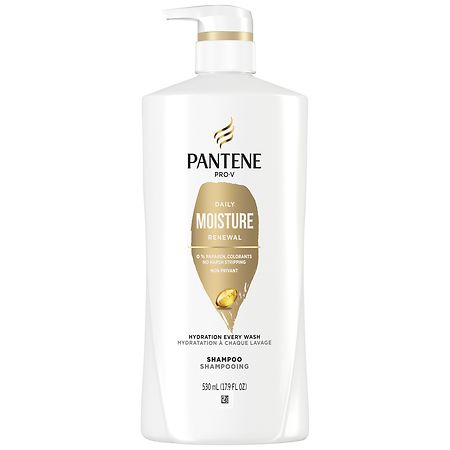

(4 pack) Pantene Pro-V Daily Moisture Renewal Shampoo All Hair Types 17.9 fl oz
Summary
This shampoo contains beneficial ingredients like stearyl alcohol, cetyl alcohol, and panthenol, which provide moisturizing and conditioning benefits. However, it also includes potentially harmful ingredients such as sodium laureth sulfate, sodium lauryl sulfate, and methylisothiazolinone, which can cause skin irritation and dryness. The presence of synthetic fragrance and preservatives further contributes to its moderate processing level, impacting the overall score.
At a glance
Key ingredients 21
WaterNeutral
Water is used as a solvent to dissolve other ingredients and provide a base for the shampoo. It is typically purified to remove impurities and ensure safety. No significant interactions or concerns are associated with its use in this product.
See more about Water →Sodium Laureth SulfateBad
Sodium Laureth Sulfate is a surfactant used for its cleansing and foaming properties. It is derived from ethoxylated lauryl alcohol, which can be contaminated with 1,4-dioxane, a potential carcinogen. It can strip natural oils from the scalp, leading to dryness and irritation.
Risks
Potential skin irritation and dryness, with concerns about contamination with 1,4-dioxane.
Benefits
Effective at removing dirt and oil from hair.
Sodium CitrateNeutral
Sodium Citrate is used as a buffering agent to maintain the pH balance of the shampoo. It is a salt of citric acid and is generally considered safe. It helps stabilize the formula without significant health impacts.
Benefits
Helps maintain the stability and effectiveness of the shampoo.
Cocamidopropyl BetaineNeutral
Cocamidopropyl Betaine is a mild surfactant derived from coconut oil and dimethylaminopropylamine. It is used to enhance foam and improve the texture of the shampoo. While generally considered safe, it can cause allergic reactions in some individuals.
Risks
Potential for allergic reactions in sensitive individuals.
Benefits
Improves foam quality and provides a gentle cleansing action.
Sodium XylenesulfonateNeutral
Sodium Xylenesulfonate is used as a solubilizer to help dissolve other ingredients in the formula. It is a synthetic compound that enhances the clarity and consistency of the product. It does not have significant health impacts when used in small amounts.
Benefits
Improves the solubility and consistency of the shampoo.
Stearyl AlcoholGood
Stearyl Alcohol is a fatty alcohol used as an emollient and thickener in shampoos. It is derived from natural fats and oils, providing moisturizing properties. It helps improve the texture and feel of the hair.
Benefits
Provides moisturizing benefits and improves hair texture.
Sodium Lauryl SulfateBad
Sodium Lauryl Sulfate is a strong surfactant used for its cleansing and foaming abilities. It is known to be harsh on the skin and can cause irritation and dryness. It is often criticized for stripping natural oils from the scalp.
Risks
Can cause skin irritation and dryness, especially in sensitive individuals.
Benefits
Effective at removing dirt and oil from hair.
Sodium ChlorideNeutral
Sodium Chloride, or table salt, is used to adjust the viscosity of the shampoo. It is a natural mineral that is generally safe in cosmetic formulations. It does not have significant health impacts when used in appropriate amounts.
Benefits
Helps adjust the thickness of the shampoo.
Cetyl AlcoholGood
Cetyl Alcohol is a fatty alcohol used as an emollient and thickener. It is derived from natural sources like coconut oil and provides moisturizing benefits. It helps improve the texture and manageability of hair.
Benefits
Provides moisturizing benefits and enhances hair manageability.
FragranceBad
Fragrance is added to provide a pleasant scent to the shampoo. It is a mixture of various chemicals, some of which can cause allergic reactions or sensitivities. The lack of transparency in fragrance components can be concerning for sensitive individuals.
Risks
Potential for allergic reactions and sensitivities due to undisclosed chemical components.
Benefits
Enhances the sensory experience of using the product.
Citric AcidNeutral
Citric Acid is used to adjust the pH of the shampoo, ensuring it is suitable for hair and scalp. It is a natural acid found in citrus fruits and is generally safe. It helps maintain the stability and effectiveness of the product.
Benefits
Helps maintain the pH balance and stability of the shampoo.
Sodium BenzoateNeutral
Sodium Benzoate is a preservative used to prevent microbial growth in the shampoo. It is a salt of benzoic acid and is generally recognized as safe in cosmetic formulations. It helps extend the shelf life of the product without significant health impacts.
Benefits
Prevents microbial growth and extends product shelf life.
Polyquaternium-6Neutral
Polyquaternium-6 is a conditioning agent that helps improve hair texture and manageability. It is a synthetic polymer that provides anti-static properties. It is generally considered safe for use in hair care products.
Benefits
Improves hair texture and reduces static.
Guar Hydroxypropyltrimonium ChlorideNeutral
Guar Hydroxypropyltrimonium Chloride is a conditioning agent derived from guar gum. It helps improve hair manageability and reduces static. It is generally considered safe for use in hair care products.
Benefits
Improves hair manageability and reduces static.
Tetrasodium EDTABad
Tetrasodium EDTA is a chelating agent used to improve the stability of the shampoo by binding metal ions. It is a synthetic compound that can enhance the penetration of other chemicals into the skin. Concerns exist about its environmental impact and potential to cause irritation.
Risks
Potential skin irritation and environmental concerns due to its persistence.
Benefits
Improves product stability by binding metal ions.
TrihydroxystearinNeutral
Trihydroxystearin is used as a thickening agent to improve the texture of the shampoo. It is a triglyceride derived from stearic acid and is generally considered safe. It helps enhance the viscosity and feel of the product.
Benefits
Enhances the viscosity and texture of the shampoo.
PanthenolGood
Panthenol, also known as provitamin B5, is used for its moisturizing and conditioning properties. It penetrates the hair shaft to improve moisture retention and elasticity. It is well-regarded for enhancing hair shine and softness.
Benefits
Improves hair moisture retention and enhances shine and softness.
Panthenyl Ethyl EtherNeutral
Panthenyl Ethyl Ether is a derivative of panthenol used for its conditioning properties. It helps improve hair texture and manageability. It is generally considered safe for use in hair care products.
Benefits
Enhances hair texture and manageability.
HistidineNeutral
Histidine is an amino acid used for its antioxidant properties in hair care products. It helps protect hair from oxidative damage and environmental stressors. It is generally considered safe and beneficial for hair health.
Benefits
Provides antioxidant protection for hair.
MethylchloroisothiazolinoneBad
Methylchloroisothiazolinone is a preservative used to prevent microbial growth in cosmetic products. It is effective in low concentrations but is known to cause allergic reactions and skin sensitivities. Its use is restricted in some regions due to these concerns.
Risks
Potential for allergic reactions and skin sensitivities.
Benefits
Prevents microbial growth and extends product shelf life.
MethylisothiazolinoneBad
Methylisothiazolinone is a preservative used to prevent microbial growth in cosmetic products. It is effective but has been associated with allergic reactions and skin irritation. Its use is restricted in some regions due to these concerns.
Risks
Potential for allergic reactions and skin irritation.
Benefits
Prevents microbial growth and extends product shelf life.
Processing
Processed Foods
Get the full breakdown in the Scout app
Scan any product to see lab results, healthy alternatives, and your personalized analysis.
Download on theApp Store