
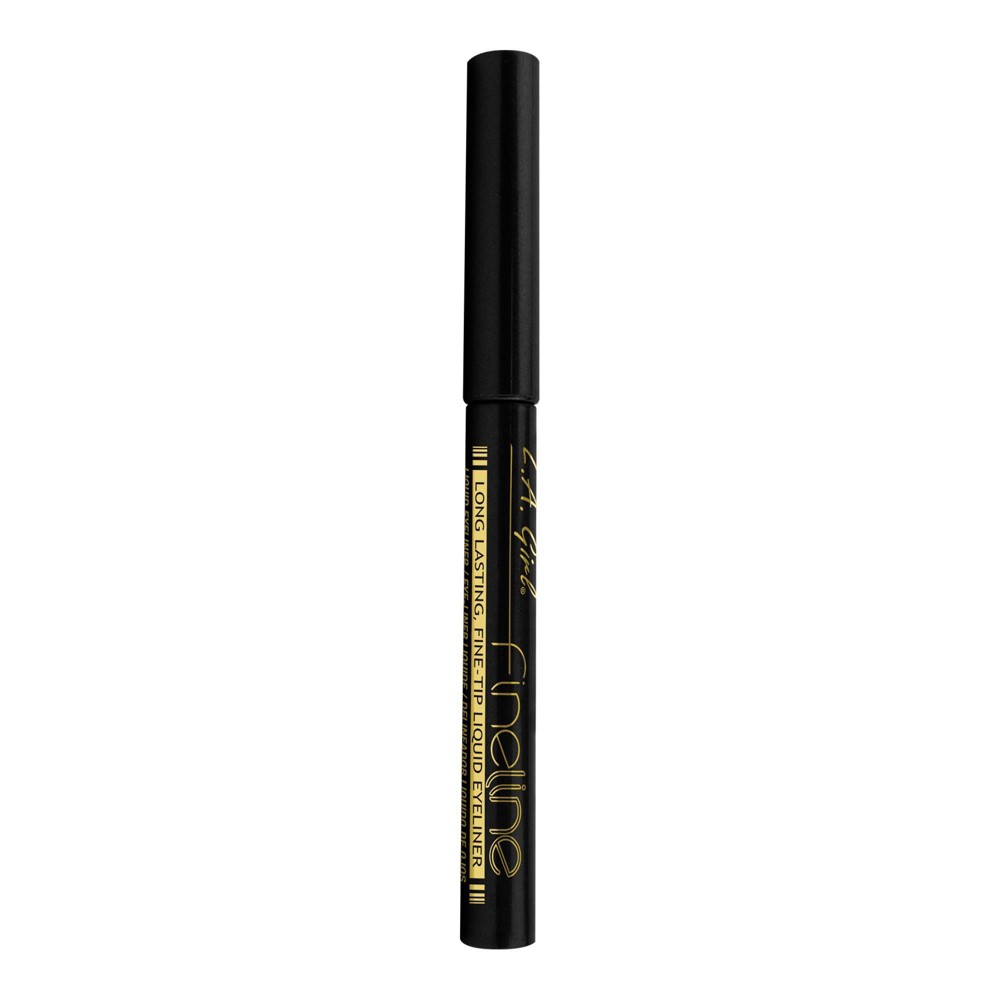

L.A. Girl Fineline Liquid Eyeliner - Black - 0.037oz: Brightening, Single Container
Analysis updated September 2026 · How Scout scores
At a glance
Summary
This eyeliner contains several synthetic polymers and alcohol, which can be drying and irritating to the skin. While it avoids some of the most harmful chemicals like parabens and phthalates, the presence of phenoxyethanol as a preservative and the use of acrylates copolymers contribute to a moderate processing level. The formulation lacks natural oils or botanicals that could enhance skin safety and nourishment.
Key ingredients 9
Aqua (Water)Neutral
Aqua, or water, is commonly used as a solvent in cosmetic formulations. It helps dissolve other ingredients and provides a base for the product. It is generally considered safe and non-irritating.
Risks
There are no significant risks associated with water in cosmetics.
Benefits
Water helps in the even distribution of other ingredients and maintains the product's consistency.
Butylene GlycolNeutral
Butylene Glycol is a common solvent and conditioning agent in cosmetics. It helps improve the texture and spreadability of products. It is generally recognized as safe for use in cosmetics.
Risks
In rare cases, it may cause mild irritation or allergic reactions.
Benefits
It helps maintain moisture and improves the application of the product.
Ammonium Acrylates CopolymerNeutral
Ammonium Acrylates Copolymer is used as a film-forming agent in cosmetics. It helps create a flexible film on the skin, enhancing product performance. It is generally considered safe for use in cosmetics.
Risks
There is a low risk of skin irritation for sensitive individuals.
Benefits
It improves the wear and appearance of the cosmetic product.
AlcoholNeutral
Alcohol is used as a solvent and preservative in cosmetics. It helps dissolve other ingredients and ensures product stability. It is generally safe in small concentrations.
Risks
High concentrations can cause skin dryness and irritation.
Benefits
It helps maintain the product's consistency and prevents microbial growth.
Caprylyl GlycolNeutral
Caprylyl Glycol is used as a skin conditioning agent and preservative booster in cosmetics. It helps improve the texture and feel of the product. It is generally considered safe for use in cosmetics.
Risks
There is a minimal risk of skin irritation.
Benefits
It enhances the moisturizing properties of the product and boosts preservative efficacy.
XanthanNeutral
Xanthan is a natural thickening agent used in cosmetics. It helps stabilize and thicken formulations, improving texture. It is considered safe and non-irritating.
Risks
There are no significant risks associated with xanthan in cosmetics.
Benefits
It enhances the consistency and stability of the product.
Styrene/Acrylates CopolymerBad
Processed additive flagged under Scout's ingredient doctrine.
Risks
There is a low risk of skin irritation for sensitive individuals.
Benefits
It enhances the longevity and appearance of the cosmetic product on the skin.
Acrylates CopolymerBad
Processed additive flagged under Scout's ingredient doctrine.
Risks
There is a minimal risk of skin irritation.
Benefits
It enhances the durability and performance of the cosmetic product.
PhenoxyethanolBad
Processed additive flagged under Scout's ingredient doctrine.
Risks
In rare cases, it may cause skin irritation or allergic reactions.
Benefits
It helps extend the shelf life of the product by preventing contamination.
Get the full breakdown in the Scout appTake Scout shopping
Scan any product to see lab results, healthy alternatives, and your personalized analysis.
Download on theApp Store GET IT ONGoogle Play