
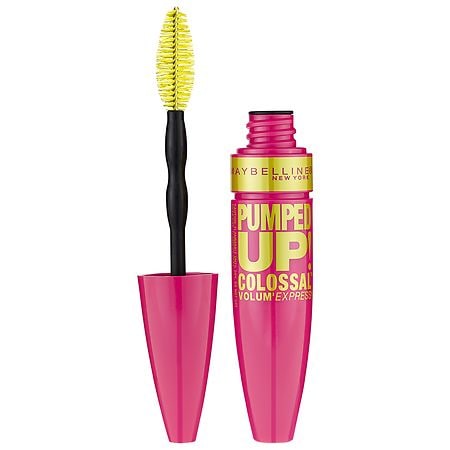

Maybelline Volum' Express Pumped Up! Colossal Mascara - 214 Glam Black - 0.33 fl oz: Thickening & Sulfate-Free
Analysis updated July 2026 · How Scout scores
At a glance
Summary
This mascara contains a mix of natural and synthetic ingredients. It includes beneficial components like beeswax and jojoba oil, which are generally safe and nourishing. However, the presence of BHT, a synthetic antioxidant, and other synthetic compounds like phenoxyethanol and disodium EDTA, which are common in cosmetics but can be concerning for sensitive individuals, affects the overall safety profile. The product is moderately processed, which also influences its rating.
Key ingredients 30
Cera Alba/BeeswaxVery Good
Beeswax is a natural wax produced by honey bees and is used as a thickening agent and emollient. It helps to lock in moisture and provides a protective barrier on the skin. It is well-tolerated and beneficial for skin hydration.
Risks
Minimal risk of allergic reaction in sensitive individuals.
Benefits
Locks in moisture and provides a protective barrier.
Carthamus Tinctorius Seed Oil/Safflower Seed OilVery Good
Safflower seed oil is a natural oil rich in linoleic acid, which helps to moisturize and nourish the skin. It is well-tolerated and beneficial for maintaining skin hydration. It also has anti-inflammatory properties.
Risks
Minimal risk of allergic reaction.
Benefits
Moisturizes and nourishes the skin with anti-inflammatory properties.
Hydrogenated Jojoba OilVery Good
Hydrogenated jojoba oil is a natural oil that is highly stable and non-comedogenic. It helps to moisturize and protect the skin. It is well-tolerated and beneficial for maintaining skin hydration.
Risks
Minimal risk of allergic reaction.
Benefits
Moisturizes and protects the skin with excellent stability.
Aqua/Water/EauNeutral
Water is a common solvent used in cosmetics to dissolve other ingredients. It helps in the application and spreadability of the product. It does not provide any direct benefits or risks.
Benefits
Essential for dissolving and mixing other ingredients.
Potassium Cetyl PhosphateNeutral
This ingredient acts as an emulsifier, helping to blend oil and water-based components. It is generally considered safe for use in cosmetics. There are no significant benefits or risks associated with its use.
Benefits
Helps in stabilizing the formulation by emulsifying ingredients.
Copernicia Cerifera Cera/Carnauba WaxNeutral
Standard formulation ingredient — neither beneficial nor harmful at typical use.
Risks
Generally considered safe with minimal risk.
Benefits
Increases product stability and provides a glossy finish.
Ethylene/Acrylic Acid CopolymerNeutral
This copolymer is used to improve the film-forming properties of the product. It is generally considered safe for use in cosmetics. There are no significant benefits or risks associated with its use.
Benefits
Enhances film-forming properties of the product.
Steareth-2Neutral
Steareth-2 is an emulsifier that helps to blend oil and water components. It is generally considered safe but may cause irritation in some individuals. It is a synthetic ingredient, which may be a concern for those avoiding synthetic compounds.
Risks
Potential for skin irritation in sensitive individuals.
Benefits
Helps in emulsifying and stabilizing the formulation.
Cetyl AlcoholNeutral
Cetyl alcohol is a fatty alcohol used as an emollient and thickener. It is generally considered safe and non-irritating. It helps to soften and smooth the skin.
Risks
Minimal risk of irritation.
Benefits
Softens and smooths the skin.
HydroxyethylcelluloseNeutral
Hydroxyethylcellulose is a thickening agent derived from cellulose. It is generally considered safe and non-irritating. It helps to improve the texture and consistency of the product.
Benefits
Improves texture and consistency of the product.
Acacia Senegal GumNeutral
Acacia Senegal gum is a natural gum used as a thickening agent and stabilizer. It is generally considered safe and non-irritating. It helps to improve the texture and stability of the product.
Benefits
Improves texture and stability of the product.
Ethylenediamine/Stearyl Dimer Dilinoleate CopolymerNeutral
This copolymer is used to enhance the film-forming properties of the product. It is generally considered safe for use in cosmetics. There are no significant benefits or risks associated with its use.
Benefits
Enhances film-forming properties of the product.
Sodium DehydroacetateNeutral
Sodium dehydroacetate is a preservative used to prevent microbial growth. It is generally considered safe in low concentrations. It helps to extend the shelf life of the product.
Risks
Potential for skin irritation in sensitive individuals.
Benefits
Prevents microbial growth and extends product shelf life.
Caprylyl GlycolNeutral
Caprylyl glycol is a humectant and skin conditioning agent. It is generally considered safe and non-irritating. It helps to moisturize and soften the skin.
Benefits
Moisturizes and softens the skin.
Hydrogenated Palm OilNeutral
Hydrogenated palm oil is used as an emollient and thickener. It is generally considered safe but may be a concern for those avoiding palm oil due to environmental reasons. It helps to soften and smooth the skin.
Risks
Environmental concerns related to palm oil production.
Benefits
Softens and smooths the skin.
Stearyl AlcoholNeutral
Stearyl alcohol is a fatty alcohol used as an emollient and thickener. It is generally considered safe and non-irritating. It helps to soften and smooth the skin.
Risks
Minimal risk of irritation.
Benefits
Softens and smooths the skin.
Myristyl AlcoholNeutral
Myristyl alcohol is a fatty alcohol used as an emollient and thickener. It is generally considered safe and non-irritating. It helps to soften and smooth the skin.
Risks
Minimal risk of irritation.
Benefits
Softens and smooths the skin.
Laureth-21Neutral
Laureth-21 is an emulsifier and surfactant used to blend oil and water components. It is generally considered safe but may cause irritation in some individuals. It helps to stabilize the formulation.
Risks
Potential for skin irritation in sensitive individuals.
Benefits
Helps in emulsifying and stabilizing the formulation.
Soluble CollagenNeutral
Soluble collagen is used as a skin conditioning agent. It is generally considered safe and helps to improve skin hydration. However, its large molecular size limits its ability to penetrate the skin.
Risks
Limited penetration due to large molecular size.
Benefits
Improves skin hydration and conditioning.
SilicaNeutral
Silica is used as a thickening agent and to improve the texture of the product. It is generally considered safe and non-irritating. It helps to absorb excess oil and provides a matte finish.
Benefits
Absorbs excess oil and provides a matte finish.
Trisodium EDTANeutral
Trisodium EDTA is a chelating agent used to improve the stability of the product. It is generally considered safe but can cause irritation in sensitive individuals. It helps to enhance the efficacy of preservatives.
Risks
Potential for skin irritation in sensitive individuals.
Benefits
Enhances the stability and efficacy of preservatives.
Pentaerythrityl Tetra-Di-T-Butyl HydroxyhydrocinnamateNeutral
This ingredient is an antioxidant used to prevent the oxidation of the product. It is generally considered safe and helps to extend the shelf life of the product. There are no significant benefits or risks associated with its use.
Benefits
Prevents oxidation and extends product shelf life.
CI 77491, CI 77492, CI 77499, CI 77007, CI 77891, CI 75470, CI 11288, CI 77742, CI 77510Neutral
These are colorants used to provide pigmentation to the product. They are generally considered safe for use in cosmetics. There are no significant benefits or risks associated with their use.
Benefits
Provides pigmentation and color to the product.
ParaffinBad
Processed additive flagged under Scout's ingredient doctrine.
Risks
Potential skin irritation and concerns about petroleum-derived ingredients.
Benefits
Provides a smooth texture and helps in thickening the product.
Acrylates CopolymerBad
Processed additive flagged under Scout's ingredient doctrine.
Risks
Potential for skin irritation in sensitive individuals.
Benefits
Provides hold and durability to the product.
PhenoxyethanolBad
Phenoxyethanol is a preservative used to prevent microbial growth. It is generally considered safe in low concentrations but can cause irritation and allergic reactions in some individuals. It is a synthetic compound, which may be a concern for those avoiding synthetic ingredients.
Risks
Potential for skin irritation and allergic reactions.
Benefits
Prevents microbial growth and extends product shelf life.
Propylene GlycolBad
Processed additive flagged under Scout's ingredient doctrine.
Risks
Potential for skin irritation in sensitive individuals.
Benefits
Improves skin hydration by retaining moisture.
Disodium EDTABad
Processed additive flagged under Scout's ingredient doctrine.
Risks
Potential for skin irritation in sensitive individuals.
Benefits
Enhances the stability and efficacy of preservatives.
Potassium SorbateBad
Synthetic preservative — flagged in daily-use products.
Risks
Potential for skin irritation in sensitive individuals.
Benefits
Prevents microbial growth and extends product shelf life.
BHTBad
BHT is an antioxidant used to prevent the oxidation of the product. It is generally considered safe in low concentrations but has been associated with potential health concerns in high doses. It helps to extend the shelf life of the product.
Risks
Potential health concerns in high doses.
Benefits
Prevents oxidation and extends product shelf life.
Get the full breakdown in the Scout appTake Scout shopping
Scan any product to see lab results, healthy alternatives, and your personalized analysis.
Download on theApp Store GET IT ONGoogle PlayAmazon pricing & content
Amazon price as of . Product prices and availability are accurate as of the date/time indicated and are subject to change. Any price and availability information displayed on Amazon.com at the time of purchase will apply to the purchase of this product.
CERTAIN CONTENT THAT APPEARS ON THIS SITE COMES FROM AMAZON. THIS CONTENT IS PROVIDED “AS IS” AND IS SUBJECT TO CHANGE OR REMOVAL AT ANY TIME.