
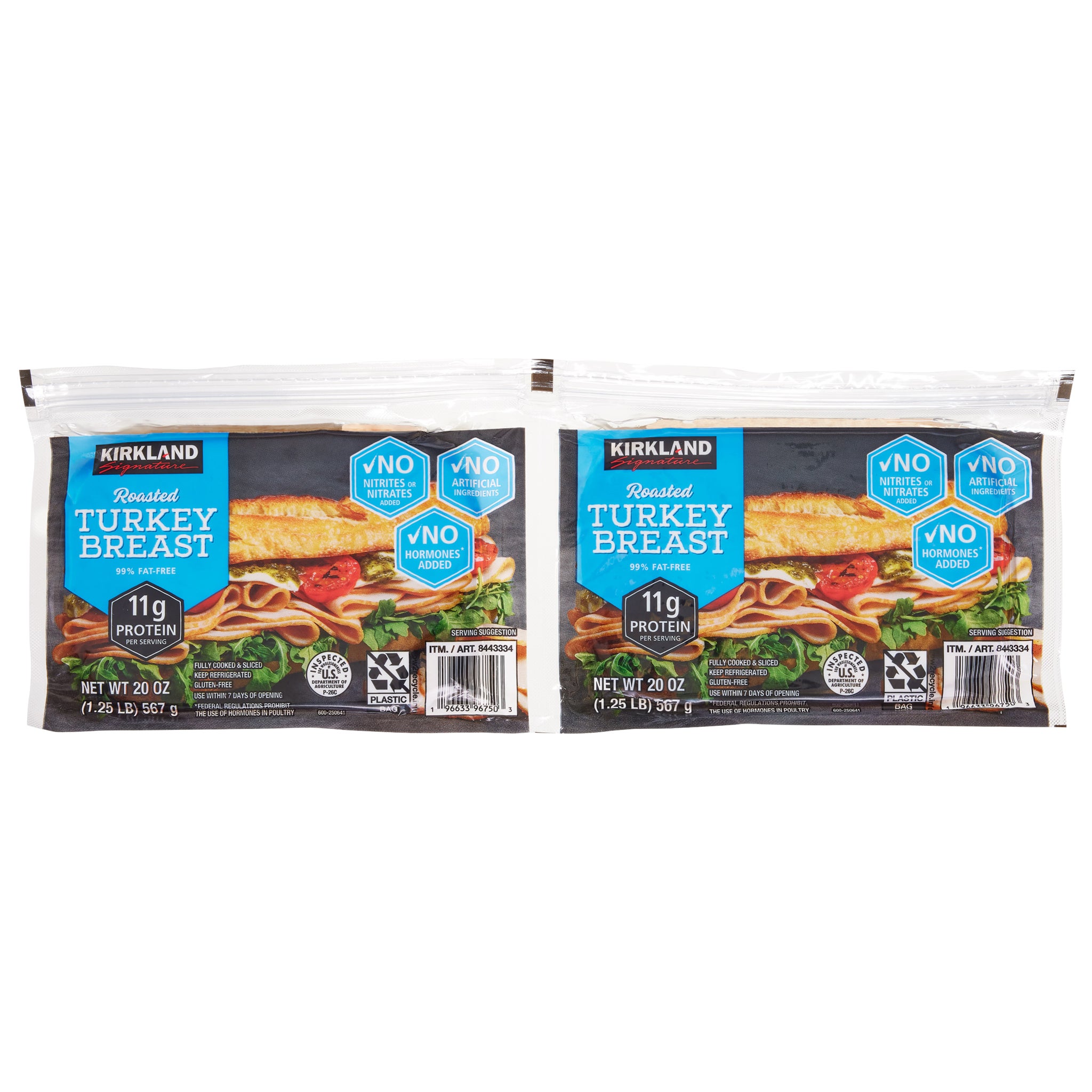







Kirkland Signature Roasted Turkey Breast
Kirkland SignatureAnalysis updated August 2026 · How Scout scores
Near you
Kirkland Signature is carried at Costco stores. Find one within 25 miles.
At a glance
Summary
This roasted turkey breast product is ultra-processed, which limits its score despite having some beneficial ingredients like turkey breast and apple juice concentrate. The presence of brown sugar adds refined sugars, contributing to empty calories and potential metabolic issues. The use of natural flavoring and potato starch further indicates a higher level of processing, impacting the overall healthiness of the product.
Key ingredients 10
Turkey breastGood
Turkey breast is a high-quality source of lean protein. It provides essential amino acids necessary for muscle repair and growth. As a minimally processed meat, it retains its nutritional integrity.
Benefits
Rich in protein and low in fat, making it an excellent choice for a healthy diet.
Apple juice concentrateGood
Apple juice concentrate is used for sweetness and flavor. It is derived from apples and retains some natural sugars and nutrients. While concentrated, it provides a more natural sweetness compared to refined sugars.
Risks
High in natural sugars, which can contribute to calorie intake if consumed in excess.
Benefits
Provides natural sweetness and some vitamins from apples.
Turkey brothNeutral
Turkey broth is used to enhance flavor and moisture in the product. It is typically made by simmering turkey bones and meat, which can add some nutrients. However, it is not a significant source of nutrition on its own.
Benefits
May provide some flavor and minor nutritional benefits from minerals and gelatin.
VinegarNeutral
Vinegar is used as a preservative and flavor enhancer. It is a natural product made through fermentation. While it adds tanginess, it does not contribute significant nutritional value.
Benefits
Can act as a natural preservative and flavor enhancer.
Potato starchNeutral
Potato starch is used as a thickening agent in food products. It is derived from potatoes and is a refined carbohydrate. It does not provide significant nutritional benefits.
Benefits
Useful for improving texture and consistency in food products.
SaltNeutral
Salt is used for seasoning and preservation. It is a common culinary ingredient but does not provide additional health benefits beyond sodium content. Excessive consumption can lead to health issues like hypertension.
Risks
High sodium intake can contribute to hypertension and cardiovascular issues.
Benefits
Essential for maintaining fluid balance and nerve function in the body.
Lemon juice concentrateNeutral
Lemon juice concentrate is used for flavor and acidity. It is derived from lemons and retains some vitamin C content. However, the concentration process may reduce its nutritional value.
Benefits
Adds flavor and may provide some vitamin C.
Natural flavoringNeutral
Natural flavoring is used to enhance the taste of the product. It is derived from natural sources but lacks transparency in its composition. It does not provide nutritional benefits.
Risks
Lack of transparency in ingredients may be a concern for some consumers.
Benefits
Enhances flavor without adding calories.
Brown sugarBad
Brown sugar is a refined sugar that adds sweetness to the product. It is a source of empty calories and can contribute to weight gain and metabolic issues when consumed in excess. It offers minimal nutritional benefits compared to whole food sweeteners.
Risks
Excessive consumption can lead to obesity, diabetes, and dental issues.
Benefits
Provides quick energy but lacks essential nutrients.
Yeast extractBad
Concentrated glutamate source — MSG-adjacent flavor enhancer.
Risks
May contain naturally occurring glutamates, which some individuals are sensitive to.
Benefits
Can enhance flavor and provide some B vitamins.
Processing
Ultra-Processed Foods
Get the full breakdown in the Scout appTake Scout shopping
Scan any product to see lab results, healthy alternatives, and your personalized analysis.
Download on theApp Store GET IT ONGoogle Play