
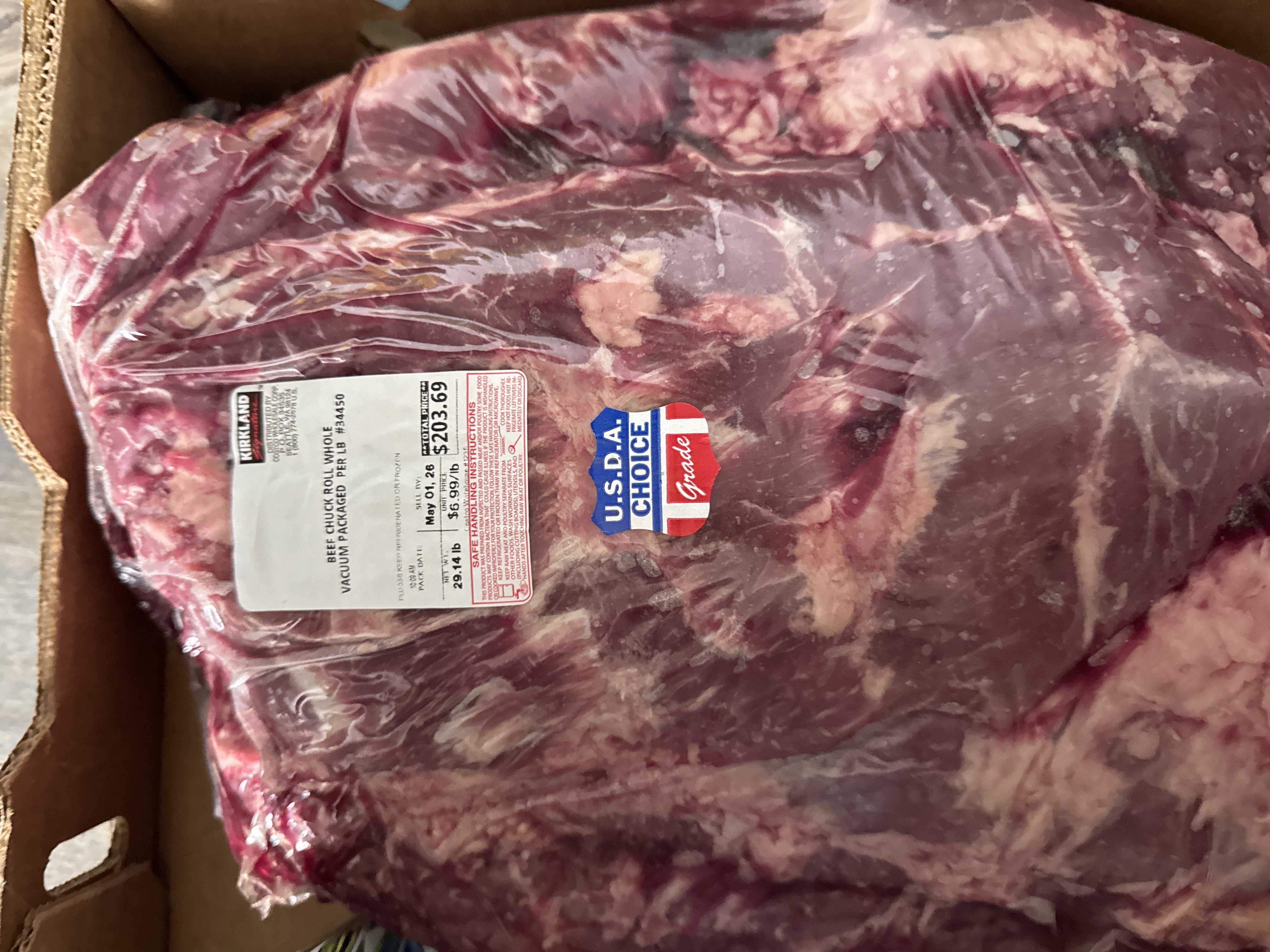



Kirkland Beef Chuck Pot Roast
KirklandAnalysis updated August 2026 · How Scout scores
At a glance
Summary
This beef chuck pot roast is minimally processed, featuring high-quality beef and beef fat, which are excellent sources of protein and essential nutrients. However, the presence of refined sugar, even in small amounts, slightly detracts from its overall healthiness. The product maintains a clean label with a short ingredient list, contributing to its favorable rating.
Key ingredients 11
BeefGood
Beef is a high-quality source of complete protein and essential nutrients like iron and B vitamins. It provides a rich amino acid profile beneficial for muscle growth and repair. Grass-fed beef would be preferable for higher omega-3 content, but standard beef still offers significant nutritional value.
Risks
Excessive consumption of red meat may be linked to increased risk of certain health issues, such as heart disease.
Benefits
Rich in protein and essential nutrients, supporting muscle health and energy levels.
Beef fatGood
Beef fat provides a source of energy and contains fat-soluble vitamins. It can be beneficial when sourced from grass-fed animals due to higher omega-3 content. While it is a saturated fat, moderate consumption can be part of a balanced diet.
Risks
High intake of saturated fats may increase the risk of heart disease.
Benefits
Provides energy and supports the absorption of fat-soluble vitamins.
Garlic powderGood
Concentrated whole-food seasoning.
Benefits
May provide some health benefits due to its antioxidant properties.
Corn starchNeutral
Corn starch is a common thickening agent used in cooking and food production. It is derived from corn and is typically highly processed. While it provides no significant nutritional benefits, it is generally considered safe for consumption.
See more about Corn starch →Rice starchNeutral
Rice starch is used as a thickening agent and is derived from rice. It is minimally processed compared to some other starches. It does not contribute significant nutritional value but is generally safe for consumption.
See more about Rice starch →SaltNeutral
Salt is used to enhance flavor and preserve food. It is essential for maintaining fluid balance and nerve function. However, excessive intake can lead to health issues such as hypertension.
Risks
High sodium intake can contribute to hypertension and cardiovascular disease.
Benefits
Essential for maintaining fluid balance and nerve function.
Beef stockNeutral
Beef stock is made by simmering beef bones and connective tissues, providing flavor and some nutrients. It can be a source of collagen and minerals, though the nutritional content varies. It is generally considered a neutral ingredient in terms of health impact.
Benefits
May provide some collagen and minerals, enhancing flavor and nutritional profile.
Onion powderNeutral
Onion powder is a dehydrated form of onion used for flavoring. It retains some of the beneficial compounds found in fresh onions, such as antioxidants. However, the processing reduces its overall nutritional value.
Benefits
Contains antioxidants that may support health, though in reduced amounts compared to fresh onions.
Malt extractNeutral
Malt extract is derived from malted barley and used for flavoring and sweetness. It contains some vitamins and minerals but is primarily a source of sugar. It is generally considered safe but should be consumed in moderation due to its sugar content.
Risks
High sugar content may contribute to health issues if consumed in excess.
Benefits
Provides flavor and some vitamins and minerals.
Dehydrated garlicNeutral
Dehydrated garlic is used for flavoring and retains some beneficial compounds found in fresh garlic. It contains antioxidants and may have antimicrobial properties. However, the drying process reduces its overall nutritional content.
Benefits
Contains antioxidants and may support immune health.
SugarBad
Refined sugar is often added to enhance flavor but provides no essential nutrients. High consumption of refined sugar is linked to various health issues, including obesity and metabolic syndrome. It is best consumed in moderation to avoid negative health impacts.
Risks
Excessive sugar intake is associated with obesity, diabetes, and heart disease.
Processing
Unprocessed or Minimally Processed Foods
Get the full breakdown in the Scout appTake Scout shopping
Scan any product to see lab results, healthy alternatives, and your personalized analysis.
Download on theApp Store GET IT ONGoogle Play