
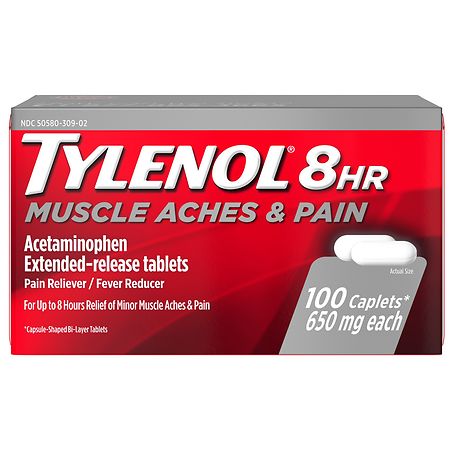
Tylenol 8HR / acetaminophen / TABLET, FILM COATED, EXTENDED RELEASE
Analysis updated July 2026 · How Scout scores
At a glance
Summary
This product contains a variety of excipients such as carnauba wax, hydroxyethyl cellulose, and magnesium stearate, which are common in pharmaceutical formulations to aid in tablet stability and release. While these ingredients are generally considered safe, the presence of multiple additives and the level of processing involved in creating an extended-release tablet contribute to a moderate score. The formulation does not include harmful artificial dyes or sweeteners, which is a positive aspect.
Key ingredients 10
Carnauba WaxNeutral
Carnauba wax is used as a coating agent to provide a shiny finish and protect the tablet. It is derived from the leaves of the carnauba palm and is considered safe for consumption. It does not contribute any nutritional value or significant health risks.
See more about Carnauba Wax →Hydroxyethyl CelluloseNeutral
Hydroxyethyl cellulose is a thickening agent used to control the viscosity of the tablet. It is a chemically modified cellulose derivative that is generally recognized as safe. It does not provide any nutritional benefits or pose significant health risks.
See more about Hydroxyethyl Cellulose →HypromelloseNeutral
Hypromellose is used as a film former and controlled-release agent in tablets. It is a semi-synthetic polymer derived from cellulose and is considered safe for use in pharmaceuticals. It does not offer nutritional benefits but aids in the controlled release of active ingredients.
See more about Hypromellose →Magnesium StearateNeutral
Magnesium stearate is used as a lubricant to prevent ingredients from sticking to manufacturing equipment. It is a salt of stearic acid and magnesium and is widely used in supplement manufacturing. It does not provide nutritional benefits but is essential for the manufacturing process.
See more about Magnesium Stearate →Microcrystalline CelluloseNeutral
Microcrystalline cellulose is used as a bulking agent and to improve the texture of tablets. It is a refined wood pulp derivative that is inert and safe for consumption. It does not offer nutritional benefits but is important for tablet formulation.
See more about Microcrystalline Cellulose →Modified StarchNeutral
Modified starch is used as a stabilizer and thickener in tablets. It is derived from natural starches that have been chemically altered to improve their properties. It does not provide nutritional benefits but is safe for use in food and pharmaceuticals.
See more about Modified Starch →PovidoneNeutral
Povidone is used as a binder and solubilizing agent in tablets. It is a synthetic polymer that is considered safe for use in pharmaceuticals. It does not offer nutritional benefits but helps in the dispersion of active ingredients.
Powdered CelluloseNeutral
Powdered cellulose is used as a filler and to improve the texture of tablets. It is derived from plant fibers and is considered safe for consumption. It does not provide nutritional benefits but is important for tablet structure.
See more about Powdered Cellulose →Sodium Starch Glycolate Type A PotatoNeutral
Sodium starch glycolate is used as a disintegrant to help tablets dissolve quickly. It is derived from potato starch and is considered safe for use in pharmaceuticals. It does not offer nutritional benefits but is crucial for tablet efficacy.
Stearic AcidNeutral
Stearic acid is used as a lubricant and to prevent ingredients from sticking during manufacturing. It is a saturated fatty acid that is generally recognized as safe. It does not provide nutritional benefits but is essential for the manufacturing process.
See more about Stearic Acid →Processing
Processed Foods
Get the full breakdown in the Scout appTake Scout shopping
Scan any product to see lab results, healthy alternatives, and your personalized analysis.
Download on theApp Store GET IT ONGoogle PlayAmazon pricing & content
Amazon price as of . Product prices and availability are accurate as of the date/time indicated and are subject to change. Any price and availability information displayed on Amazon.com at the time of purchase will apply to the purchase of this product.
CERTAIN CONTENT THAT APPEARS ON THIS SITE COMES FROM AMAZON. THIS CONTENT IS PROVIDED “AS IS” AND IS SUBJECT TO CHANGE OR REMOVAL AT ANY TIME.