
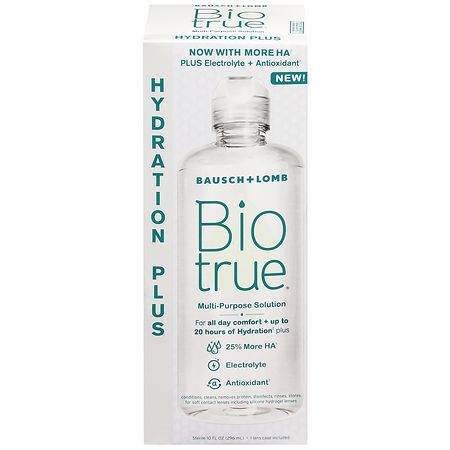

Biotrue Hydration Plus Multi-Purpose Contact Lens Solution for Hydrating Dry Contacts by Bausch + Lomb - 10 fl oz
Analysis updated August 2026 · How Scout scores
At a glance
Summary
This contact lens solution contains a mix of ingredients designed for hydration and cleaning, such as hyaluronan and erythritol, which are generally safe for use in eye care products. However, it also includes preservatives like polyaminopropyl biguanide and polyquaternium, which, while effective, can be irritating for some users. The presence of boric acid and sodium borate, although common in such solutions, requires careful formulation to ensure safety, contributing to a moderate score.
Key ingredients 13
sodium citrateGood
Beneficial ingredient — whole-food or functional value in this product class.
Risks
There are no significant risks associated with sodium citrate in oral care.
Benefits
Sodium citrate helps maintain pH balance, which can be beneficial in oral care formulations.
potassium chlorideGood
Beneficial ingredient — whole-food or functional value in this product class.
Risks
Excessive potassium chloride can cause hyperkalemia, but this is unlikely in oral care products.
Benefits
Potassium chloride helps maintain electrolyte balance in formulations.
hyaluronanNeutral
Hyaluronan is a naturally occurring substance in the body, often used for its hydrating properties. It is generally considered safe and beneficial for moisture retention. However, its role in oral care products is not well-defined.
Risks
There are no significant risks associated with hyaluronan in the context of oral care.
Benefits
Hyaluronan can help retain moisture, which may be soothing in oral care applications.
diglycineNeutral
Diglycine is a dipeptide that may be used for its buffering capacity. It is not commonly associated with oral care benefits or risks. Its role in oral care products is not well-documented.
Risks
There are no known significant risks associated with diglycine in oral care.
Benefits
Diglycine may help maintain pH balance, although its specific benefits in oral care are unclear.
erythritolNeutral
Erythritol is a sugar alcohol used as a sweetener, known for not causing tooth decay. However, its presence in this product is not relevant to oral care as it is not used for sweetening purposes here.
Risks
Erythritol is generally safe, but excessive consumption can cause digestive discomfort.
Benefits
Erythritol does not contribute to tooth decay and may have some oral health benefits.
poloxamineNeutral
Poloxamine is a surfactant used for its cleaning properties. It is not typically associated with oral care benefits or risks. Its role in oral care products is not well-documented.
Risks
There are no significant risks associated with poloxamine in oral care.
Benefits
Poloxamine may help in cleaning, although its specific benefits in oral care are unclear.
poloxamer 181Neutral
Poloxamer 181 is a surfactant used for its emulsifying properties. It is not commonly associated with oral care benefits or risks. Its role in oral care products is not well-documented.
Risks
There are no significant risks associated with poloxamer 181 in oral care.
Benefits
Poloxamer 181 may help in emulsifying, although its specific benefits in oral care are unclear.
boric acidNeutral
Boric acid is used for its antiseptic properties. It is not typically used in oral care products and its benefits or risks in this context are not well-documented.
Risks
Boric acid can be toxic if ingested in large amounts.
Benefits
Boric acid has antiseptic properties that may help in reducing microbial growth.
sodium borateNeutral
Sodium borate is used as a buffering agent and preservative. It is not commonly associated with oral care benefits or risks.
Risks
Sodium borate can be toxic if ingested in large amounts.
Benefits
Sodium borate helps maintain stability and pH balance in formulations.
edetate disodiumNeutral
Edetate disodium is a chelating agent used to bind metal ions. It is not typically associated with oral care benefits or risks.
Risks
Edetate disodium can cause irritation if used inappropriately.
Benefits
Edetate disodium helps stabilize formulations by binding metal ions.
polyaminopropyl biguanide 0.00005%Neutral
Polyaminopropyl biguanide is a preservative with antimicrobial properties. It is not typically used in oral care products and its benefits or risks in this context are not well-documented.
Risks
There are no significant risks associated with polyaminopropyl biguanide in oral care.
Benefits
Polyaminopropyl biguanide helps prevent microbial growth in formulations.
polyquaternium 0.00015%Neutral
Polyquaternium is used as a conditioning agent. It is not commonly associated with oral care benefits or risks.
Risks
There are no significant risks associated with polyquaternium in oral care.
Benefits
Polyquaternium may help in conditioning, although its specific benefits in oral care are unclear.
alexidine 0.00025%Neutral
Alexidine is an antimicrobial agent used for its disinfectant properties. It is not typically used in oral care products and its benefits or risks in this context are not well-documented.
Risks
There are no significant risks associated with alexidine in oral care.
Benefits
Alexidine helps reduce microbial growth, which can be beneficial in maintaining hygiene.
Processing
Processed Foods
Get the full breakdown in the Scout appTake Scout shopping
Scan any product to see lab results, healthy alternatives, and your personalized analysis.
Download on theApp Store GET IT ONGoogle PlayAmazon pricing & content
Amazon price as of . Product prices and availability are accurate as of the date/time indicated and are subject to change. Any price and availability information displayed on Amazon.com at the time of purchase will apply to the purchase of this product.
CERTAIN CONTENT THAT APPEARS ON THIS SITE COMES FROM AMAZON. THIS CONTENT IS PROVIDED “AS IS” AND IS SUBJECT TO CHANGE OR REMOVAL AT ANY TIME.