
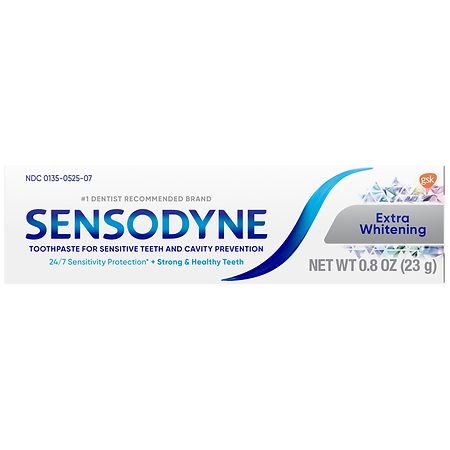


Sensodyne Extra Whitening Toothpaste for Sensitive Teeth Cavity Prevention and Sensitive Teeth Whitening - 0.8 Ounces
Summary
This toothpaste contains beneficial ingredients like potassium nitrate and sodium fluoride, which are effective for reducing tooth sensitivity and preventing cavities. However, it also includes synthetic compounds such as pentasodium triphosphate, PEG-8, and titanium dioxide, which raise environmental and health concerns. The presence of these additives, along with the processed nature of the product, impacts its overall rating.
At a glance
Key ingredients 16
Potassium NitrateGood
Potassium nitrate is beneficial for reducing tooth sensitivity by calming the nerves in the teeth. It is a commonly used desensitizing agent in toothpaste formulations. Its effectiveness in reducing sensitivity makes it a valuable ingredient for those with sensitive teeth.
Benefits
Helps in reducing tooth sensitivity, providing relief for individuals with sensitive teeth.
Sodium FluorideGood
Sodium fluoride is effective in preventing dental cavities by strengthening tooth enamel. It is a standard ingredient in toothpaste for its cavity-prevention properties. Its inclusion in toothpaste is crucial for maintaining oral health.
Risks
Excessive ingestion can lead to dental fluorosis, especially in children.
Benefits
Strengthens tooth enamel and helps prevent cavities, contributing to overall dental health.
WaterNeutral
Water is used as a solvent and base in toothpaste formulations. It helps dissolve other ingredients and provides the necessary consistency. The quality and purity of water are essential to ensure no contaminants are present.
See more about Water →Hydrated SilicaNeutral
Hydrated silica is used as an abrasive agent to help remove plaque and surface stains from teeth. It is a common ingredient in whitening toothpaste formulations. Its abrasive nature is balanced to ensure it does not damage tooth enamel.
Risks
Overuse may lead to enamel erosion if the abrasive level is too high.
Benefits
Aids in removing surface stains and plaque, contributing to cleaner teeth.
SorbitolNeutral
Sorbitol acts as a humectant and sweetener in toothpaste, helping to retain moisture and improve taste. It is a sugar alcohol that does not contribute to tooth decay. Its use is common in oral care products for its dual functionality.
Risks
Excessive consumption can cause gastrointestinal discomfort.
Benefits
Helps maintain moisture and improves the taste of toothpaste without promoting tooth decay.
GlycerinNeutral
Glycerin is used as a humectant to prevent toothpaste from drying out. It also contributes to the smooth texture of the product. Its role is primarily functional, with no direct impact on oral health.
Benefits
Helps maintain moisture and texture in toothpaste formulations.
Pentasodium TriphosphateBad
Pentasodium triphosphate is used as a cleaning agent and water softener in toothpaste. It is a synthetic compound that can contribute to environmental concerns. Its use is primarily functional, with potential ecological impacts.
Risks
May contribute to environmental pollution if not properly managed.
PEG-8Bad
PEG-8 is used as a dispersant and solvent in toothpaste formulations. It is a synthetic polymer that can be contaminated with harmful impurities. Its inclusion is primarily for texture and consistency, with potential safety concerns.
Risks
Potential contamination with ethylene oxide and 1,4-dioxane, which are harmful impurities.
FlavorNeutral
Flavor is added to improve the taste and user experience of toothpaste. It is typically a blend of natural and artificial compounds. The specific composition is proprietary, making it difficult to assess health impacts.
Risks
Potential for allergic reactions in sensitive individuals.
Benefits
Enhances the taste and user experience of the toothpaste.
Titanium DioxideBad
Titanium dioxide is used as a whitening agent to improve the appearance of toothpaste. It is a synthetic compound with potential health concerns when inhaled. Its use is primarily cosmetic, with limited oral health benefits.
Risks
Inhalation of titanium dioxide particles is a potential health concern.
Sodium Methyl Cocoyl TaurateNeutral
Sodium methyl cocoyl taurate is a mild surfactant used to create foam and improve cleaning. It is derived from coconut oil and taurine, offering a gentle cleansing action. Its role is primarily functional, with no direct health benefits.
Benefits
Provides gentle cleansing and foaming action in toothpaste.
Cocamidopropyl BetaineNeutral
Cocamidopropyl betaine is a surfactant used to enhance foaming and cleansing properties. It is derived from coconut oil and is considered mild. Its inclusion is primarily for texture and cleaning efficiency.
Risks
Potential for skin irritation in sensitive individuals.
Benefits
Enhances foaming and cleansing properties of toothpaste.
Xanthan GumNeutral
Xanthan gum is used as a thickening agent to stabilize toothpaste formulations. It is a natural polysaccharide produced through fermentation. Its role is primarily functional, with no direct health benefits.
Benefits
Stabilizes and thickens toothpaste, improving texture and consistency.
Sodium HydroxideBad
Sodium hydroxide is used to adjust the pH of toothpaste formulations. It is a strong alkaline compound that can be corrosive in high concentrations. Its use is primarily functional, with potential safety concerns if not properly managed.
Risks
Corrosive in high concentrations and can cause irritation.
Sodium SaccharinNeutral
Sodium saccharin is an artificial sweetener used to improve the taste of toothpaste. It is non-nutritive and does not contribute to tooth decay. Its inclusion is primarily for flavor enhancement.
Risks
Potential for allergic reactions in sensitive individuals.
Benefits
Improves taste without contributing to tooth decay.
SucraloseNeutral
Sucralose is an artificial sweetener used to enhance the taste of toothpaste. It is non-caloric and does not promote tooth decay. Its role is primarily for flavor, with no direct health benefits.
Benefits
Enhances taste without contributing to tooth decay.
Processing
Processed Foods
Get the full breakdown in the Scout app
Scan any product to see lab results, healthy alternatives, and your personalized analysis.
Download on theApp Store