
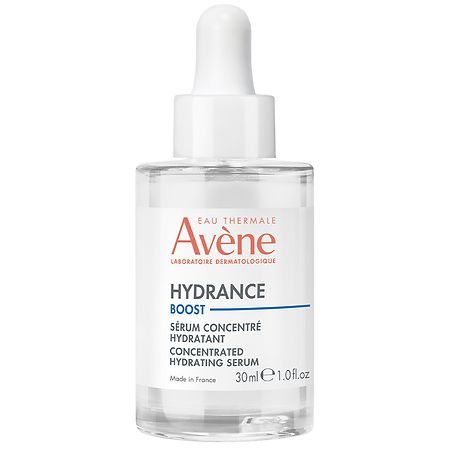

Avene Hydrance Boost Concentrated Hydrating Serum with Hyaluronic Acid & Vitamin B3 - 1.0 fl oz: For Face, Alcohol-Free, Vegan, Non-Toxic
Analysis updated August 2026 · How Scout scores
At a glance
Summary
This serum contains beneficial ingredients like niacinamide and sodium hyaluronate, which are known for their hydrating and skin-brightening properties. However, the presence of fragrance, which can cause irritation and allergic reactions, slightly detracts from its overall safety profile. The product is processed, which limits its maximum potential score despite its otherwise clean ingredient list.
Key ingredients 16
Avene Thermal Spring WaterGood
Avene Thermal Spring Water is known for its soothing and anti-irritating properties. It is often used in skincare products to calm sensitive skin.
Risks
There are minimal risks associated with thermal spring water, though individual reactions can vary.
Benefits
It helps to soothe and soften the skin, making it ideal for sensitive skin types.
GlycerinGood
Glycerin is a humectant that attracts moisture to the skin, helping to keep it hydrated. It is widely used in skincare for its moisturizing properties.
Risks
There are minimal risks, though overuse can lead to a sticky feeling on the skin.
Benefits
It effectively hydrates the skin, improving its smoothness and suppleness.
NiacinamideGood
Niacinamide is a form of Vitamin B3 that is known for its anti-inflammatory and skin-brightening properties. It helps to improve skin texture and tone.
Risks
Rarely, it can cause mild irritation or redness.
Benefits
It reduces inflammation, improves skin elasticity, and brightens the complexion.
Sodium HyaluronateGood
Sodium Hyaluronate is a salt form of Hyaluronic Acid, known for its ability to retain moisture. It is highly effective in hydrating and plumping the skin.
Risks
Generally safe, but overuse can lead to a temporary sticky feeling.
Benefits
It provides intense hydration and helps to reduce the appearance of fine lines.
PropanediolNeutral
Propanediol is a glycol that is used as a solvent and skin-conditioning agent. It is generally considered safe and non-irritating.
Risks
Some individuals may experience mild irritation or allergic reactions.
Benefits
It helps to improve the texture and feel of the product on the skin.
Pentylene GlycolNeutral
Pentylene Glycol is used as a solvent and skin-conditioning agent. It has antimicrobial properties that can help preserve the product.
Risks
Potential for mild irritation in sensitive individuals.
Benefits
It enhances the texture of the product and provides some antimicrobial benefits.
DiglycerinNeutral
Diglycerin is a humectant similar to glycerin, used to retain moisture in the skin. It is considered safe and effective for hydration.
Risks
Minimal risks, though excessive use can lead to a sticky residue.
Benefits
It helps to maintain skin hydration and improve texture.
1, 2-HexanediolNeutral
1, 2-Hexanediol is a preservative and humectant that helps to maintain product stability. It is generally regarded as safe in cosmetics.
Risks
May cause mild irritation in sensitive skin.
Benefits
It helps to preserve the product and maintain moisture levels in the skin.
BetaineNeutral
Betaine is a natural amino acid derivative that acts as a humectant and anti-irritant. It helps to maintain skin hydration and soothe irritation.
Risks
Minimal risks, though some may experience mild irritation.
Benefits
It helps to hydrate the skin and reduce irritation.
Citric AcidNeutral
Citric Acid is used to adjust the pH of skincare products. It can also provide mild exfoliation benefits.
Risks
Can cause irritation or stinging in sensitive skin.
Benefits
It helps to balance the pH and can improve skin texture.
PCANeutral
PCA is a skin-conditioning agent that helps to maintain moisture balance. It is naturally found in the skin and is considered safe.
Risks
Minimal risks, though overuse can lead to a sticky feeling.
Benefits
It helps to hydrate the skin and maintain its natural moisture balance.
Polyglyceryl-4 CaprateNeutral
Polyglyceryl-4 Caprate is an emulsifier that helps to blend ingredients in a formulation. It is derived from natural sources and is considered safe.
Risks
Minimal risks, though some may experience mild irritation.
Benefits
It helps to stabilize the formulation and improve texture.
Sclerotium GumNeutral
Sclerotium Gum is a natural thickening agent derived from fermentation. It is used to improve the texture and stability of products.
Risks
Generally safe, but can cause mild irritation in sensitive individuals.
Benefits
It enhances the texture and stability of the product.
Sodium CitrateNeutral
Sodium Citrate is used as a buffering agent to control pH levels in formulations. It is considered safe and non-irritating.
Risks
Minimal risks, though excessive use can lead to irritation.
Benefits
It helps to maintain the stability and effectiveness of the product.
Sodium HydroxideNeutral
Sodium Hydroxide is used to adjust the pH of cosmetic products. It is effective in small amounts but can be irritating in higher concentrations.
Risks
Potential for irritation if used in high concentrations.
Benefits
It helps to balance the pH of the product, ensuring its stability and effectiveness.
FragranceVery Bad
Fragrance is often added to cosmetics for scent but can cause irritation and allergic reactions. It is a common cause of contact dermatitis.
Risks
High risk of irritation and allergic reactions, especially in sensitive skin.
Benefits
Provides a pleasant scent to the product.
Processing
Processed Foods
Get the full breakdown in the Scout appTake Scout shopping
Scan any product to see lab results, healthy alternatives, and your personalized analysis.
Download on theApp Store GET IT ONGoogle PlayAmazon pricing & content
Amazon price as of . Product prices and availability are accurate as of the date/time indicated and are subject to change. Any price and availability information displayed on Amazon.com at the time of purchase will apply to the purchase of this product.
CERTAIN CONTENT THAT APPEARS ON THIS SITE COMES FROM AMAZON. THIS CONTENT IS PROVIDED “AS IS” AND IS SUBJECT TO CHANGE OR REMOVAL AT ANY TIME.