
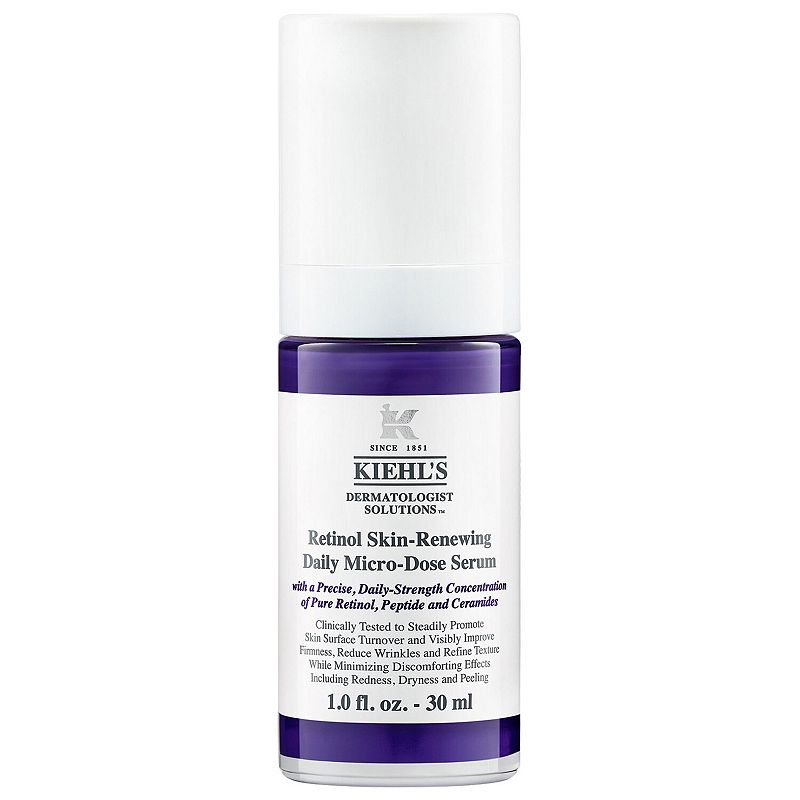

Kiehl's Since 1851 Micro-Dose Anti-Aging Retinol Serum with Ceramides and Peptide, 1-oz.
Analysis updated August 2026 · How Scout scores
At a glance
Summary
This serum contains beneficial ingredients like glycerin, niacinamide, retinol, and ceramide NP, which are known for their hydrating and anti-aging properties. However, the presence of phenoxyethanol and chlorphenesin, both of which can cause irritation and allergic reactions, slightly detracts from its overall safety profile. The product is moderately processed, which also influences its rating.
Key ingredients 8
RetinolVery Good
Retinol is a potent anti-aging ingredient that promotes cell turnover. It helps reduce the appearance of fine lines and wrinkles. It is effective but can be irritating to sensitive skin.
Risks
May cause irritation, redness, and peeling, especially in sensitive skin.
Benefits
Reduces fine lines and promotes cell turnover.
GlycerinGood
Glycerin is a humectant that attracts moisture to the skin. It helps maintain hydration and improves skin barrier function. It is well-tolerated and beneficial for all skin types.
Risks
Rarely, it may cause irritation in very sensitive skin.
Benefits
Enhances skin hydration and barrier function.
NiacinamideGood
Niacinamide is a form of Vitamin B3 that offers multiple skin benefits. It helps improve skin tone, reduce redness, and enhance barrier function. It is well-tolerated and suitable for all skin types.
Risks
High concentrations may cause mild irritation.
Benefits
Improves skin tone and barrier function.
Ceramide NPGood
Ceramide NP is a lipid that helps restore the skin barrier. It improves hydration and protects against environmental damage. It is beneficial for dry and sensitive skin types.
Risks
Generally considered safe with no significant risks.
Benefits
Restores skin barrier and improves hydration.
Aqua / WaterNeutral
Water is a common solvent used in cosmetic formulations. It helps dissolve other ingredients and provides a base for the product. It does not have any direct benefits or risks.
Benefits
Acts as a solvent and carrier for other ingredients.
Butylene GlycolNeutral
Butylene Glycol is a solvent and conditioning agent. It helps improve the texture and spreadability of the product. It is generally considered safe for use in cosmetics.
Risks
May cause irritation in sensitive skin types.
Benefits
Improves product texture and application.
PhenoxyethanolBad
Phenoxyethanol is a preservative used to prevent microbial growth. It is effective but can cause irritation and allergic reactions in some individuals. It is often used as a safer alternative to parabens.
Risks
Potential for irritation and allergic reactions.
Benefits
Prevents microbial growth in cosmetic products.
ChlorphenesinBad
Chlorphenesin is a preservative with antimicrobial properties. It helps extend the shelf life of cosmetic products. However, it can cause skin irritation and allergic reactions in some people.
Risks
May cause skin irritation and allergic reactions.
Benefits
Provides antimicrobial protection to extend product shelf life.
Get the full breakdown in the Scout appTake Scout shopping
Scan any product to see lab results, healthy alternatives, and your personalized analysis.
Download on theApp Store GET IT ONGoogle PlayAmazon pricing & content
Amazon price as of . Product prices and availability are accurate as of the date/time indicated and are subject to change. Any price and availability information displayed on Amazon.com at the time of purchase will apply to the purchase of this product.
CERTAIN CONTENT THAT APPEARS ON THIS SITE COMES FROM AMAZON. THIS CONTENT IS PROVIDED “AS IS” AND IS SUBJECT TO CHANGE OR REMOVAL AT ANY TIME.