
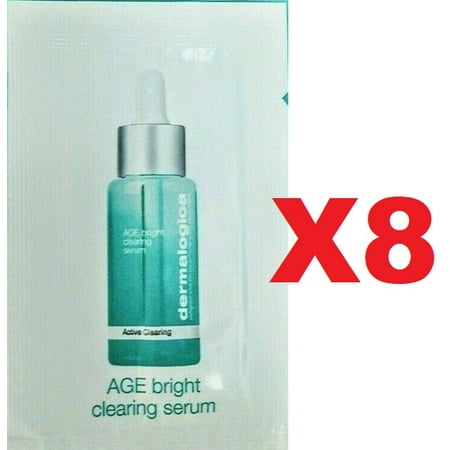

Dermalogica AGE Bright Clearing Serum PacketTravel Size X 8
Analysis updated October 2026 · How Scout scores
At a glance
Summary
This serum contains beneficial ingredients like niacinamide and salicylic acid, which are known for their skin-brightening and acne-fighting properties. However, the presence of fragrance components such as limonene, linalool, geraniol, and citronellol, which can be skin sensitizers, slightly lowers its safety profile. The product is mostly composed of safe and effective ingredients, but the inclusion of potential irritants affects its overall rating.
Key ingredients 32
NiacinamideGood
Niacinamide is a form of Vitamin B3 known for its anti-inflammatory and skin-brightening properties. It helps improve skin texture and reduce the appearance of pores. It is well-tolerated by most skin types.
Risks
In rare cases, it may cause mild irritation or redness.
Benefits
Niacinamide enhances skin barrier function and reduces signs of aging.
Salicylic AcidGood
Salicylic Acid is a beta hydroxy acid known for its exfoliating and acne-fighting properties. It helps unclog pores and reduce inflammation. It is effective in treating acne-prone skin.
Risks
Overuse can lead to skin dryness and irritation.
Benefits
It promotes clearer skin by exfoliating and reducing acne.
Lentinus Edodes Mycelium ExtractGood
Lentinus Edodes Mycelium Extract, derived from shiitake mushrooms, is known for its antioxidant properties. It helps protect the skin from environmental stressors. It also has moisturizing and soothing effects.
Risks
There are minimal risks associated with this ingredient.
Benefits
It provides antioxidant protection and enhances skin hydration.
Glyceryl GlucosideGood
Glyceryl Glucoside is a moisturizing agent that helps improve skin hydration. It enhances the skin's natural moisturizing factors. It is generally well-tolerated and safe for use.
Risks
There are no significant risks associated with this ingredient.
Benefits
It boosts skin hydration and supports the skin barrier.
Salvia Sclarea (Clary) OilGood
Clary Oil is known for its calming and anti-inflammatory properties. It helps soothe irritated skin and balance oil production. It is beneficial for sensitive and acne-prone skin.
Risks
It may cause irritation in some individuals with sensitive skin.
Benefits
It provides soothing effects and helps regulate sebum production.
Citrus Aurantium Dulcis (Orange) Peel OilGood
Orange Peel Oil is rich in antioxidants and provides a refreshing scent. It helps brighten the skin and improve its texture. It is generally safe for use in cosmetics.
Risks
It may cause photosensitivity if used in high concentrations.
Benefits
It provides antioxidant benefits and a pleasant fragrance.
Rosmarinus Officinalis (Rosemary) Leaf OilGood
Rosemary Leaf Oil is known for its antioxidant and anti-inflammatory properties. It helps protect the skin from environmental damage. It is beneficial for improving skin tone and texture.
Risks
It may cause irritation in sensitive skin types.
Benefits
It provides antioxidant protection and improves skin health.
Lavandula Hybrida OilGood
Lavandula Hybrida Oil is known for its calming and soothing properties. It helps reduce skin irritation and promotes relaxation. It is generally safe for use in cosmetics.
Risks
It may cause irritation in some individuals with sensitive skin.
Benefits
It provides soothing effects and a calming fragrance.
Pelargonium Graveolens Flower OilGood
Pelargonium Graveolens Flower Oil, also known as Geranium Oil, is known for its balancing and astringent properties. It helps regulate oil production and improve skin elasticity. It is beneficial for all skin types.
Risks
It may cause irritation in sensitive skin types.
Benefits
It balances oil production and enhances skin firmness.
Lavandula Angustifolia (Lavender) OilGood
Lavender Oil is known for its calming and anti-inflammatory properties. It helps soothe irritated skin and promote relaxation. It is widely used in cosmetics for its fragrance and skin benefits.
Risks
It may cause irritation in sensitive skin types.
Benefits
It provides soothing effects and a pleasant fragrance.
Citrus Limon (Lemon) Peel OilGood
Lemon Peel Oil is rich in antioxidants and provides a refreshing scent. It helps brighten the skin and improve its texture. It is generally safe for use in cosmetics.
Risks
It may cause photosensitivity if used in high concentrations.
Benefits
It provides antioxidant benefits and a pleasant fragrance.
GlycerinGood
Glycerin is a well-known humectant that attracts moisture to the skin. It helps maintain skin hydration and improve its barrier function. It is widely used in cosmetics for its moisturizing properties.
Risks
There are minimal risks associated with this ingredient.
Benefits
It provides excellent hydration and supports the skin barrier.
Water/Aqua/EauNeutral
Water is a common solvent used in cosmetics to dissolve other ingredients. It is essential for the formulation but does not provide direct skin benefits. It is generally considered safe and non-irritating.
Risks
There are no significant risks associated with water in cosmetic formulations.
Benefits
Water helps in the application and absorption of other active ingredients.
Butylene GlycolNeutral
Butylene Glycol is a common humectant that helps retain moisture in the skin. It also acts as a solvent and improves the texture of the product. It is generally considered safe for use in cosmetics.
Risks
It may cause irritation in sensitive skin types.
Benefits
It helps maintain skin hydration and improves product spreadability.
PEG-40 Hydrogenated Castor OilNeutral
PEG-40 Hydrogenated Castor Oil is an emulsifier that helps blend oil and water-based ingredients. It enhances the texture and stability of the product. It is generally safe but may cause irritation in some individuals.
Risks
There is a potential risk of contamination with ethylene oxide and 1,4-dioxane.
Benefits
It improves the consistency and application of cosmetic products.
Phytic AcidNeutral
Phytic Acid is a natural antioxidant and chelating agent. It helps protect the skin from free radical damage. It is generally considered safe for use in cosmetics.
Risks
There are minimal risks associated with this ingredient.
Benefits
It provides antioxidant protection and enhances product stability.
TerpineolNeutral
Terpineol is a naturally occurring terpene alcohol with a pleasant scent. It is used for its fragrance and potential antimicrobial properties. It is generally safe in low concentrations.
Risks
High concentrations may cause skin irritation.
Benefits
It adds fragrance and may provide antimicrobial benefits.
ThymolNeutral
Thymol is a natural compound with antiseptic and antimicrobial properties. It is used to preserve the product and enhance its shelf life. It is generally safe in cosmetic formulations.
Risks
It may cause irritation in sensitive skin types.
Benefits
It helps preserve the product and provides antimicrobial effects.
PolydextroseNeutral
Polydextrose is a synthetic polymer used as a bulking agent and stabilizer. It helps improve the texture and consistency of the product. It is generally considered safe for use in cosmetics.
Risks
There are minimal risks associated with this ingredient.
Benefits
It enhances product texture and stability.
DextrinNeutral
Dextrin is a polysaccharide used as a thickening agent and stabilizer. It helps improve the texture and consistency of the product. It is generally considered safe for use in cosmetics.
Risks
There are minimal risks associated with this ingredient.
Benefits
It enhances product texture and stability.
AmylopectinNeutral
Amylopectin is a polysaccharide used as a thickening agent and stabilizer. It helps improve the texture and consistency of the product. It is generally considered safe for use in cosmetics.
Risks
There are minimal risks associated with this ingredient.
Benefits
It enhances product texture and stability.
Caprylyl GlycolNeutral
Caprylyl Glycol is a skin conditioning agent and preservative. It helps improve skin hydration and extend the shelf life of the product. It is generally considered safe for use in cosmetics.
Risks
There are minimal risks associated with this ingredient.
Benefits
It provides moisturizing benefits and enhances product preservation.
EthylhexylglycerinNeutral
Ethylhexylglycerin is a skin conditioning agent and preservative. It helps improve skin hydration and extend the shelf life of the product. It is generally considered safe for use in cosmetics.
Risks
There are minimal risks associated with this ingredient.
Benefits
It provides moisturizing benefits and enhances product preservation.
Xanthan GumNeutral
Xanthan Gum is a natural thickening agent used to stabilize cosmetic formulations. It helps improve the texture and consistency of the product. It is generally considered safe for use in cosmetics.
Risks
There are minimal risks associated with this ingredient.
Benefits
It enhances product texture and stability.
Pentylene GlycolNeutral
Pentylene Glycol is a humectant and solvent that helps retain moisture in the skin. It also enhances the penetration of other active ingredients. It is generally considered safe for use in cosmetics.
Risks
There are minimal risks associated with this ingredient.
Benefits
It provides moisturizing benefits and improves ingredient delivery.
Sodium HydroxideNeutral
Sodium Hydroxide is used to adjust the pH of cosmetic formulations. It helps maintain the stability and effectiveness of the product. It is generally safe in low concentrations.
Risks
High concentrations can cause skin irritation and damage.
Benefits
It ensures the product maintains an appropriate pH level.
Isoamyl LaurateNeutral
Isoamyl Laurate is an emollient that provides a silky feel to the skin. It helps improve the texture and spreadability of the product. It is generally considered safe for use in cosmetics.
Risks
There are minimal risks associated with this ingredient.
Benefits
It enhances skin feel and product application.
LimoneneBad
Limonene is a fragrance component that provides a citrus scent. It is a known skin sensitizer and can cause allergic reactions. It is generally safe in low concentrations but can be irritating.
Risks
It may cause skin irritation and allergic reactions.
Benefits
It provides a pleasant citrus fragrance.
LinaloolBad
Linalool is a fragrance component that provides a floral scent. It is a known skin sensitizer and can cause allergic reactions. It is generally safe in low concentrations but can be irritating.
Risks
It may cause skin irritation and allergic reactions.
Benefits
It provides a pleasant floral fragrance.
GeraniolBad
Geraniol is a fragrance component that provides a rose-like scent. It is a known skin sensitizer and can cause allergic reactions. It is generally safe in low concentrations but can be irritating.
Risks
It may cause skin irritation and allergic reactions.
Benefits
It provides a pleasant rose-like fragrance.
CitronellolBad
Citronellol is a fragrance component that provides a floral scent. It is a known skin sensitizer and can cause allergic reactions. It is generally safe in low concentrations but can be irritating.
Risks
It may cause skin irritation and allergic reactions.
Benefits
It provides a pleasant floral fragrance.
PhenoxyethanolBad
Processed additive flagged under Scout's ingredient doctrine.
Risks
High concentrations can cause skin irritation and toxicity.
Benefits
It effectively preserves the product and prevents contamination.
Get the full breakdown in the Scout appTake Scout shopping
Scan any product to see lab results, healthy alternatives, and your personalized analysis.
Download on theApp Store GET IT ONGoogle Play