
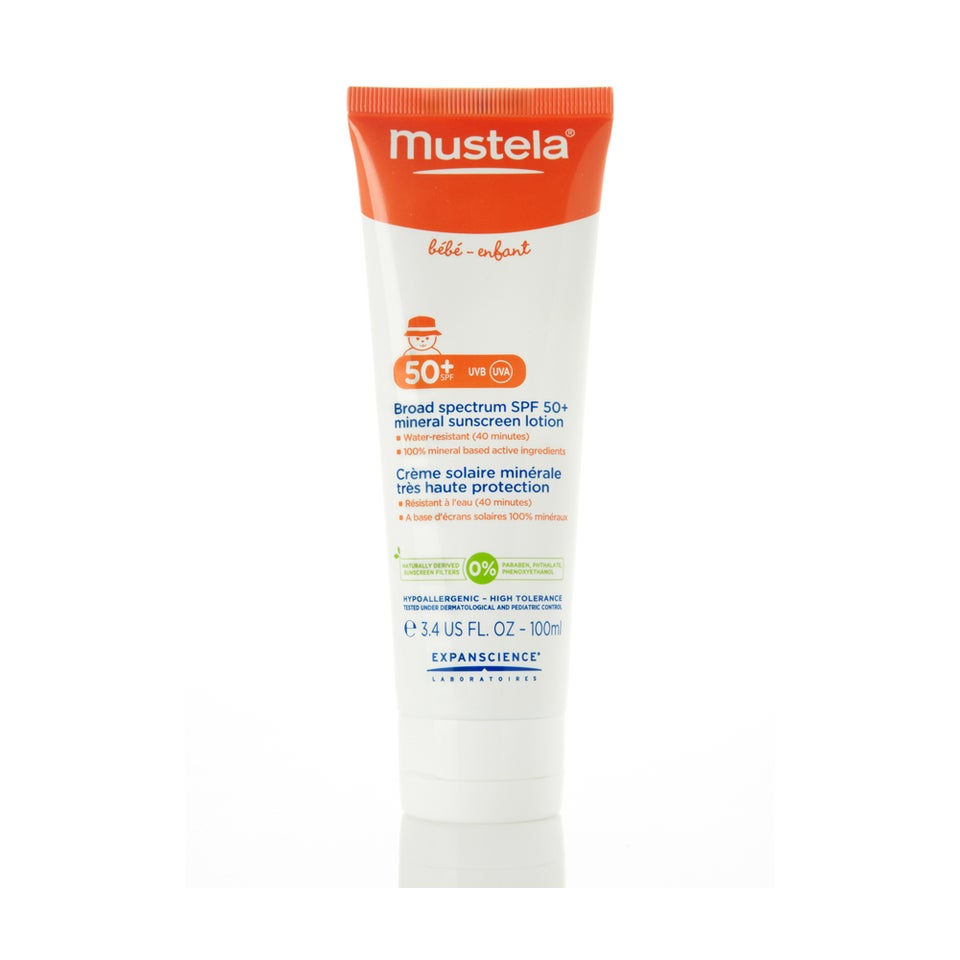

Mustela SPF 50+ Mineral Sunscreen One Size
Analysis updated August 2026 · How Scout scores
At a glance
Summary
This mineral sunscreen contains beneficial ingredients like glycerin, ethyl macadamiate, and sodium hyaluronate, which provide hydration and skin conditioning benefits. The absence of chemical UV filters and the inclusion of mineral-based ingredients contribute positively to its safety profile. However, the presence of synthetic polymers and emulsifiers slightly affects its overall rating, though they are not considered highly harmful.
Key ingredients 21
GlycerinGood
Glycerin is a humectant that attracts moisture to the skin, helping to keep it hydrated. It is widely used in skincare products for its moisturizing properties. It is considered safe and beneficial for most skin types.
Risks
There are minimal risks associated with glycerin, though it may cause irritation in very sensitive skin.
Benefits
Glycerin helps maintain skin hydration and improves skin barrier function.
Ethyl MacadamiateGood
Ethyl Macadamiate is an emollient derived from macadamia oil, providing a silky feel to the skin. It is used to enhance the texture and spreadability of products. It is considered safe and beneficial for skin conditioning.
Risks
There are minimal risks associated with Ethyl Macadamiate, though it may cause mild irritation in sensitive individuals.
Benefits
It provides a non-greasy feel and helps in moisturizing the skin.
Caprylic/Capric TriglycerideGood
Caprylic/Capric Triglyceride is an emollient derived from coconut oil and glycerin. It helps to moisturize and replenish the skin. It is widely used in cosmetics for its skin-conditioning properties.
Risks
There are minimal risks associated with this ingredient, though it may cause mild irritation in sensitive individuals.
Benefits
It provides a lightweight, non-greasy feel and helps in maintaining skin hydration.
Tocopheryl AcetateGood
Tocopheryl Acetate is a form of Vitamin E used as an antioxidant in cosmetics. It helps protect the skin from free radical damage and supports skin health. It is widely used for its skin-conditioning properties.
Risks
There are minimal risks associated with Tocopheryl Acetate, though it may cause mild irritation in sensitive individuals.
Benefits
It provides antioxidant protection and helps maintain skin health.
Sodium HyaluronateGood
Sodium Hyaluronate is a form of hyaluronic acid used for its excellent moisturizing properties. It helps retain moisture in the skin, improving hydration and elasticity. It is highly regarded for its skin benefits.
Risks
There are minimal risks associated with Sodium Hyaluronate, though it may cause mild irritation in very sensitive skin.
Benefits
It provides deep hydration and improves skin elasticity and texture.
TocopherolGood
Tocopherol is a form of Vitamin E used as an antioxidant in cosmetics. It helps protect the skin from oxidative stress and supports skin health. It is widely used for its beneficial effects on the skin.
Risks
There are minimal risks associated with Tocopherol, though it may cause mild irritation in sensitive individuals.
Benefits
It provides antioxidant protection and helps maintain skin health.
WaterNeutral
Water is a common solvent used in many cosmetic formulations. It helps dissolve other ingredients and provides a base for the product. It does not have any direct benefits or risks in this context.
Risks
There are no significant risks associated with water in cosmetic formulations.
Benefits
Water helps in the even distribution of other ingredients in the formulation.
C15-19 AlkaneNeutral
C15-19 Alkane is used as an emollient and solvent in cosmetics. It helps in improving the texture and spreadability of the product. It is generally considered safe for use in cosmetics.
Risks
There are minimal risks associated with C15-19 Alkane, though it may cause mild irritation in sensitive individuals.
Benefits
It provides a smooth application and helps in moisturizing the skin.
Polyglyceryl-3 PolyricinoleateNeutral
Polyglyceryl-3 Polyricinoleate is an emulsifier that helps blend oil and water-based ingredients. It is derived from castor oil and glycerin. It is generally considered safe for use in cosmetics.
Risks
There are minimal risks associated with this ingredient, though it may cause mild irritation in sensitive individuals.
Benefits
It helps stabilize the formulation and improves product consistency.
Stearyl/Octyldodecyl Citrate CrosspolymerNeutral
This ingredient is used as a texture enhancer and thickener in cosmetic formulations. It helps improve the spreadability and feel of the product. It is generally considered safe for use in cosmetics.
Risks
There are minimal risks associated with this ingredient, though it may cause mild irritation in sensitive individuals.
Benefits
It improves the texture and application of the product.
Lauryl PEG-9 Polydimethylsiloxyethyl DimethiconeNeutral
This ingredient is a silicone-based surfactant used to improve the spreadability of products. It helps in creating a smooth application. It is generally considered safe for use in cosmetics.
Risks
There are minimal risks associated with this ingredient, though it may cause mild irritation in sensitive individuals.
Benefits
It enhances the texture and spreadability of the product.
PropanediolNeutral
Propanediol is used as a solvent and humectant in cosmetics. It helps in improving the texture and moisture retention of products. It is generally considered safe for use in cosmetics.
Risks
There are minimal risks associated with propanediol, though it may cause mild irritation in sensitive individuals.
Benefits
It helps in maintaining skin hydration and improves product texture.
Polyhydroxystearic AcidNeutral
Polyhydroxystearic Acid is used as a thickener and emulsifier in cosmetic formulations. It helps stabilize emulsions and improve product consistency. It is generally considered safe for use in cosmetics.
Risks
There are minimal risks associated with this ingredient, though it may cause mild irritation in sensitive individuals.
Benefits
It helps stabilize formulations and improves texture.
TriethoxycaprylylsilaneNeutral
Triethoxycaprylylsilane is used as a surface modifier in cosmetics to improve the dispersion of pigments. It enhances the stability and performance of formulations. It is generally considered safe for use in cosmetics.
Risks
There are minimal risks associated with this ingredient, though it may cause mild irritation in sensitive individuals.
Benefits
It improves pigment dispersion and product stability.
1, 2-HexanediolNeutral
1, 2-Hexanediol is used as a preservative and humectant in cosmetics. It helps in maintaining product stability and moisture retention. It is generally considered safe for use in cosmetics.
Risks
There are minimal risks associated with this ingredient, though it may cause mild irritation in sensitive individuals.
Benefits
It helps in preserving the product and maintaining skin hydration.
HydroxyacetophenoneNeutral
Hydroxyacetophenone is used as an antioxidant and preservative booster in cosmetics. It helps in enhancing the stability and shelf life of products. It is generally considered safe for use in cosmetics.
Risks
There are minimal risks associated with this ingredient, though it may cause mild irritation in sensitive individuals.
Benefits
It helps in preserving the product and enhancing antioxidant activity.
Magnesium SulfateNeutral
Magnesium Sulfate is used as a thickener and bulking agent in cosmetics. It helps in improving the texture and consistency of products. It is generally considered safe for use in cosmetics.
Risks
There are minimal risks associated with this ingredient, though it may cause mild irritation in sensitive individuals.
Benefits
It helps improve product texture and consistency.
Sodium ChlorideNeutral
Sodium Chloride is used as a thickener and stabilizer in cosmetics. It helps in improving the texture and consistency of products. It is generally considered safe for use in cosmetics.
Risks
There are minimal risks associated with this ingredient, though it may cause mild irritation in sensitive individuals.
Benefits
It helps stabilize formulations and improve texture.
Caprylhydroxamic AcidNeutral
Caprylhydroxamic Acid is used as a preservative in cosmetics. It helps in preventing microbial growth and extending product shelf life. It is generally considered safe for use in cosmetics.
Risks
There are minimal risks associated with this ingredient, though it may cause mild irritation in sensitive individuals.
Benefits
It helps preserve the product and prevent microbial contamination.
Malic AcidNeutral
Malic Acid is used as an exfoliant and pH adjuster in cosmetics. It helps in improving skin texture and maintaining product stability. It is generally considered safe for use in cosmetics.
Risks
There are minimal risks associated with Malic Acid, though it may cause mild irritation in sensitive skin.
Benefits
It helps in exfoliating the skin and maintaining product pH balance.
Styrene/Acrylates CopolymerBad
Processed additive flagged under Scout's ingredient doctrine.
Risks
There are minimal risks associated with this ingredient, though it may cause mild irritation in sensitive individuals.
Benefits
It enhances the durability and water resistance of the product.
Processing
Processed Foods
Get the full breakdown in the Scout appTake Scout shopping
Scan any product to see lab results, healthy alternatives, and your personalized analysis.
Download on theApp Store GET IT ONGoogle PlayAmazon pricing & content
Amazon price as of . Product prices and availability are accurate as of the date/time indicated and are subject to change. Any price and availability information displayed on Amazon.com at the time of purchase will apply to the purchase of this product.
CERTAIN CONTENT THAT APPEARS ON THIS SITE COMES FROM AMAZON. THIS CONTENT IS PROVIDED “AS IS” AND IS SUBJECT TO CHANGE OR REMOVAL AT ANY TIME.