
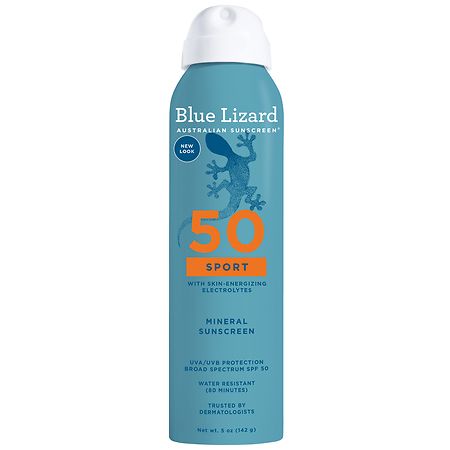
Blue Lizard Sport Mineral Sunscreen Spray - SPF 50+ - 5oz: Whole Body, Paraben-Free, Vegan, Unscented
Analysis updated August 2026 · How Scout scores
At a glance
Summary
This mineral sunscreen spray primarily uses zinc gluconate, which is beneficial for skin health, and includes other safe ingredients like glycerin and propanediol that help maintain skin moisture. However, the presence of phenoxyethanol, a preservative that can cause irritation in some individuals, slightly lowers its rating. The product is processed, which also impacts its overall score, but it remains a relatively clean option compared to many chemical-filter sunscreens.
Key ingredients 24
ZINC GLUCONATEGood
Zinc gluconate is used as a skin conditioning agent and anti-inflammatory in cosmetics. It is a source of zinc, which is beneficial for skin health. It is considered safe for use in cosmetics.
Risks
There are minimal risks associated with this ingredient.
Benefits
It provides essential minerals that can support skin health and reduce inflammation.
GLYCERINGood
Glycerin is a humectant used to attract moisture to the skin. It helps to hydrate and maintain skin moisture levels. It is considered safe and beneficial for use in cosmetics.
Risks
There are minimal risks associated with this ingredient.
Benefits
It provides excellent moisturizing properties, helping to keep the skin hydrated.
PROPANEDIOLGood
Propanediol is used as a humectant and skin conditioning agent in cosmetics. It helps to improve the skin feel of the product. It is derived from corn sugar and is considered safe for use.
Risks
There are minimal risks associated with this ingredient.
Benefits
It enhances the moisturizing properties of the product and provides a smooth application.
ETHYLHEXYLGLYCERINNeutral
Ethylhexylglycerin is a conditioning agent and preservative enhancer. It is generally considered safe for use in cosmetics. It helps to improve the skin feel of the product.
Risks
There are minimal risks associated with this ingredient, though it can cause mild irritation in sensitive individuals.
Benefits
It enhances the efficacy of preservatives, allowing for lower concentrations of potentially irritating preservatives.
HYDROGENATED POLY(C6-14 OLEFIN; 4 CST)Neutral
This ingredient is used as an emollient and texture enhancer in cosmetic formulations. It helps to improve the spreadability of the product. It is generally considered safe for use in cosmetics.
Risks
There are minimal risks associated with this ingredient.
Benefits
It provides a smooth, silky feel to the skin and helps to improve the product's texture.
PHYTATE SODIUMNeutral
Sodium phytate is used as a chelating agent in cosmetics. It helps to stabilize the formulation by binding metal ions. It is derived from plant sources and is considered safe for use.
Risks
There are minimal risks associated with this ingredient.
Benefits
It helps to enhance the stability and shelf life of the product.
CETYL DIGLYCERYL TRIS(TRIMETHYLSILOXY)SILYLETHYL DIMETHICONENeutral
This is a silicone-based ingredient used for its emollient and conditioning properties. It provides a smooth application and enhances the texture of the product. It is considered safe for use in cosmetics.
Risks
There are minimal risks associated with this ingredient.
Benefits
It improves the spreadability and feel of the product on the skin.
ALKYL (C12-15) BENZOATENeutral
Alkyl benzoate is used as an emollient and texture enhancer in cosmetic formulations. It provides a light, non-greasy feel. It is considered safe for use in cosmetics.
Risks
There are minimal risks associated with this ingredient.
Benefits
It helps to improve the spreadability and feel of the product on the skin.
ISOPROPYL MYRISTATENeutral
Isopropyl myristate is used as an emollient and penetration enhancer in cosmetics. It helps to improve the absorption of active ingredients. It is generally considered safe for use in cosmetics.
Risks
It can potentially clog pores in some individuals, leading to breakouts.
Benefits
It enhances the absorption of active ingredients and provides a smooth application.
MAGNESIUM ASPARTATENeutral
Magnesium aspartate is used as a skin conditioning agent in cosmetics. It is a source of magnesium, which is beneficial for skin health. It is considered safe for use in cosmetics.
Risks
There are minimal risks associated with this ingredient.
Benefits
It provides essential minerals that can support skin health.
SODIUM CHLORIDENeutral
Sodium chloride is used as a thickening agent in cosmetics. It helps to improve the viscosity of the product. It is generally considered safe for use in cosmetics.
Risks
There are minimal risks associated with this ingredient.
Benefits
It helps to improve the texture and consistency of the product.
WATERNeutral
Water is used as a solvent in cosmetic formulations. It helps to dissolve other ingredients and provides a base for the product. It is essential for the formulation of most cosmetic products.
Risks
There are no significant risks associated with water in cosmetics.
Benefits
It acts as a solvent and carrier for other ingredients.
COPPER GLUCONATENeutral
Copper gluconate is used as a skin conditioning agent in cosmetics. It is a source of copper, which is beneficial for skin health. It is considered safe for use in cosmetics.
Risks
There are minimal risks associated with this ingredient.
Benefits
It provides essential minerals that can support skin health.
HYDROGEN DIMETHICONENeutral
Hydrogen dimethicone is a silicone-based ingredient used for its emollient and conditioning properties. It provides a smooth application and enhances the texture of the product. It is considered safe for use in cosmetics.
Risks
There are minimal risks associated with this ingredient.
Benefits
It improves the spreadability and feel of the product on the skin.
SORBITAN OLIVATENeutral
Sorbitan olivate is used as an emulsifier and skin conditioning agent in cosmetics. It helps to stabilize formulations and improve skin feel. It is derived from olive oil and is considered safe for use.
Risks
There are minimal risks associated with this ingredient.
Benefits
It provides a smooth application and enhances the texture of the product.
CAPRYLYL GLYCOLNeutral
Caprylyl glycol is used as a skin conditioning agent and preservative enhancer in cosmetics. It helps to improve the skin feel of the product. It is generally considered safe for use in cosmetics.
Risks
There are minimal risks associated with this ingredient.
Benefits
It enhances the efficacy of preservatives, allowing for lower concentrations of potentially irritating preservatives.
POLYHYDROXYSTEARIC ACIDNeutral
Polyhydroxystearic acid is used as an emulsifier and thickening agent in cosmetics. It helps to stabilize formulations and improve texture. It is considered safe for use in cosmetics.
Risks
There are minimal risks associated with this ingredient.
Benefits
It helps to improve the texture and consistency of the product.
1, 3, 3, 3-TETRAFLUOROPROPENENeutral
1,3,3,3-Tetrafluoropropene is used as a propellant in aerosol products. It helps to dispense the product evenly. It is considered safe for use in cosmetics.
Risks
There are minimal risks associated with this ingredient.
Benefits
It allows for even application of aerosol products.
PENTYLENE GLYCOLNeutral
Pentylene glycol is used as a humectant and skin conditioning agent in cosmetics. It helps to improve the skin feel of the product. It is generally considered safe for use in cosmetics.
Risks
There are minimal risks associated with this ingredient.
Benefits
It enhances the moisturizing properties of the product.
SILICON DIOXIDENeutral
Silicon dioxide is used as an absorbent and anti-caking agent in cosmetics. It helps to improve the texture and stability of the product. It is considered safe for use in cosmetics.
Risks
There are minimal risks associated with this ingredient.
Benefits
It helps to improve the texture and stability of the product.
DIMETHICONEBad
Occlusive silicone film-former — flagged under clean-beauty doctrine.
Risks
It can potentially clog pores in some individuals, leading to breakouts.
Benefits
It helps to lock in moisture and protect the skin from environmental damage.
SYNTHETIC BEESWAXBad
Processed additive flagged under Scout's ingredient doctrine.
Risks
There are minimal risks associated with this ingredient.
Benefits
It helps to improve the texture and consistency of the product.
PHENOXYETHANOLBad
Phenoxyethanol is used as a preservative in cosmetics. It helps to prevent the growth of bacteria and mold. However, it can cause irritation in some individuals and is restricted in concentration by regulatory bodies.
Risks
It can cause skin irritation and allergic reactions in sensitive individuals.
Benefits
It effectively preserves the product, extending its shelf life.
BUTYLOCTYL SALICYLATEBad
Processed additive flagged under Scout's ingredient doctrine.
Risks
There are minimal risks associated with this ingredient.
Benefits
It provides a smooth, silky feel to the skin and helps to improve the product's texture.
Processing
Processed Foods
Get the full breakdown in the Scout appTake Scout shopping
Scan any product to see lab results, healthy alternatives, and your personalized analysis.
Download on theApp Store GET IT ONGoogle PlayAmazon pricing & content
Amazon price as of . Product prices and availability are accurate as of the date/time indicated and are subject to change. Any price and availability information displayed on Amazon.com at the time of purchase will apply to the purchase of this product.
CERTAIN CONTENT THAT APPEARS ON THIS SITE COMES FROM AMAZON. THIS CONTENT IS PROVIDED “AS IS” AND IS SUBJECT TO CHANGE OR REMOVAL AT ANY TIME.