
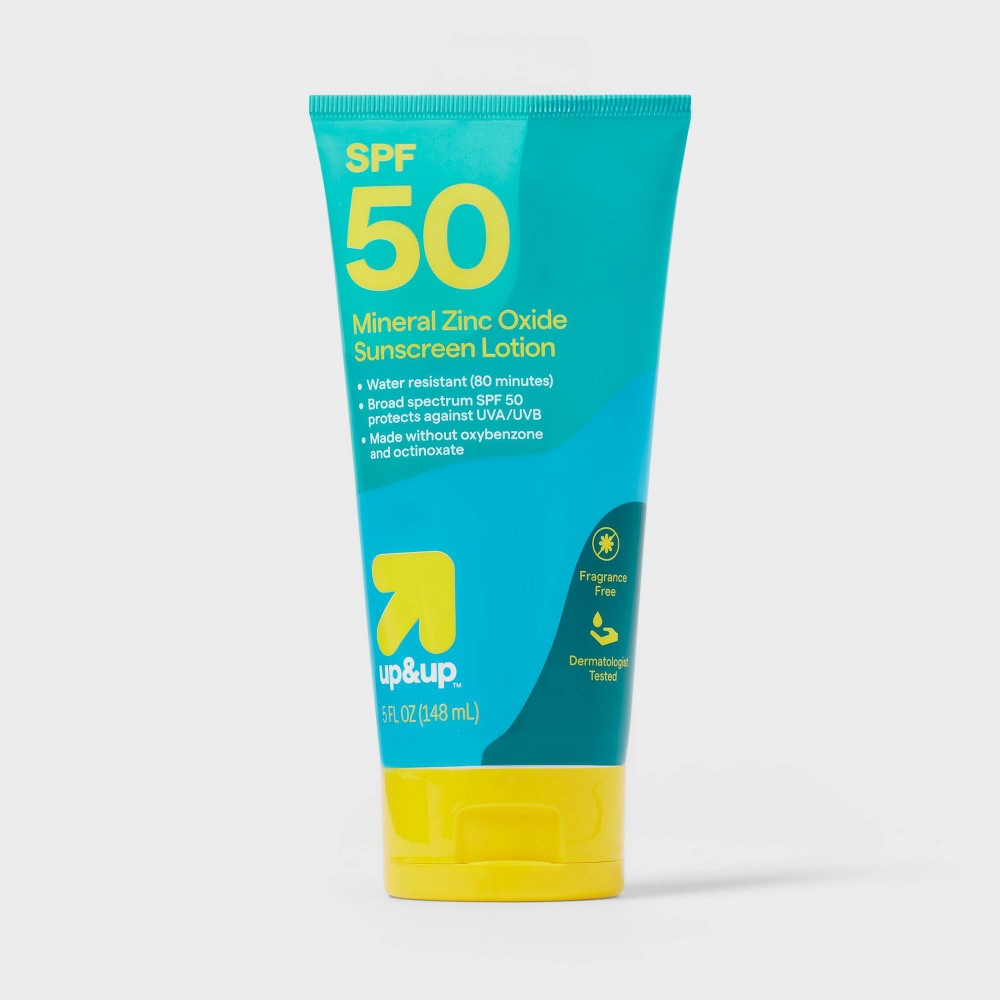


Mineral Sunscreen Lotion - SPF 50 - 5oz - up&up™: Whole Body, Unscented, Zinc Oxide 20.6%
Analysis updated September 2026 · How Scout scores
At a glance
Summary
This mineral sunscreen lotion features zinc oxide as its active ingredient, providing effective broad-spectrum UV protection without the risks associated with chemical filters. The formulation includes beneficial ingredients like aloe vera, glycerin, and sunflower seed oil, which offer soothing and moisturizing properties. Although it contains phenoxyethanol as a preservative, which can be irritating to some, the overall ingredient list is clean and minimally processed, contributing to a high score.
Key ingredients 6
Aloe Barbadensis Leaf JuiceVery Good
Aloe Vera is known for its soothing and moisturizing properties. It helps to calm irritated skin and provides hydration. It is rich in antioxidants and vitamins that can help protect the skin.
Risks
Aloe Vera is generally safe, but some individuals may experience allergic reactions.
Benefits
Aloe Vera provides soothing relief and hydration, making it beneficial for sun-exposed skin.
Helianthus Annuus (Sunflower) Seed OilVery Good
Sunflower Seed Oil is rich in essential fatty acids and vitamin E, which help to nourish and protect the skin. It is non-comedogenic and suitable for sensitive skin. It has anti-inflammatory properties that can help soothe the skin.
Risks
There is a low risk of allergic reactions with Sunflower Seed Oil.
Benefits
Sunflower Seed Oil provides nourishment and protection, and its anti-inflammatory properties help soothe the skin.
TocopherolVery Good
Tocopherol, or Vitamin E, is a powerful antioxidant that helps protect the skin from free radical damage. It also has moisturizing properties and can improve skin texture. It is commonly used in skincare for its protective benefits.
Risks
Tocopherol is generally safe, but high concentrations may cause skin irritation in sensitive individuals.
Benefits
Tocopherol provides antioxidant protection and helps maintain skin moisture.
Zinc OxideGood
Zinc Oxide is a mineral sunscreen agent that provides broad-spectrum UV protection. It is considered safe and effective for sensitive skin. It is non-comedogenic and does not penetrate the skin, making it a preferred choice for physical sunblocks.
Risks
There are minimal risks associated with Zinc Oxide, primarily related to potential whitening effect on the skin.
Benefits
Zinc Oxide offers excellent protection against both UVA and UVB rays and is suitable for sensitive skin types.
GlycerinGood
Glycerin is a humectant that attracts moisture to the skin, helping to keep it hydrated. It is widely used in skincare for its ability to improve skin barrier function. It is non-irritating and suitable for all skin types.
Risks
Glycerin is generally safe with minimal risk of irritation.
Benefits
Glycerin helps maintain skin hydration and improves skin barrier function.
PhenoxyethanolBad
Phenoxyethanol is a preservative used to prevent microbial growth in cosmetics. It is considered a safer alternative to parabens but can cause irritation in some individuals. It is generally used in low concentrations to minimize risks.
Risks
Phenoxyethanol can cause skin irritation and allergic reactions, especially in sensitive individuals.
Benefits
It effectively preserves the product by preventing microbial contamination.
Get the full breakdown in the Scout appTake Scout shopping
Scan any product to see lab results, healthy alternatives, and your personalized analysis.
Download on theApp Store GET IT ONGoogle Play