
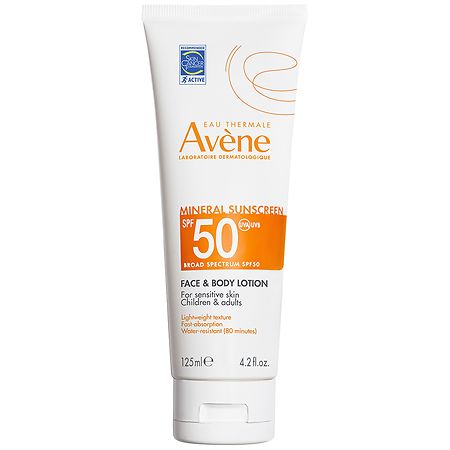

Avene Mineral Face and Body Sunscreen Lotion with Zinc Oxide - SPF 50 - 4.2 fl oz: Oil-Free, Paraben-Free, Gluten-Free, Oxybenzone-Free
Analysis updated September 2026 · How Scout scores
At a glance
Summary
This sunscreen features zinc oxide as its primary active ingredient, providing effective broad-spectrum UV protection without the use of chemical filters. The formulation includes beneficial ingredients like allantoin and bisabolol, which offer soothing and moisturizing properties. The absence of parabens, oxybenzone, and other harmful chemicals, along with a clean ingredient list, contributes to its high rating.
Key ingredients 27
Zinc OxideGood
Zinc Oxide is a mineral sunscreen agent that provides broad-spectrum UV protection. It is considered safe and effective for sensitive skin. It is often used in physical sunscreens due to its ability to reflect and scatter UV radiation.
Risks
There are minimal risks associated with Zinc Oxide, though it may leave a white cast on the skin.
Benefits
Zinc Oxide is beneficial for its non-irritating properties and effectiveness in protecting against both UVA and UVB rays.
AllantoinGood
Allantoin is known for its skin-soothing and moisturizing properties. It helps to protect the skin and promote healing. It is often used in skincare products for its ability to improve skin smoothness.
Risks
Allantoin is generally considered safe with a low risk of irritation.
Benefits
It is beneficial for its ability to soothe irritated skin and promote skin repair.
BisabololGood
Bisabolol is a natural compound known for its anti-inflammatory and soothing properties. It is derived from chamomile and is used to calm and heal the skin. It is effective in reducing redness and irritation.
Risks
Bisabolol is generally safe, but in rare cases, it may cause allergic reactions.
Benefits
It is beneficial for its calming effects on the skin and its ability to enhance the absorption of other skincare ingredients.
GlycerinGood
Beneficial ingredient — whole-food or functional value in this product class.
Risks
Glycerin is generally safe, but excessive use may lead to a sticky feel on the skin.
Benefits
It is beneficial for its ability to maintain skin hydration and improve skin barrier function.
Tocopheryl AcetateGood
Beneficial ingredient — whole-food or functional value in this product class.
Risks
Tocopheryl Acetate is generally safe, but may cause mild irritation in sensitive individuals.
Benefits
It is beneficial for its antioxidant properties and ability to enhance skin hydration.
C12-15 Alkyl BenzoateNeutral
C12-15 Alkyl Benzoate is an emollient that helps to improve the texture and spreadability of skincare products. It is commonly used in sunscreens to enhance the feel of the product. It is considered safe for use in cosmetics.
Risks
There are minimal risks associated with this ingredient, though it may cause mild irritation in sensitive individuals.
Benefits
It provides a silky feel to the skin and helps to improve the application of sunscreen products.
Caprylic/Capric TriglycerideNeutral
Caprylic/Capric Triglyceride is a mixed triester derived from coconut oil and glycerin. It is used as an emollient and skin-repairing ingredient. It is known for its ability to enhance the spreadability of products.
Risks
It is generally considered safe, but may cause mild irritation in some individuals.
Benefits
It is beneficial for its moisturizing properties and ability to improve the texture of formulations.
Caprylyl CaprateNeutral
Caprylyl Caprate is an ester that functions as an emollient and skin-conditioning agent. It is used to improve the texture and feel of cosmetic products. It is considered safe for use in skincare.
Risks
There are minimal risks associated with Caprylyl Caprate, though it may cause mild irritation in sensitive skin.
Benefits
It helps to enhance the spreadability and absorption of skincare products.
Caprylyl GlycolNeutral
Caprylyl Glycol is a skin-conditioning agent that also acts as a preservative booster. It is used to improve the moisture content of the skin. It is considered safe for use in cosmetics.
Risks
It may cause mild irritation in sensitive individuals, but is generally considered safe.
Benefits
It is beneficial for its moisturizing properties and ability to enhance the efficacy of preservatives.
Coco-CaprylateNeutral
Coco-Caprylate is an emollient derived from coconut oil that provides a silky feel to the skin. It is used to improve the spreadability of products. It is considered safe for use in cosmetics.
Risks
There are minimal risks associated with Coco-Caprylate, though it may cause mild irritation in sensitive skin.
Benefits
It is beneficial for its ability to enhance the texture and application of skincare products.
Glyceryl BehenateNeutral
Glyceryl Behenate is an ester of glycerin and behenic acid used as an emollient and thickening agent. It helps to improve the texture and stability of formulations. It is considered safe for use in cosmetics.
Risks
There are minimal risks associated with Glyceryl Behenate, though it may cause mild irritation in sensitive skin.
Benefits
It is beneficial for its ability to enhance the texture and consistency of skincare products.
Glyceryl DibehenateNeutral
Glyceryl Dibehenate is an ester used as an emollient and thickening agent in cosmetics. It helps to improve the texture and stability of formulations. It is considered safe for use in skincare products.
Risks
There are minimal risks associated with Glyceryl Dibehenate, though it may cause mild irritation in sensitive skin.
Benefits
It is beneficial for its ability to enhance the texture and consistency of skincare products.
Glyceryl StearateNeutral
Glyceryl Stearate is an emulsifier that helps to stabilize formulations and improve texture. It is commonly used in skincare products for its moisturizing properties. It is considered safe for use in cosmetics.
Risks
Glyceryl Stearate is generally safe, but may cause mild irritation in sensitive individuals.
Benefits
It is beneficial for its ability to improve the texture and stability of skincare formulations.
Isoamyl LaurateNeutral
Isoamyl Laurate is an ester used as an emollient and skin-conditioning agent. It provides a silky feel and enhances the spreadability of products. It is considered safe for use in cosmetics.
Risks
There are minimal risks associated with Isoamyl Laurate, though it may cause mild irritation in sensitive skin.
Benefits
It is beneficial for its ability to improve the texture and application of skincare products.
MethylpropanediolNeutral
Methylpropanediol is a solvent and skin-conditioning agent used to enhance the absorption of active ingredients. It is considered safe for use in cosmetics. It also helps to improve the texture of formulations.
Risks
There are minimal risks associated with Methylpropanediol, though it may cause mild irritation in sensitive skin.
Benefits
It is beneficial for its ability to enhance the penetration of active ingredients and improve product texture.
Neopentyl Glycol DiheptanoateNeutral
Neopentyl Glycol Diheptanoate is an ester used as an emollient and skin-conditioning agent. It provides a silky feel and enhances the spreadability of products. It is considered safe for use in cosmetics.
Risks
There are minimal risks associated with Neopentyl Glycol Diheptanoate, though it may cause mild irritation in sensitive skin.
Benefits
It is beneficial for its ability to improve the texture and application of skincare products.
PhenylpropanolNeutral
Phenylpropanol is a preservative and fragrance ingredient used to enhance the shelf life of products. It is considered safe for use in cosmetics. It also provides a pleasant scent to formulations.
Risks
Phenylpropanol may cause mild irritation in sensitive individuals, but is generally considered safe.
Benefits
It is beneficial for its preservative properties and ability to enhance the fragrance of products.
Polyester-7Neutral
Polyester-7 is a film-forming agent used to improve the water resistance of sunscreen products. It helps to create a protective barrier on the skin. It is considered safe for use in cosmetics.
Risks
There are minimal risks associated with Polyester-7, though it may cause mild irritation in sensitive skin.
Benefits
It is beneficial for its ability to enhance the water resistance and durability of sunscreen formulations.
Polyglyceryl-3 PolyricinoleateNeutral
Polyglyceryl-3 Polyricinoleate is an emulsifier used to stabilize formulations and improve texture. It is derived from castor oil and is considered safe for use in cosmetics. It helps to enhance the spreadability of products.
Risks
There are minimal risks associated with Polyglyceryl-3 Polyricinoleate, though it may cause mild irritation in sensitive skin.
Benefits
It is beneficial for its ability to improve the texture and stability of skincare formulations.
Polyglyceryl-4 Diisostearate/Polyhydroxystearate/SebacateNeutral
This ingredient is a blend of emulsifiers used to stabilize formulations and improve texture. It is considered safe for use in cosmetics. It helps to enhance the spreadability and application of products.
Risks
There are minimal risks associated with this blend, though it may cause mild irritation in sensitive skin.
Benefits
It is beneficial for its ability to improve the texture and stability of skincare formulations.
SilicaNeutral
Silica is a mineral used as an absorbent and anti-caking agent in cosmetics. It helps to improve the texture and mattify the skin. It is considered safe for use in skincare products.
Risks
Silica is generally safe, but inhalation of fine particles may pose respiratory risks.
Benefits
It is beneficial for its ability to absorb excess oil and improve the texture of formulations.
Sodium ChlorideNeutral
Sodium Chloride, or table salt, is used as a thickening agent in cosmetics. It helps to improve the texture and stability of formulations. It is considered safe for use in skincare products.
Risks
Sodium Chloride is generally safe, but excessive use may lead to dryness or irritation.
Benefits
It is beneficial for its ability to enhance the texture and consistency of skincare products.
TocopherolNeutral
Tocopherol, or Vitamin E, is an antioxidant that helps to protect the skin from free radical damage. It is commonly used in skincare products for its moisturizing properties. It is considered safe for use in cosmetics.
Risks
Tocopherol is generally safe, but may cause mild irritation in sensitive individuals.
Benefits
It is beneficial for its antioxidant properties and ability to improve skin hydration.
TribeheninNeutral
Tribehenin is an emollient and thickening agent used to improve the texture of skincare products. It helps to enhance the spreadability and stability of formulations. It is considered safe for use in cosmetics.
Risks
There are minimal risks associated with Tribehenin, though it may cause mild irritation in sensitive skin.
Benefits
It is beneficial for its ability to improve the texture and consistency of skincare products.
Tridecyl SalicylateNeutral
Tridecyl Salicylate is an ester used as an emollient and UV filter in cosmetics. It helps to improve the texture and provide some sun protection. It is considered safe for use in skincare products.
Risks
There are minimal risks associated with Tridecyl Salicylate, though it may cause mild irritation in sensitive skin.
Benefits
It is beneficial for its ability to enhance the texture and provide additional sun protection.
WaterNeutral
Water is used as a solvent in cosmetics to dissolve other ingredients and form emulsions. It is a fundamental component in many skincare products. It is considered safe and essential for formulations.
Risks
There are no significant risks associated with water in cosmetics.
Benefits
It is beneficial for its role as a solvent and its ability to hydrate the skin.
LecithinBad
Processed additive flagged under Scout's ingredient doctrine.
Risks
Lecithin is generally safe, but may cause mild irritation in sensitive individuals.
Benefits
It is beneficial for its ability to enhance the texture and moisture content of skincare products.
Get the full breakdown in the Scout appTake Scout shopping
Scan any product to see lab results, healthy alternatives, and your personalized analysis.
Download on theApp Store GET IT ONGoogle PlayAmazon pricing & content
Amazon price as of . Product prices and availability are accurate as of the date/time indicated and are subject to change. Any price and availability information displayed on Amazon.com at the time of purchase will apply to the purchase of this product.
CERTAIN CONTENT THAT APPEARS ON THIS SITE COMES FROM AMAZON. THIS CONTENT IS PROVIDED “AS IS” AND IS SUBJECT TO CHANGE OR REMOVAL AT ANY TIME.