
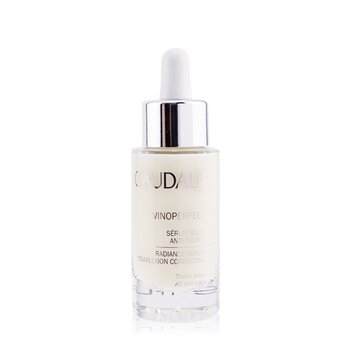
CAUDALIE Vinoperfect Radiance Serum at Nordstrom, Size 1 Oz
Analysis updated September 2026 · How Scout scores
At a glance
Summary
This serum contains beneficial ingredients like glycerin, squalane, and bisabolol, which are known for their moisturizing and soothing properties. However, the presence of 'parfum' or fragrance, which can be a source of allergens and irritants, slightly detracts from its overall safety profile. The product has a relatively clean ingredient list with minimal processing, contributing to a favorable score.
Key ingredients 19
SqualaneVery Good
Squalane is a highly effective emollient and natural antioxidant. It mimics the skin's natural oils, making it an excellent moisturizer. It is non-comedogenic and suitable for all skin types.
Risks
There are minimal risks associated with squalane, making it suitable for sensitive skin.
Benefits
Squalane deeply hydrates the skin and helps in reducing the appearance of fine lines.
GlycerinGood
Glycerin is a well-known humectant that attracts moisture to the skin. It is effective in improving skin hydration and barrier function. It is widely used in skincare products for its moisturizing properties.
Risks
There are minimal risks associated with glycerin, though it may cause irritation in very sensitive skin.
Benefits
Glycerin helps maintain skin hydration and improves the skin's natural barrier.
BisabololGood
Bisabolol is known for its soothing and anti-inflammatory properties. It is derived from chamomile and is effective in calming irritated skin. It is widely used in skincare for its gentle nature.
Risks
There are minimal risks associated with bisabolol, making it suitable for sensitive skin.
Benefits
It helps in soothing the skin and reducing redness and irritation.
Aqua/Water/EauNeutral
Water is a common solvent used in cosmetic formulations. It helps dissolve other ingredients and provides a base for the product. It is generally considered safe and non-reactive.
Risks
There are no significant risks associated with water in cosmetics.
Benefits
Water helps in hydrating the skin and acts as a carrier for other beneficial ingredients.
Butylene GlycolNeutral
Butylene Glycol is a common humectant used to retain moisture in the skin. It also helps improve the texture and spreadability of the product. It is generally considered safe for use in cosmetics.
Risks
In rare cases, it may cause irritation or allergic reactions in sensitive individuals.
Benefits
It helps in keeping the skin hydrated and enhances the absorption of other ingredients.
Coco-Caprylate/CaprateNeutral
Coco-Caprylate/Caprate is an emollient derived from coconut oil and caprylic acid. It is used to enhance the spreadability of products and provide a silky feel. It is generally considered safe for use in cosmetics.
Risks
There are no significant risks associated with this ingredient.
Benefits
It provides a smooth application and helps in moisturizing the skin.
Palmitoyl Grapevine Shoot ExtractNeutral
Palmitoyl Grapevine Shoot Extract is used for its potential antioxidant properties. It may help in protecting the skin from environmental damage. However, there is limited research on its efficacy.
Risks
There are no significant risks associated with this ingredient.
Benefits
It may provide antioxidant benefits and help in maintaining skin health.
Polyglyceryl-3 DistearateNeutral
Polyglyceryl-3 Distearate is an emulsifier that helps blend oil and water components. It improves the texture and stability of the product. It is generally considered safe for use in cosmetics.
Risks
There are no significant risks associated with this ingredient.
Benefits
It helps in maintaining the consistency and stability of the formulation.
Glyceryl StearateNeutral
Glyceryl Stearate is an emulsifier that helps in blending ingredients and improving product texture. It is derived from glycerin and stearic acid. It is generally considered safe for use in cosmetics.
Risks
There are no significant risks associated with this ingredient.
Benefits
It helps in maintaining the consistency and stability of the formulation.
Xanthan GumNeutral
Xanthan Gum is a thickening agent used to stabilize and improve the texture of cosmetic products. It is derived from natural sources and is considered safe for use. It helps in maintaining the consistency of the product.
Risks
There are no significant risks associated with xanthan gum.
Benefits
It provides a smooth texture and helps in stabilizing the formulation.
Caprylyl GlycolNeutral
Caprylyl Glycol is a skin conditioning agent that also acts as a preservative. It helps in improving the moisture content of the skin. It is generally considered safe for use in cosmetics.
Risks
There are no significant risks associated with this ingredient.
Benefits
It helps in moisturizing the skin and extending the shelf life of the product.
Microcrystalline CelluloseNeutral
Microcrystalline Cellulose is used as a bulking agent and stabilizer in cosmetics. It helps in improving the texture and consistency of the product. It is generally considered safe for use.
Risks
There are no significant risks associated with this ingredient.
Benefits
It provides a smooth texture and helps in stabilizing the formulation.
Polyacrylate Crosspolymer-6Neutral
Polyacrylate Crosspolymer-6 is used as a thickening agent and stabilizer in cosmetic formulations. It helps in improving the texture and spreadability of the product. It is generally considered safe for use.
Risks
There are no significant risks associated with this ingredient.
Benefits
It provides a smooth texture and helps in stabilizing the formulation.
Glyceryl Stearate CitrateNeutral
Glyceryl Stearate Citrate is an emulsifier that helps in blending oil and water components. It improves the texture and stability of the product. It is generally considered safe for use in cosmetics.
Risks
There are no significant risks associated with this ingredient.
Benefits
It helps in maintaining the consistency and stability of the formulation.
Citric AcidNeutral
Citric Acid is used to adjust the pH of cosmetic formulations. It also acts as a mild preservative and antioxidant. It is generally considered safe for use in cosmetics.
Risks
In high concentrations, it may cause irritation or sensitivity in some individuals.
Benefits
It helps in maintaining the stability and effectiveness of the product.
Sodium PhytateNeutral
Sodium Phytate is used as a chelating agent to stabilize cosmetic formulations. It helps in preventing the degradation of the product. It is generally considered safe for use.
Risks
There are no significant risks associated with this ingredient.
Benefits
It helps in maintaining the stability and effectiveness of the product.
Sodium HydroxideNeutral
Sodium Hydroxide is used to adjust the pH of cosmetic formulations. It is effective in maintaining the stability of the product. It is generally considered safe when used in low concentrations.
Risks
In high concentrations, it can be corrosive and cause irritation.
Benefits
It helps in maintaining the stability and effectiveness of the product.
Potassium SorbateBad
Synthetic preservative — flagged in daily-use products.
Risks
In rare cases, it may cause irritation or allergic reactions in sensitive individuals.
Benefits
It helps in preserving the product and preventing microbial contamination.
Parfum (Fragrance)Very Bad
Fragrance is used to impart a pleasant scent to cosmetic products. However, it can be a source of allergens and irritants. It is often criticized for its potential to cause skin sensitivity.
Risks
Fragrance can cause allergic reactions and irritation, especially in sensitive individuals.
Benefits
It provides a pleasant scent to the product, enhancing the user experience.
Get the full breakdown in the Scout appTake Scout shopping
Scan any product to see lab results, healthy alternatives, and your personalized analysis.
Download on theApp Store GET IT ONGoogle Play