
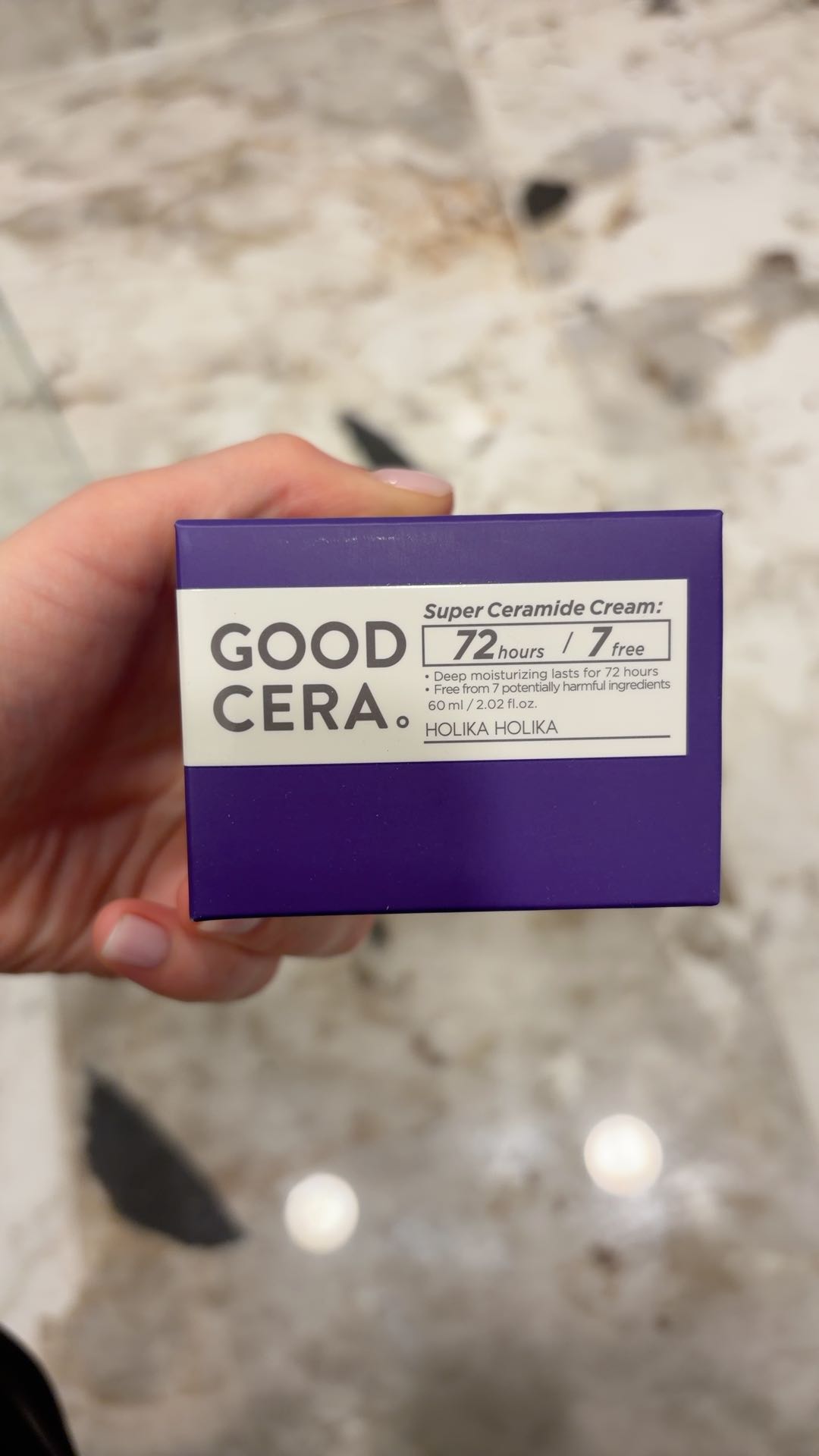
Holika Holika Good Cera Super Ceramide Cream In Serum Gift Set Free Gifts
Summary
This product contains beneficial ingredients like hyaluronic acid, niacinamide, and aloe vera, which are known for their skin-enhancing properties. However, it includes some synthetic components such as polysorbate 60 and ceteareth-20, which are common emulsifiers and can be considered minor concerns. The overall formulation is mostly safe, but the presence of these synthetic ingredients and the processing level slightly lower its score.
At a glance
Key ingredients 18
Allantoin
Allantoin is known for its soothing and skin-conditioning properties. It helps to protect the skin and promote healing. It is often used in skincare products for its ability to improve skin smoothness.
Risks
Allantoin is generally considered safe with minimal risk of irritation.
Benefits
It can help to soothe irritated skin and promote cell regeneration.
Aloe Vera
Aloe Vera is a natural extract known for its hydrating and soothing properties. It is commonly used in skincare for its ability to calm irritated skin. Aloe Vera also provides a cooling effect that can help reduce redness.
Risks
Aloe Vera is generally safe but can cause allergic reactions in some individuals.
Benefits
It hydrates the skin and reduces inflammation, making it beneficial for sensitive skin.
Amino Acids
Amino acids are essential for maintaining skin hydration and elasticity. They help to strengthen the skin barrier and improve overall skin health. Amino acids are often included in skincare for their moisturizing properties.
Risks
Amino acids are generally safe with low risk of adverse effects.
Benefits
They enhance skin hydration and support the skin's natural repair processes.
Betaine
Betaine is a natural humectant that helps to retain moisture in the skin. It is derived from sugar beets and is known for its ability to improve skin texture. Betaine is often used in skincare for its moisturizing and soothing effects.
Risks
Betaine is generally considered safe with minimal risk of irritation.
Benefits
It helps to maintain skin hydration and smoothness.
Niacinamide
Niacinamide is a form of Vitamin B3 that is known for its anti-inflammatory and brightening properties. It helps to improve skin texture and reduce the appearance of pores. Niacinamide is widely used in skincare for its ability to enhance skin barrier function.
Risks
Niacinamide is generally well-tolerated but can cause mild irritation in sensitive skin.
Benefits
It improves skin tone and reduces signs of aging.
Tocopheryl Acetate
Tocopheryl Acetate is a form of Vitamin E that acts as an antioxidant. It helps to protect the skin from environmental damage and supports skin healing. Tocopheryl Acetate is commonly used in skincare for its moisturizing and protective properties.
Risks
It is generally safe but can cause allergic reactions in some individuals.
Benefits
It provides antioxidant protection and improves skin hydration.
Theobroma Cacao (Cocoa) Seed Extract
Cocoa Seed Extract is rich in antioxidants and has moisturizing properties. It helps to protect the skin from oxidative stress and improve skin elasticity. Cocoa Seed Extract is often used in skincare for its nourishing effects.
Risks
It is generally safe but may cause allergic reactions in sensitive individuals.
Benefits
It nourishes the skin and provides antioxidant protection.
Fermented Ceramide
Fermented Ceramide is known for its ability to strengthen the skin barrier and retain moisture. It helps to improve skin hydration and elasticity. Fermented Ceramide is valued in skincare for its role in maintaining healthy skin.
Risks
It is generally considered safe with low risk of irritation.
Benefits
It enhances skin barrier function and hydration.
Bacillus Ferment
Bacillus Ferment is a probiotic ingredient that helps to balance the skin's microbiome. It is used in skincare for its soothing and conditioning properties. Bacillus Ferment can improve skin texture and reduce irritation.
Risks
It is generally safe but may cause irritation in very sensitive skin.
Benefits
It supports a healthy skin microbiome and soothes the skin.
Cica
Cica, also known as Centella Asiatica, is renowned for its healing and soothing properties. It helps to calm irritated skin and promote collagen production. Cica is widely used in skincare for its ability to repair and protect the skin.
Risks
Cica is generally safe but can cause allergic reactions in some individuals.
Benefits
It promotes skin healing and reduces inflammation.
Fig Extract
Fig Extract is rich in antioxidants and vitamins that nourish the skin. It helps to improve skin hydration and elasticity. Fig Extract is used in skincare for its moisturizing and rejuvenating effects.
Risks
It is generally safe but may cause irritation in sensitive skin.
Benefits
It provides antioxidant protection and enhances skin hydration.
Hyaluronic Acid
Hyaluronic Acid is a powerful humectant that attracts and retains moisture in the skin. It helps to plump the skin and reduce the appearance of fine lines. Hyaluronic Acid is a popular ingredient in skincare for its hydrating and anti-aging benefits.
Risks
It is generally safe with minimal risk of irritation.
Benefits
It deeply hydrates the skin and improves skin texture.
Cyclopentasiloxane
Cyclopentasiloxane is a silicone-based compound used for its smoothing and conditioning properties. It helps to improve the texture and spreadability of skincare products. Cyclopentasiloxane is often used in cosmetics for its lightweight feel.
Risks
It can cause build-up on the skin and may not be suitable for acne-prone skin.
Benefits
It provides a silky texture and enhances product application.
Stearic Acid
Stearic Acid is a fatty acid used as an emulsifier and thickener in skincare products. It helps to stabilize formulations and improve texture. Stearic Acid is commonly used in cosmetics for its ability to enhance product consistency.
Risks
It is generally safe but may cause irritation in sensitive skin.
Benefits
It stabilizes formulations and improves product texture.
Polysorbate 60
Polysorbate 60 is an emulsifier used to blend oil and water-based ingredients. It helps to improve the texture and stability of skincare products. Polysorbate 60 is commonly used in cosmetics for its emulsifying properties.
Risks
It can cause irritation in sensitive skin and may contain impurities.
Benefits
It enhances product stability and texture.
Ceteareth-20
Ceteareth-20 is an emulsifier used to improve the texture and stability of skincare products. It helps to blend oil and water-based ingredients. Ceteareth-20 is often used in cosmetics for its emulsifying properties.
Risks
It may contain impurities and can cause irritation in sensitive skin.
Benefits
It stabilizes formulations and improves product texture.
Cocos Nucifera Oil
Cocos Nucifera Oil, also known as Coconut Oil, is a natural oil known for its moisturizing and nourishing properties. It helps to hydrate the skin and improve elasticity. Coconut Oil is widely used in skincare for its ability to soften and protect the skin.
Risks
It can clog pores and may not be suitable for acne-prone skin.
Benefits
It deeply moisturizes the skin and enhances skin barrier function.
Aloe Barbadensis Leaf Extract
Aloe Barbadensis Leaf Extract is derived from Aloe Vera and is known for its soothing and hydrating properties. It helps to calm irritated skin and provide moisture. Aloe Barbadensis Leaf Extract is commonly used in skincare for its calming effects.
Risks
It is generally safe but can cause allergic reactions in some individuals.
Benefits
It soothes and hydrates the skin, reducing redness and irritation.
Processing
Processed Foods
Get the full breakdown in the Scout app
Scan any product to see lab results, healthy alternatives, and your personalized analysis.
Download on theApp Store