
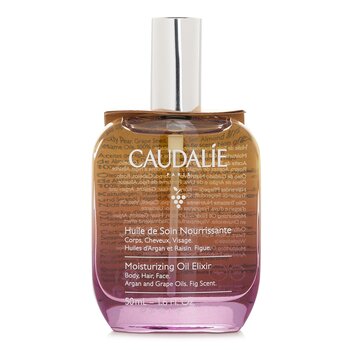

CaudalieOil Elixir Smoothing & Glow Care Oil 50ml/1.6oz
Analysis updated August 2026 · How Scout scores
At a glance
Summary
This product contains a mix of beneficial natural oils such as grape seed, sesame, and argan oil, which are known for their nourishing and antioxidant properties. However, the presence of fragrance components like parfum, coumarin, linalool, and limonene, which can cause skin irritation and sensitization, lowers its overall safety profile. The product's processing level and inclusion of these potentially irritating ingredients prevent it from achieving a higher score.
Key ingredients 17
Vitis Vinifera (Grape) Seed OilVery Good
Grape seed oil is rich in antioxidants and essential fatty acids, which help nourish and protect the skin. It is lightweight and easily absorbed, making it suitable for all skin types.
Risks
There is a minimal risk of allergic reactions, although it is rare.
Benefits
It provides moisturizing and anti-inflammatory benefits, promoting skin health.
Sesamum Indicum (Sesame) Seed OilVery Good
Sesame seed oil is known for its anti-inflammatory and antioxidant properties. It contains vitamins and minerals that support skin health.
Risks
Potential for allergic reactions in individuals with sesame allergies.
Benefits
It helps to moisturize and protect the skin from environmental damage.
Butyrospermum Parkii (Shea) ButterVery Good
Shea butter is a natural fat extracted from the nuts of the shea tree, known for its moisturizing and anti-inflammatory properties. It is rich in vitamins A and E.
Risks
Low risk of allergic reactions, generally safe for most skin types.
Benefits
It deeply moisturizes and nourishes the skin, improving elasticity.
Helianthus Annuus (Sunflower) Seed OilVery Good
Sunflower seed oil is rich in vitamin E and fatty acids, providing antioxidant and moisturizing benefits. It is non-comedogenic and suitable for all skin types.
Risks
Minimal risk of allergic reactions.
Benefits
It helps to maintain the skin's natural barrier and hydration.
Argania Spinosa Kernel OilVery Good
Argan oil is rich in essential fatty acids and antioxidants, known for its nourishing and anti-aging properties. It is often used to improve skin elasticity and hydration.
Risks
Rare risk of allergic reactions.
Benefits
It provides deep hydration and helps to reduce the appearance of fine lines.
Opuntia Ficus-Indica Seed OilVery Good
Prickly pear seed oil is high in essential fatty acids and vitamin E, offering excellent moisturizing and antioxidant properties. It is known for its ability to soothe and protect the skin.
Risks
Low risk of irritation or allergic reaction.
Benefits
It helps to hydrate and rejuvenate the skin, reducing signs of aging.
Prunus Amygdalus Dulcis (Sweet Almond) OilVery Good
Sweet almond oil is a natural emollient rich in vitamins A and E, known for its ability to soften and nourish the skin. It is suitable for all skin types.
Risks
Potential for allergic reactions in individuals with nut allergies.
Benefits
It helps to improve skin tone and texture, providing deep hydration.
TocopherolVery Good
Tocopherol, or vitamin E, is a powerful antioxidant that helps protect the skin from oxidative stress. It is widely used for its moisturizing and healing properties.
Risks
Generally considered safe with low risk of irritation.
Benefits
It helps to nourish and protect the skin, promoting a healthy complexion.
Caprylic/Capric TriglycerideGood
This ingredient is derived from coconut oil and glycerin, providing a lightweight and non-greasy emollient. It helps to improve the spreadability of products.
Risks
Generally considered safe with low risk of irritation.
Benefits
It enhances skin hydration and smoothness.
Coco-Caprylate/CaprateGood
Coco-Caprylate/Caprate is a natural emollient derived from coconut oil, known for its skin-softening properties. It is used to improve the texture and feel of cosmetic products.
Risks
Low risk of skin irritation or allergic reaction.
Benefits
It provides a silky, smooth feel to the skin without leaving a greasy residue.
Solanum Lycopersicum (Tomato) Fruit ExtractGood
Tomato fruit extract is rich in antioxidants, particularly lycopene, which helps protect the skin from environmental damage. It is known for its anti-inflammatory properties.
Risks
Low risk of irritation or allergic reaction.
Benefits
It helps to brighten and even out skin tone.
Rosmarinus Officinalis (Rosemary) Leaf ExtractGood
Rosemary leaf extract is known for its antioxidant and antimicrobial properties. It helps to protect the skin from free radical damage.
Risks
May cause mild irritation in sensitive individuals.
Benefits
It helps to improve skin health and reduce signs of aging.
Ethylhexyl PalmitateNeutral
Ethylhexyl Palmitate is an ester of 2-ethylhexyl alcohol and palmitic acid, used as an emollient and texture enhancer. It is commonly used in cosmetics for its ability to improve product spreadability.
Risks
May cause mild irritation in sensitive individuals.
Benefits
It helps to soften and smooth the skin.
CoumarinBad
Coumarin is a fragrance ingredient that can cause skin irritation and sensitization. It is often used for its sweet scent in cosmetic products.
Risks
Potential for allergic reactions and skin irritation.
Benefits
Provides a pleasant fragrance to the product.
LinaloolBad
Linalool is a fragrance component that can cause skin irritation and allergic reactions in some individuals. It is commonly used for its floral scent.
Risks
Potential for allergic reactions and skin irritation.
Benefits
Provides a pleasant fragrance to the product.
LimoneneBad
Limonene is a fragrance ingredient that can oxidize and cause skin irritation and sensitization. It is often used for its citrus scent.
Risks
Potential for allergic reactions and skin irritation.
Benefits
Provides a fresh, citrus fragrance to the product.
Parfum (Fragrance)Very Bad
Fragrance is often a mixture of various chemicals that can cause skin irritation and allergic reactions. It is a common sensitizer in cosmetic products.
Risks
Potential for allergic reactions and skin irritation, especially in sensitive individuals.
Benefits
Provides a pleasant scent to the product.
Get the full breakdown in the Scout appTake Scout shopping
Scan any product to see lab results, healthy alternatives, and your personalized analysis.
Download on theApp Store GET IT ONGoogle Play