
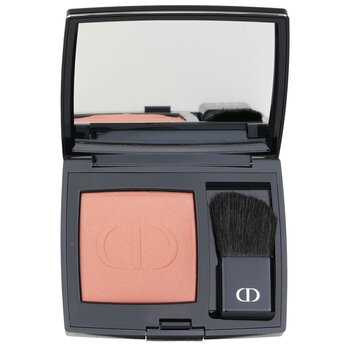



DIOR Rouge Blush in 459 Charnelle /Satiny at Nordstrom
Analysis updated September 2026 · How Scout scores
At a glance
Summary
This product contains several beneficial ingredients such as Caprylic/Capric/Succinic Triglyceride, Hibiscus Sabdariffa Flower Extract, and Tocopherol, which provide moisturizing and antioxidant benefits. However, the presence of 'Parfum' (fragrance) introduces potential skin irritation risks, especially for sensitive skin. The overall formulation is moderately processed with a mix of synthetic and natural components, which impacts its safety profile.
Key ingredients 25
MicaGood
Beneficial ingredient — whole-food or functional value in this product class.
Risks
Inhalation of mica particles can pose respiratory risks, especially in loose powder form.
Benefits
Mica adds a natural shimmer and glow to cosmetic products.
Caprylic/Capric/Succinic TriglycerideGood
This ingredient is an emollient that helps to moisturize and soften the skin. It is derived from coconut oil and is considered safe and beneficial for skin health. It is well-tolerated by most skin types.
Risks
There are minimal risks associated with this ingredient, primarily related to potential skin irritation in very sensitive individuals.
Benefits
It provides moisturizing benefits and helps to improve the texture of the skin.
Hibiscus Sabdariffa Flower ExtractGood
Hibiscus Sabdariffa Flower Extract is rich in antioxidants and is used for its skin conditioning properties. It is considered beneficial for skin health. It helps to improve skin elasticity and hydration.
Risks
There are minimal risks associated with this ingredient, primarily related to potential skin irritation in very sensitive individuals.
Benefits
It provides antioxidant benefits and helps to improve skin texture and hydration.
Iris Florentina Root ExtractGood
Iris Florentina Root Extract is used for its skin conditioning and antioxidant properties. It is considered beneficial for skin health. It helps to improve skin texture and hydration.
Risks
There are minimal risks associated with this ingredient, primarily related to potential skin irritation in very sensitive individuals.
Benefits
It provides antioxidant benefits and helps to improve skin texture and hydration.
TocopherolGood
Tocopherol, also known as Vitamin E, is an antioxidant that helps to protect the skin from free radical damage. It is considered beneficial for skin health. It helps to improve skin texture and hydration.
Risks
There are minimal risks associated with this ingredient, primarily related to potential skin irritation in very sensitive individuals.
Benefits
It provides antioxidant benefits and helps to improve skin texture and hydration.
Ci 77491, Ci 77492, Ci 77499 (Iron Oxides)Good
Beneficial ingredient — whole-food or functional value in this product class.
Risks
There are minimal risks associated with these ingredients, primarily related to potential skin irritation in sensitive individuals.
Benefits
They provide color and pigmentation to cosmetic products.
Synthetic FluorphlogopiteNeutral
Synthetic Fluorphlogopite is a synthetic version of mica used to add shimmer and shine. It is generally considered safe for use in cosmetics. However, it does not provide any direct skin benefits.
Risks
There are minimal risks associated with Synthetic Fluorphlogopite, primarily related to inhalation in powder form.
Benefits
It provides a shimmering effect, enhancing the visual appeal of cosmetic products.
Butylene Glycol Dicaprylate/DicaprateNeutral
This ingredient is an emollient that helps to soften and smooth the skin. It is generally considered safe and non-irritating. However, it does not provide significant active benefits.
Risks
There are minimal risks associated with this ingredient, primarily related to potential skin irritation in sensitive individuals.
Benefits
It helps to improve the texture and feel of the product on the skin.
Calcium Sodium BorosilicateNeutral
Calcium Sodium Borosilicate is used to add shimmer and shine to cosmetics. It is considered safe for use in cosmetics. However, it does not offer direct skin benefits.
Risks
There are minimal risks associated with this ingredient, primarily related to inhalation in powder form.
Benefits
It provides a shimmering effect, enhancing the visual appeal of cosmetic products.
SilicaNeutral
Silica is used in cosmetics to improve texture and absorb excess oil. It is generally considered safe for use in cosmetics. However, inhalation of fine silica particles can pose health risks.
Risks
Inhalation of fine silica particles can pose respiratory risks.
Benefits
It helps to control oil and improve the texture of cosmetic products.
Zinc StearateNeutral
Zinc Stearate is used as a lubricant and thickening agent in cosmetics. It is generally considered safe for use in cosmetics. However, it does not provide significant active benefits.
Risks
There are minimal risks associated with this ingredient, primarily related to potential skin irritation in sensitive individuals.
Benefits
It helps to improve the texture and application of cosmetic products.
Hydrogenated Castor Oil Dimer DilinoleateNeutral
This ingredient is used as an emollient and thickening agent in cosmetics. It is generally considered safe for use in cosmetics. However, it does not provide significant active benefits.
Risks
There are minimal risks associated with this ingredient, primarily related to potential skin irritation in sensitive individuals.
Benefits
It helps to improve the texture and feel of the product on the skin.
Polyglyceryl-2 TriisostearateNeutral
This ingredient is an emulsifier that helps to blend oil and water-based ingredients. It is generally considered safe for use in cosmetics. However, it does not provide significant active benefits.
Risks
There are minimal risks associated with this ingredient, primarily related to potential skin irritation in sensitive individuals.
Benefits
It helps to stabilize cosmetic formulations and improve texture.
CelluloseNeutral
Cellulose is used as a thickening agent and stabilizer in cosmetics. It is generally considered safe for use in cosmetics. However, it does not provide significant active benefits.
Risks
There are minimal risks associated with this ingredient, primarily related to potential skin irritation in sensitive individuals.
Benefits
It helps to improve the texture and stability of cosmetic products.
Pentylene GlycolNeutral
Pentylene Glycol is used as a humectant and skin conditioning agent. It is generally considered safe for use in cosmetics. However, it does not provide significant active benefits.
Risks
There are minimal risks associated with this ingredient, primarily related to potential skin irritation in sensitive individuals.
Benefits
It helps to retain moisture and improve the texture of the skin.
Caprylyl GlycolNeutral
Caprylyl Glycol is used as a skin conditioning agent and preservative. It is generally considered safe for use in cosmetics. However, it does not provide significant active benefits.
Risks
There are minimal risks associated with this ingredient, primarily related to potential skin irritation in sensitive individuals.
Benefits
It helps to condition the skin and extend the shelf life of cosmetic products.
Aqua (Water)Neutral
Water is used as a solvent in cosmetics to dissolve other ingredients. It is generally considered safe and essential in cosmetic formulations. However, it does not provide direct skin benefits.
Risks
There are no significant risks associated with water in cosmetic formulations.
Benefits
It acts as a solvent and helps to blend other ingredients in the formulation.
EthylhexylglycerinNeutral
Ethylhexylglycerin is used as a preservative and skin conditioning agent. It is generally considered safe for use in cosmetics. However, it does not provide significant active benefits.
Risks
There are minimal risks associated with this ingredient, primarily related to potential skin irritation in sensitive individuals.
Benefits
It helps to condition the skin and extend the shelf life of cosmetic products.
Sodium DehydroacetateNeutral
Sodium Dehydroacetate is used as a preservative in cosmetics to prevent microbial growth. It is generally considered safe for use in cosmetics. However, it does not provide direct skin benefits.
Risks
There are minimal risks associated with this ingredient, primarily related to potential skin irritation in sensitive individuals.
Benefits
It helps to preserve the product and prevent microbial contamination.
Hydrolyzed Viola Tricolor ExtractNeutral
Hydrolyzed Viola Tricolor Extract is used for its skin conditioning properties. It is generally considered safe for use in cosmetics. However, it does not provide significant active benefits.
Risks
There are minimal risks associated with this ingredient, primarily related to potential skin irritation in sensitive individuals.
Benefits
It helps to condition the skin and improve texture.
1,2-HexanediolNeutral
1,2-Hexanediol is used as a solvent and preservative in cosmetics. It is generally considered safe for use in cosmetics. However, it does not provide significant active benefits.
Risks
There are minimal risks associated with this ingredient, primarily related to potential skin irritation in sensitive individuals.
Benefits
It helps to preserve the product and improve texture.
Ci 77891 (Titanium Dioxide)Neutral
Titanium Dioxide is used as a pigment and UV filter in cosmetics. It is generally considered safe for use in cosmetics. However, inhalation of fine particles can pose health risks.
Risks
Inhalation of fine titanium dioxide particles can pose respiratory risks.
Benefits
It provides pigmentation and UV protection in cosmetic products.
Sodium BenzoateBad
Synthetic preservative that can form benzene in the presence of vitamin C.
Risks
There are minimal risks associated with this ingredient, primarily related to potential skin irritation in sensitive individuals.
Benefits
It helps to preserve the product and prevent microbial contamination.
Potassium SorbateBad
Synthetic preservative — flagged in daily-use products.
Risks
There are minimal risks associated with this ingredient, primarily related to potential skin irritation in sensitive individuals.
Benefits
It helps to preserve the product and prevent microbial contamination.
Parfum (Fragrance)Very Bad
Fragrance is used to add scent to cosmetics but can cause skin irritation and allergic reactions. It is considered a potential irritant, especially for sensitive skin. Fragrance formulations are proprietary, making it difficult to assess individual component safety.
Risks
Fragrance can cause skin irritation, allergic reactions, and sensitization, especially in sensitive individuals.
Benefits
It enhances the sensory experience of using the product.
Get the full breakdown in the Scout appTake Scout shopping
Scan any product to see lab results, healthy alternatives, and your personalized analysis.
Download on theApp Store GET IT ONGoogle Play