
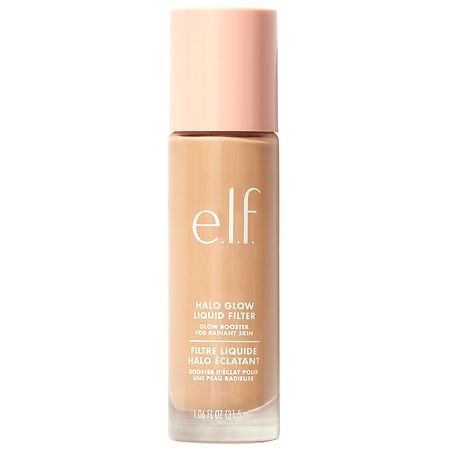


e.l.f. Halo Glow Liquid Filter Highlighter - 2 Fair/Light - 1.06 fl oz: Paraben-Free, Vegan, Illuminating Finish
Analysis updated August 2026 · How Scout scores
At a glance
Summary
This highlighter contains beneficial ingredients like squalane, glycerin, and hyaluronic acid, which provide hydration and skin conditioning benefits. However, the presence of phenoxyethanol, a preservative that can cause irritation, and the inclusion of PEG/PPG compounds contribute to a moderate processing level. The product is mostly safe but includes some synthetic components that prevent it from achieving a higher rating.
Key ingredients 36
SqualaneVery Good
Squalane is a highly effective emollient and natural antioxidant. It mimics the skin's natural oils, making it an excellent moisturizer.
Risks
There are no significant risks associated with squalane.
Benefits
Squalane helps in reducing fine lines and softening the skin, providing a smooth and hydrated appearance.
Hydrolyzed Sodium HyaluronateVery Good
Hydrolyzed Sodium Hyaluronate is a form of hyaluronic acid that provides intense hydration to the skin. It is known for its ability to retain moisture and improve skin elasticity.
Risks
There are no significant risks associated with this ingredient.
Benefits
It helps in deeply hydrating the skin and reducing the appearance of fine lines.
Calendula Officinalis Flower ExtractVery Good
Calendula Officinalis Flower Extract is a botanical extract known for its soothing and anti-inflammatory properties. It is used to calm and protect the skin.
Risks
There are no significant risks associated with this ingredient.
Benefits
It helps in soothing irritated skin and providing anti-inflammatory benefits.
GlycerinGood
Glycerin is a powerful humectant that attracts moisture to the skin. It is widely used for its hydrating properties and ability to improve skin barrier function.
Risks
There are no significant risks associated with glycerin.
Benefits
Glycerin helps in maintaining skin hydration and improving skin texture.
Caprylic/Capric TriglycerideGood
Caprylic/Capric Triglyceride is an emollient derived from coconut oil and glycerin. It is used for its moisturizing properties and ability to improve product texture.
Risks
There are no significant risks associated with this ingredient.
Benefits
It helps in moisturizing the skin and enhancing the spreadability of the product.
Helianthus Annuus Seed OilGood
Helianthus Annuus Seed Oil, or sunflower seed oil, is a natural oil rich in fatty acids and vitamin E. It is used for its moisturizing and antioxidant properties.
Risks
There are no significant risks associated with this ingredient.
Benefits
It helps in nourishing and protecting the skin, providing hydration and antioxidant benefits.
Sodium HyaluronateGood
Sodium Hyaluronate is a salt form of hyaluronic acid that provides excellent hydration to the skin. It is known for its ability to retain moisture and improve skin elasticity.
Risks
There are no significant risks associated with this ingredient.
Benefits
It helps in deeply hydrating the skin and reducing the appearance of fine lines.
TocopherolGood
Tocopherol, or vitamin E, is an antioxidant that helps protect the skin from free radical damage. It is widely used for its skin conditioning and protective properties.
Risks
There are no significant risks associated with tocopherol.
Benefits
It helps in nourishing and protecting the skin, providing antioxidant benefits.
WaterNeutral
Water is a common solvent used in cosmetics to dissolve other ingredients. It helps in the application and absorption of the product. It is generally considered safe and non-irritating.
Risks
There are no significant risks associated with water in cosmetics.
Benefits
Water helps in hydrating the skin and acts as a base for other ingredients.
Hydrogenated DideceneNeutral
Hydrogenated Didecene is an emollient that provides a smooth application and helps in moisturizing the skin. It is generally considered safe for use in cosmetics.
Risks
There are minimal risks associated with this ingredient, though it may cause mild irritation in sensitive individuals.
Benefits
It helps in improving the texture of the skin by providing moisture.
OctyldodecanolNeutral
Octyldodecanol is an emollient that provides a smooth application and helps in moisturizing the skin. It is generally considered safe for use in cosmetics.
Risks
There are minimal risks associated with this ingredient, though it may cause mild irritation in sensitive individuals.
Benefits
It helps in improving the texture of the skin by providing moisture.
Cetyl PEG/PPG-10/1 DimethiconeNeutral
Cetyl PEG/PPG-10/1 Dimethicone is a silicone-based compound used for its conditioning properties. It provides a smooth application and enhances the spreadability of the product.
Risks
There are minimal risks, though silicones can sometimes cause build-up on the skin.
Benefits
It improves the texture and feel of the product on the skin.
Polyglyceryl-4 IsostearateNeutral
Polyglyceryl-4 Isostearate is an emulsifier that helps in blending oil and water-based ingredients. It is generally considered safe for use in cosmetics.
Risks
There are minimal risks associated with this ingredient.
Benefits
It helps in stabilizing the formulation and improving product consistency.
Synthetic FluorphlogopiteNeutral
Synthetic Fluorphlogopite is a synthetic mica used to add shimmer and shine to cosmetics. It is considered safe for use in makeup products.
Risks
There are minimal risks, though inhalation of fine particles should be avoided.
Benefits
It provides a luminous finish and enhances the visual appeal of the product.
Isoamyl LaurateNeutral
Isoamyl Laurate is an emollient that provides a smooth application and helps in moisturizing the skin. It is generally considered safe for use in cosmetics.
Risks
There are minimal risks associated with this ingredient.
Benefits
It helps in improving the texture of the skin by providing moisture.
Hydrogenated Styrene/Isoprene CopolymerNeutral
Hydrogenated Styrene/Isoprene Copolymer is a film-forming agent that provides flexibility and durability to cosmetic products. It is generally considered safe for use.
Risks
There are minimal risks associated with this ingredient.
Benefits
It enhances the longevity and wear of the product on the skin.
Ethylhexyl HydroxystearateNeutral
Ethylhexyl Hydroxystearate is an emollient that provides a smooth application and helps in moisturizing the skin. It is generally considered safe for use in cosmetics.
Risks
There are minimal risks associated with this ingredient.
Benefits
It helps in improving the texture of the skin by providing moisture.
Sodium ChlorideNeutral
Sodium Chloride is used as a thickening agent in cosmetics. It is generally considered safe for use in small amounts.
Risks
Excessive use may cause dryness or irritation.
Benefits
It helps in adjusting the viscosity of the product.
Disteardimonium HectoriteNeutral
Disteardimonium Hectorite is a thickening agent used to stabilize emulsions in cosmetics. It is generally considered safe for use.
Risks
There are minimal risks associated with this ingredient.
Benefits
It helps in maintaining the consistency and stability of the product.
Propylene CarbonateNeutral
Propylene Carbonate is a solvent used to dissolve other ingredients in cosmetics. It is generally considered safe for use.
Risks
There are minimal risks associated with this ingredient.
Benefits
It helps in improving the texture and application of the product.
EthylhexylglycerinNeutral
Ethylhexylglycerin is a preservative and skin conditioning agent. It is used to enhance the efficacy of other preservatives.
Risks
There are minimal risks, though it may cause mild irritation in sensitive individuals.
Benefits
It helps in preserving the product and providing skin conditioning benefits.
Caprylyl GlycolNeutral
Caprylyl Glycol is a skin conditioning agent and preservative. It is used to enhance the efficacy of other preservatives.
Risks
There are minimal risks, though it may cause mild irritation in sensitive individuals.
Benefits
It helps in preserving the product and providing skin conditioning benefits.
Aluminum HydroxideNeutral
Aluminum Hydroxide is used as a thickening agent and opacifying agent in cosmetics. It is generally considered safe for use.
Risks
There are minimal risks associated with this ingredient.
Benefits
It helps in improving the texture and appearance of the product.
TriethoxycaprylylsilaneNeutral
Triethoxycaprylylsilane is a silicone-based compound used as a binding agent in cosmetics. It is generally considered safe for use.
Risks
There are minimal risks associated with this ingredient.
Benefits
It helps in improving the adhesion and longevity of the product on the skin.
PolymethylsilsesquioxaneNeutral
Polymethylsilsesquioxane is a silicone-based powder used to provide a smooth, silky feel to cosmetics. It is generally considered safe for use.
Risks
There are minimal risks associated with this ingredient.
Benefits
It helps in improving the texture and feel of the product on the skin.
Tin OxideNeutral
Tin Oxide is used as an opacifying agent and colorant in cosmetics. It is generally considered safe for use.
Risks
There are minimal risks associated with this ingredient.
Benefits
It helps in enhancing the color and appearance of the product.
Pentaerythrityl Tetra-Di-T-Butyl HydroxyhydrocinnamateNeutral
Pentaerythrityl Tetra-Di-T-Butyl Hydroxyhydrocinnamate is an antioxidant used to protect the product from oxidation. It is generally considered safe for use.
Risks
There are minimal risks associated with this ingredient.
Benefits
It helps in extending the shelf life of the product by preventing oxidation.
Titanium Dioxide (CI 77891)Neutral
Titanium Dioxide is a mineral used as a pigment and sunscreen agent in cosmetics. It is effective in providing coverage and UV protection.
Risks
Inhalation of fine particles should be avoided.
Benefits
It provides coverage and helps in protecting the skin from UV radiation.
Yellow Iron Oxide (CI 77492)Neutral
Yellow Iron Oxide is a mineral pigment used to provide color in cosmetics. It is generally considered safe for use.
Risks
There are minimal risks associated with this ingredient.
Benefits
It helps in providing color and enhancing the appearance of the product.
Red Iron Oxide (CI 77491)Neutral
Red Iron Oxide is a mineral pigment used to provide color in cosmetics. It is generally considered safe for use.
Risks
There are minimal risks associated with this ingredient.
Benefits
It helps in providing color and enhancing the appearance of the product.
Black Iron Oxide (CI 77499)Neutral
Black Iron Oxide is a mineral pigment used to provide color in cosmetics. It is generally considered safe for use.
Risks
There are minimal risks associated with this ingredient.
Benefits
It helps in providing color and enhancing the appearance of the product.
Bismuth Oxychloride (CI 77163)Neutral
Bismuth Oxychloride is a mineral used to provide a pearlescent finish in cosmetics. It is generally considered safe for use.
Risks
There are minimal risks, though it may cause mild irritation in sensitive individuals.
Benefits
It helps in providing a luminous finish and enhancing the visual appeal of the product.
Propylene GlycolBad
Processed additive flagged under Scout's ingredient doctrine.
Risks
In rare cases, it may cause skin irritation or allergic reactions.
Benefits
It enhances the penetration of other ingredients and keeps the skin hydrated.
DimethiconeBad
Occlusive silicone film-former — flagged under clean-beauty doctrine.
Risks
There are minimal risks, though it may cause build-up on the skin with prolonged use.
Benefits
It provides a silky, smooth feel and helps in reducing the appearance of fine lines.
PhenoxyethanolBad
Phenoxyethanol is a preservative used to prevent microbial growth in cosmetics. It is effective but can cause irritation in some individuals.
Risks
It may cause skin irritation or allergic reactions, especially in sensitive individuals.
Benefits
It helps in extending the shelf life of the product by preventing contamination.
Disodium EDTABad
Processed additive flagged under Scout's ingredient doctrine.
Risks
There are minimal risks associated with this ingredient.
Benefits
It helps in maintaining the stability and effectiveness of the product.
Processing
Processed Foods
Get the full breakdown in the Scout appTake Scout shopping
Scan any product to see lab results, healthy alternatives, and your personalized analysis.
Download on theApp Store GET IT ONGoogle PlayAmazon pricing & content
Amazon price as of . Product prices and availability are accurate as of the date/time indicated and are subject to change. Any price and availability information displayed on Amazon.com at the time of purchase will apply to the purchase of this product.
CERTAIN CONTENT THAT APPEARS ON THIS SITE COMES FROM AMAZON. THIS CONTENT IS PROVIDED “AS IS” AND IS SUBJECT TO CHANGE OR REMOVAL AT ANY TIME.