
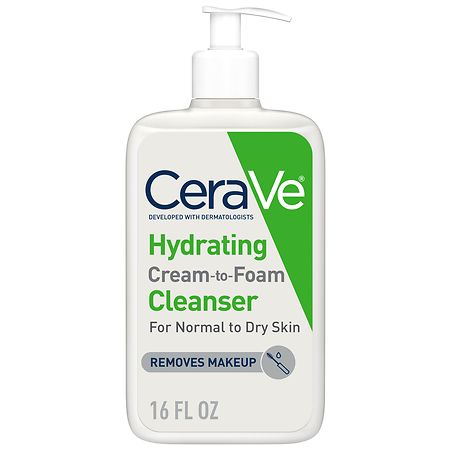

CeraVe Hydrating Cream-to-Foam Face Wash with Hyaluronic Acid for Normal to Dry Skin - 16 fl oz: Paraben-Free, Noncomedogenic, Soap-Free
Summary
This face wash contains beneficial ingredients like ceramides and hyaluronic acid, which are known for their skin-repairing and hydrating properties. However, the presence of phenoxyethanol, a synthetic preservative, slightly lowers its safety profile. The product is free from parabens and synthetic fragrances, which is positive, but the inclusion of some synthetic surfactants and preservatives affects its overall rating.
At a glance
Key ingredients 19
WaterNeutral
Water is a common solvent used in cosmetic formulations. It acts as a base for other ingredients to dissolve in. It does not have any direct benefits or risks associated with its use in skincare.
Risks
There are no significant risks associated with water in skincare products.
Benefits
Water helps in dissolving other ingredients and provides a medium for application.
GlycerinVery Good
Glycerin is a humectant that attracts moisture to the skin, helping to keep it hydrated. It is well-tolerated by most skin types and is a common ingredient in moisturizers.
Risks
There are minimal risks associated with glycerin, though it may cause irritation in very sensitive skin.
Benefits
Glycerin helps to maintain skin hydration and improve skin barrier function.
Cocamidopropyl BetaineNeutral
Cocamidopropyl Betaine is a mild surfactant derived from coconut oil. It is used to create foam and cleanse the skin without stripping natural oils.
Risks
It can cause irritation or allergic reactions in some individuals, especially those with sensitive skin.
Benefits
It provides gentle cleansing and is less irritating than harsher surfactants.
Sodium Cocoyl IsethionateGood
Sodium Cocoyl Isethionate is a mild surfactant that helps to cleanse the skin without causing dryness. It is derived from coconut oil and is considered gentle.
Risks
There are minimal risks, though it may cause mild irritation in sensitive individuals.
Benefits
It effectively cleanses the skin while maintaining moisture balance.
Sodium Lauroyl Methyl IsethionateGood
Sodium Lauroyl Methyl Isethionate is a gentle surfactant that provides effective cleansing with a creamy lather. It is known for being mild on the skin.
Risks
It may cause mild irritation in sensitive skin types, but is generally well-tolerated.
Benefits
It cleanses the skin effectively while being gentle and non-drying.
Cetearyl AlcoholNeutral
Cetearyl Alcohol is a fatty alcohol used as an emollient and thickener in skincare products. It helps to soften and smooth the skin.
Risks
There are minimal risks, though it may cause irritation in very sensitive skin.
Benefits
It provides moisturizing properties and improves the texture of formulations.
Ceramide NPVery Good
Ceramide NP is a skin-identical lipid that helps to restore and maintain the skin's natural barrier. It is beneficial for dry and sensitive skin types.
Risks
There are no significant risks associated with ceramides.
Benefits
Ceramide NP helps to strengthen the skin barrier and retain moisture.
Ceramide APVery Good
Ceramide AP is another type of ceramide that supports the skin's barrier function. It is essential for maintaining skin hydration and health.
Risks
There are no significant risks associated with ceramides.
Benefits
It aids in skin barrier repair and moisture retention.
Ceramide EOPVery Good
Ceramide EOP is crucial for maintaining the integrity of the skin barrier. It helps to prevent moisture loss and protect against environmental damage.
Risks
There are no significant risks associated with ceramides.
Benefits
It supports skin barrier function and enhances hydration.
Hyaluronic AcidVery Good
Hyaluronic Acid is a powerful humectant that can hold up to 1000 times its weight in water. It is excellent for hydrating and plumping the skin.
Risks
There are minimal risks, though it may cause irritation in very sensitive skin.
Benefits
It provides intense hydration and helps to reduce the appearance of fine lines.
CholesterolGood
Cholesterol is a lipid that is naturally found in the skin. It helps to maintain the skin barrier and improve moisture retention.
Risks
There are minimal risks associated with cholesterol in skincare.
Benefits
It supports skin barrier function and enhances hydration.
PhytosphingosineGood
Phytosphingosine is a lipid that helps to restore the skin's natural barrier and has anti-inflammatory properties. It is beneficial for sensitive and acne-prone skin.
Risks
There are minimal risks, though it may cause irritation in very sensitive skin.
Benefits
It helps to calm inflammation and support skin barrier health.
Sodium HyaluronateVery Good
Sodium Hyaluronate is a salt form of Hyaluronic Acid that penetrates deeper into the skin. It provides excellent hydration and plumping effects.
Risks
There are minimal risks, though it may cause irritation in very sensitive skin.
Benefits
It offers deep hydration and helps to reduce the appearance of fine lines.
Sodium ChlorideNeutral
Sodium Chloride, or table salt, is used as a thickening agent in skincare formulations. It helps to improve the texture and stability of products.
Risks
In high concentrations, it can be drying or irritating to the skin.
Benefits
It helps to stabilize formulations and improve product texture.
Potassium ChlorideNeutral
Potassium Chloride is used as a thickening agent and to adjust the ionic balance in formulations. It is generally considered safe in cosmetics.
Risks
There are minimal risks associated with its use in cosmetics.
Benefits
It helps to stabilize formulations and improve product texture.
Citric AcidNeutral
Citric Acid is used to adjust the pH of skincare products. It can also provide mild exfoliation and antioxidant benefits.
Risks
In high concentrations, it can cause irritation or sensitivity, especially in sensitive skin.
Benefits
It helps to maintain the pH balance of products and provides mild exfoliation.
TocopherolGood
Tocopherol, or Vitamin E, is an antioxidant that helps to protect the skin from free radical damage. It also has moisturizing properties.
Risks
There are minimal risks, though it may cause irritation in very sensitive skin.
Benefits
It provides antioxidant protection and helps to moisturize the skin.
PhenoxyethanolBad
Phenoxyethanol is a preservative used to prevent microbial growth in cosmetics. It is considered safe in low concentrations but can cause irritation.
Risks
It can cause skin irritation and allergic reactions in some individuals.
Benefits
It helps to preserve the product and extend its shelf life.
EthylhexylglycerinNeutral
Ethylhexylglycerin is used as a preservative and skin conditioning agent. It enhances the efficacy of other preservatives like phenoxyethanol.
Risks
There are minimal risks, though it may cause irritation in very sensitive skin.
Benefits
It helps to preserve the product and has mild skin conditioning properties.
Processing
Processed Foods
Get the full breakdown in the Scout app
Scan any product to see lab results, healthy alternatives, and your personalized analysis.
Download on theApp Store