
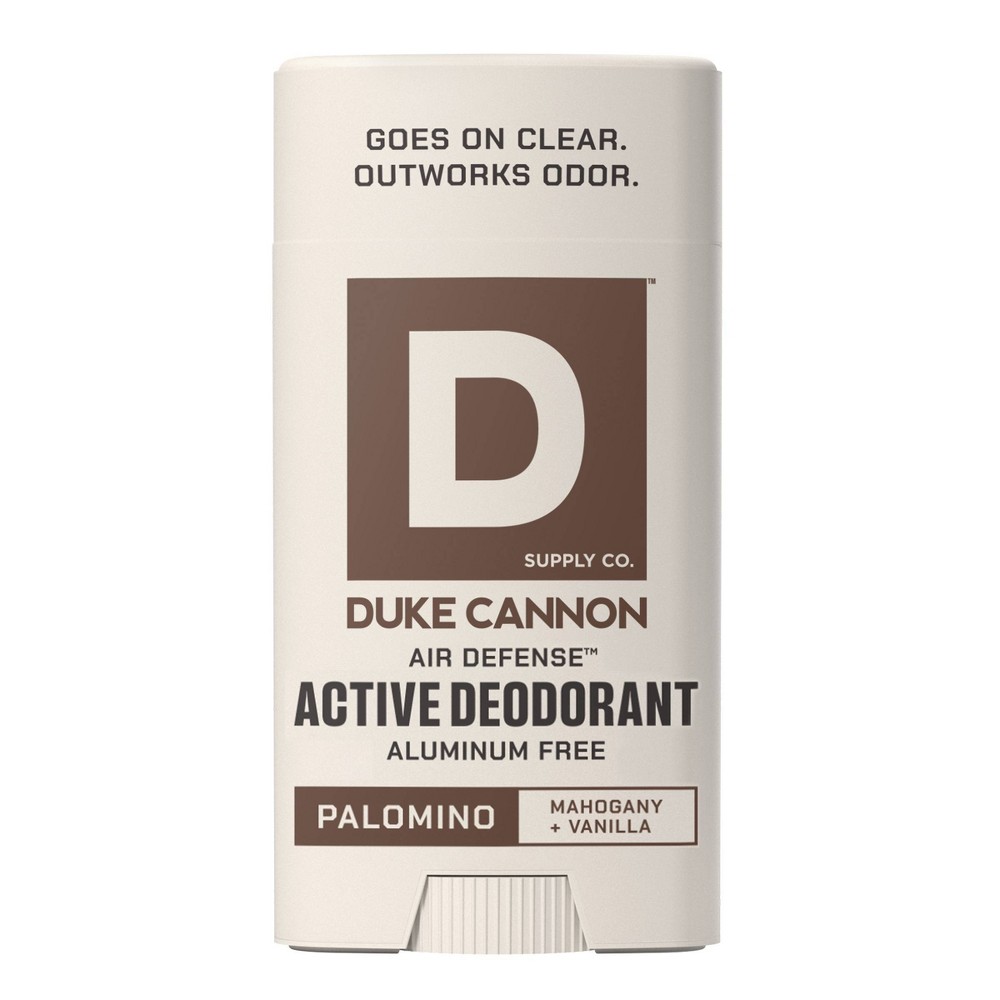
Duke Cannon Supply Co. Air Defense Active Aluminum-Free Deodorant - Palomino - 3oz: Under Arm, Solid Form, Vanilla Scent
Analysis updated July 2026 · How Scout scores
At a glance
Summary
This deodorant is aluminum-free and contains several beneficial natural ingredients like magnesium hydroxide, tapioca starch, and witch hazel, which contribute to its odor-neutralizing and soothing properties. However, the presence of propylene glycol and synthetic fragrance, which can cause irritation and contain undisclosed chemicals, slightly detracts from its overall safety profile. The product is moderately processed, which also influences its rating.
Key ingredients 18
Magnesium HydroxideVery Good
Magnesium hydroxide is a natural mineral used to neutralize odor. It raises the pH of the skin, making it less hospitable to odor-causing bacteria. It is gentle and non-irritating.
Risks
Generally considered safe with minimal risk of irritation.
Benefits
Effectively neutralizes odor without blocking pores.
GlycerinGood
Beneficial ingredient — whole-food or functional value in this product class.
Benefits
Helps to hydrate and moisturize the skin.
Saccharomyces Ferment FiltrateGood
Saccharomyces ferment filtrate is a probiotic ingredient that can help balance the skin's microbiome. It is derived from yeast fermentation and is considered beneficial for skin health. It may improve skin texture and hydration.
Risks
Generally considered safe with minimal risk of irritation.
Benefits
Supports a healthy skin microbiome and improves skin texture.
Aloe Barbadensis Leaf JuiceGood
Aloe barbadensis leaf juice is a natural ingredient known for its soothing and moisturizing properties. It is derived from the aloe vera plant and is widely used in skincare. It helps to calm and hydrate the skin.
Risks
Generally considered safe with minimal risk of irritation.
Benefits
Soothes and moisturizes the skin, providing a calming effect.
Tocopheryl AcetateGood
Tocopheryl acetate is a form of vitamin E used for its antioxidant properties. It helps to protect the skin from environmental damage and improve skin health. It is generally considered safe for use in cosmetics.
Risks
May cause mild irritation in sensitive individuals.
Benefits
Provides antioxidant protection and supports skin health.
Hamamelis Virginiana (Witch Hazel) Leaf ExtractGood
Witch hazel leaf extract is a natural astringent used for its soothing and anti-inflammatory properties. It helps to tighten pores and reduce irritation. It is derived from the witch hazel plant and is considered safe.
Risks
Generally considered safe with minimal risk of irritation.
Benefits
Soothes the skin and acts as a natural astringent.
WaterNeutral
Water is a common solvent used in many cosmetic products. It helps to dissolve other ingredients and provides a base for the formulation. It is generally safe and non-irritating.
Benefits
Acts as a solvent and helps in the application of the product.
PropanediolNeutral
Propanediol is a glycol used as a skin-conditioning agent and solvent. It is derived from corn sugar and is considered safe for use in cosmetics. It is less irritating than propylene glycol.
Risks
May cause mild irritation in some individuals.
Benefits
Acts as a humectant and solvent, improving skin feel and product texture.
Sodium StearateNeutral
Sodium stearate is a fatty acid salt used as a thickener and stabilizer in cosmetics. It helps to form the solid structure of stick deodorants. It is generally considered safe for use.
Benefits
Provides structure and stability to solid deodorant formulations.
Tapioca StarchNeutral
Standard formulation ingredient — neither beneficial nor harmful at typical use.
Risks
Generally considered safe with minimal risk of irritation.
Benefits
Absorbs moisture and helps to keep the skin dry.
SilicaNeutral
Silica is a mineral used to absorb moisture and improve the texture of cosmetic products. It is generally considered safe for use in cosmetics. It helps to reduce shine and improve product feel.
Risks
Inhalation of fine silica particles can be harmful, but this is not a concern in topical applications.
Benefits
Absorbs moisture and reduces shine on the skin.
EthylhexylglycerinNeutral
Ethylhexylglycerin is a skin-conditioning agent and preservative enhancer. It is used to improve the efficacy of preservatives and is considered safe for use in cosmetics. It has mild antimicrobial properties.
Risks
May cause mild irritation in sensitive individuals.
Benefits
Enhances the effectiveness of preservatives and conditions the skin.
PEG-12 DimethiconeNeutral
PEG-12 dimethicone is a silicone-based polymer used to improve the texture and spreadability of products. It is generally considered safe for use in cosmetics. It provides a smooth, silky feel to the skin.
Risks
May cause mild irritation in some individuals.
Benefits
Improves product texture and provides a smooth application.
PolycitronellolNeutral
Polycitronellol is a fragrance ingredient used to impart a pleasant scent. It is derived from citronella oil and is considered safe for use in cosmetics. It is generally non-irritating.
Risks
May cause mild irritation or allergic reactions in sensitive individuals.
Benefits
Provides a pleasant fragrance to the product.
Stearic AcidNeutral
Stearic acid is a fatty acid used as an emulsifier and thickener in cosmetics. It helps to stabilize formulations and improve texture. It is generally considered safe for use.
Benefits
Stabilizes formulations and improves product texture.
Phenethyl AlcoholNeutral
Phenethyl alcohol is a fragrance ingredient and preservative used in cosmetics. It is derived from natural sources and is considered safe for use. It has a pleasant floral scent.
Risks
May cause mild irritation or allergic reactions in sensitive individuals.
Benefits
Provides a pleasant scent and acts as a preservative.
Propylene GlycolBad
Propylene glycol is a petroleum-derived compound used to retain moisture. It can cause skin irritation in sensitive individuals. It is generally recognized as safe in small amounts but may cause allergic reactions.
Risks
Potential skin irritant and allergen, especially for sensitive skin.
Benefits
Helps to retain moisture and improve texture of the product.
FragranceVery Bad
Fragrance in cosmetics can be a mixture of various chemicals, some of which may cause irritation or allergic reactions. It is often not fully disclosed, leading to concerns about potential harmful effects. Synthetic fragrances can contain phthalates, which are linked to health issues.
Risks
Potential for skin irritation and allergic reactions; may contain undisclosed harmful chemicals.
Benefits
Provides a pleasant scent to the product.
Get the full breakdown in the Scout appTake Scout shopping
Scan any product to see lab results, healthy alternatives, and your personalized analysis.
Download on theApp Store GET IT ONGoogle PlayAmazon pricing & content
Amazon price as of . Product prices and availability are accurate as of the date/time indicated and are subject to change. Any price and availability information displayed on Amazon.com at the time of purchase will apply to the purchase of this product.
CERTAIN CONTENT THAT APPEARS ON THIS SITE COMES FROM AMAZON. THIS CONTENT IS PROVIDED “AS IS” AND IS SUBJECT TO CHANGE OR REMOVAL AT ANY TIME.