
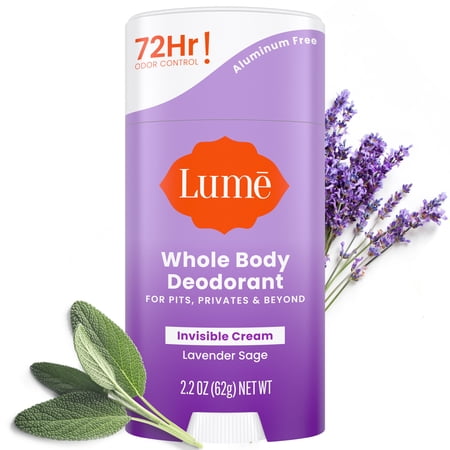
Lume Whole Body Women’s Deodorant - Invisible Cream Stick - Aluminum Free - Lavender Sage - 2.2oz
Analysis updated July 2026 · How Scout scores
At a glance
Summary
This deodorant is aluminum-free and contains beneficial natural ingredients like tapioca starch and cocoa seed butter, which are known for their odor-controlling and moisturizing properties. However, the presence of synthetic fragrance and dimethicone, along with a moderate level of processing, slightly detracts from its overall ingredient safety profile. Despite these minor concerns, it remains a mostly clean option compared to conventional antiperspirants.
Key ingredients 25
Mandelic AcidGood
Mandelic acid is an alpha hydroxy acid (AHA) known for its exfoliating properties. It can help in reducing odor by gently exfoliating the skin and preventing bacterial growth. It is generally well-tolerated by most skin types.
Risks
Overuse can lead to skin irritation or sensitivity, especially in sensitive skin types.
Benefits
It helps in exfoliating the skin and reducing odor-causing bacteria.
Maranta Arundinacea Root PowderGood
Arrowroot powder is a natural starch that helps in absorbing moisture. It is often used in natural deodorants to keep the underarms dry. It is gentle on the skin and suitable for sensitive skin types.
Risks
There are minimal risks associated with arrowroot powder, though it may not be as effective as synthetic moisture absorbers.
Benefits
It absorbs moisture and helps keep the skin dry.
Aloe Barbadensis Leaf JuiceGood
Aloe vera is known for its soothing and moisturizing properties. It helps in calming irritated skin and provides hydration. It is a beneficial ingredient for sensitive skin types.
Risks
There are minimal risks associated with aloe vera, though some individuals may experience allergic reactions.
Benefits
It soothes and moisturizes the skin.
Theobroma Cacao (Cocoa) Seed ButterGood
Cocoa butter is a natural fat extracted from cocoa beans. It is known for its moisturizing properties and helps in nourishing the skin. It is a beneficial ingredient for dry and sensitive skin.
Risks
There are minimal risks associated with cocoa butter, though it may cause breakouts in acne-prone skin.
Benefits
It moisturizes and nourishes the skin.
TocopherolGood
Tocopherol, also known as vitamin E, is an antioxidant that helps in protecting the skin from free radical damage. It also has moisturizing properties and supports skin health. It is a beneficial ingredient in skincare products.
Risks
There are minimal risks associated with tocopherol, though it may cause allergic reactions in some individuals.
Benefits
It protects the skin from free radical damage and moisturizes.
AllantoinGood
Allantoin is known for its soothing and skin-conditioning properties. It helps in calming irritated skin and promotes healing. It is a beneficial ingredient for sensitive and irritated skin.
Risks
There are minimal risks associated with allantoin, making it safe for most skin types.
Benefits
It soothes and conditions the skin.
PanthenolGood
Panthenol, also known as provitamin B5, is a humectant that helps in retaining moisture in the skin. It has soothing and anti-inflammatory properties, making it beneficial for sensitive skin. It supports skin hydration and health.
Risks
There are minimal risks associated with panthenol, though it may cause irritation in rare cases.
Benefits
It retains moisture and soothes the skin.
WaterNeutral
Water is a common solvent used in many cosmetic products. It helps to dissolve other ingredients and provides a base for the formulation. It does not have any direct benefits or risks in deodorant formulations.
Risks
There are no significant risks associated with water in cosmetic formulations.
Benefits
Water helps in dissolving other ingredients and provides a smooth application.
Tapioca StarchNeutral
Standard formulation ingredient — neither beneficial nor harmful at typical use.
Risks
There are minimal risks associated with tapioca starch, making it a safe choice for most users.
Benefits
It effectively absorbs moisture and reduces wetness.
Isoamyl LaurateNeutral
Isoamyl laurate is an ester used as an emollient and skin conditioning agent. It provides a silky feel to the skin and helps in spreading the product evenly. It is generally considered safe for use in cosmetics.
Risks
There are no significant risks associated with isoamyl laurate in cosmetic formulations.
Benefits
It provides a silky feel and helps in even application.
Hydroxypropyl Starch PhosphateNeutral
Hydroxypropyl starch phosphate is a modified starch used as a thickening agent. It helps in stabilizing the formulation and improving texture. It is considered safe for use in cosmetics.
Risks
There are no significant risks associated with hydroxypropyl starch phosphate.
Benefits
It stabilizes the formulation and improves texture.
Cetearyl AlcoholNeutral
Cetearyl alcohol is a fatty alcohol used as an emollient and thickener. It helps in improving the texture and consistency of the product. It is generally considered safe and non-irritating.
Risks
There are no significant risks associated with cetearyl alcohol.
Benefits
It improves texture and consistency.
CaffeineNeutral
Caffeine is known for its antioxidant properties and is sometimes used in cosmetics for its potential to reduce puffiness. In deodorants, its role is less clear but may contribute to skin conditioning.
Risks
There are minimal risks associated with caffeine in topical applications.
Benefits
It has antioxidant properties and may condition the skin.
Caprylic/Capric TriglycerideNeutral
Caprylic/capric triglyceride is derived from coconut oil and glycerin. It is used as an emollient and helps in spreading the product smoothly. It is considered safe and non-irritating.
Risks
There are no significant risks associated with caprylic/capric triglyceride.
Benefits
It acts as an emollient and helps in smooth application.
Behenyl AlcoholNeutral
Behenyl alcohol is a fatty alcohol used as an emollient and thickener. It helps in improving the texture and consistency of the product. It is generally considered safe and non-irritating.
Risks
There are no significant risks associated with behenyl alcohol.
Benefits
It improves texture and consistency.
Hydrogenated Castor OilNeutral
Hydrogenated castor oil is used as an emollient and thickening agent. It helps in providing a smooth texture and consistency to the product. It is considered safe for use in cosmetics.
Risks
There are no significant risks associated with hydrogenated castor oil.
Benefits
It provides a smooth texture and consistency.
Floral PyranolNeutral
Floral pyranol is a fragrance ingredient used to impart a floral scent. It is used in small quantities and is generally considered safe. However, it does not provide any direct benefits to the skin.
Risks
Potential for skin irritation or allergic reactions in sensitive individuals.
Benefits
Provides a floral scent to the product.
Stearyl AlcoholNeutral
Stearyl alcohol is a fatty alcohol used as an emollient and thickener. It helps in improving the texture and consistency of the product. It is generally considered safe and non-irritating.
Risks
There are no significant risks associated with stearyl alcohol.
Benefits
It improves texture and consistency.
Cetearyl GlucosideNeutral
Cetearyl glucoside is an emulsifier used to blend oil and water-based ingredients. It helps in stabilizing the formulation and improving texture. It is considered safe for use in cosmetics.
Risks
There are no significant risks associated with cetearyl glucoside.
Benefits
It stabilizes the formulation and improves texture.
Pentylene GlycolNeutral
Pentylene glycol is a synthetic humectant and solvent used to improve skin hydration. It also has antimicrobial properties, which can help in preserving the product. It is generally considered safe for use in cosmetics.
Risks
There are minimal risks associated with pentylene glycol.
Benefits
It improves skin hydration and has antimicrobial properties.
Potassium HydroxideNeutral
Potassium hydroxide is used to adjust the pH of cosmetic formulations. It helps in maintaining the stability and effectiveness of the product. It is used in small quantities and is generally considered safe.
Risks
There are minimal risks associated with potassium hydroxide when used in small quantities.
Benefits
It adjusts pH and maintains product stability.
Tetrasodium Glutamate DiacetateNeutral
Tetrasodium glutamate diacetate is a chelating agent used to enhance the effectiveness of preservatives. It helps in stabilizing the formulation and improving shelf life. It is considered safe for use in cosmetics.
Risks
There are no significant risks associated with tetrasodium glutamate diacetate.
Benefits
It enhances preservative effectiveness and improves shelf life.
DimethiconeBad
Occlusive silicone film-former — flagged under clean-beauty doctrine.
Risks
There are minimal risks associated with dimethicone, though it may cause breakouts in acne-prone skin.
Benefits
It provides a smooth application and protects the skin.
Sodium BenzoateBad
Synthetic preservative that can form benzene in the presence of vitamin C.
Risks
There are minimal risks associated with sodium benzoate, though it may cause irritation in sensitive individuals.
Benefits
It prevents microbial growth and maintains product safety.
FragranceVery Bad
Fragrance in cosmetics can be a mixture of various chemicals, some of which may cause skin irritation or allergic reactions. It is often criticized for its lack of transparency regarding the specific chemicals used. Synthetic fragrances can also contain phthalates, which are linked to reproductive and organ damage.
Risks
Potential skin irritation, allergic reactions, and exposure to phthalates.
Benefits
Provides a pleasant scent to the product.
Get the full breakdown in the Scout appTake Scout shopping
Scan any product to see lab results, healthy alternatives, and your personalized analysis.
Download on theApp Store GET IT ONGoogle PlayAmazon pricing & content
Amazon price as of . Product prices and availability are accurate as of the date/time indicated and are subject to change. Any price and availability information displayed on Amazon.com at the time of purchase will apply to the purchase of this product.
CERTAIN CONTENT THAT APPEARS ON THIS SITE COMES FROM AMAZON. THIS CONTENT IS PROVIDED “AS IS” AND IS SUBJECT TO CHANGE OR REMOVAL AT ANY TIME.