
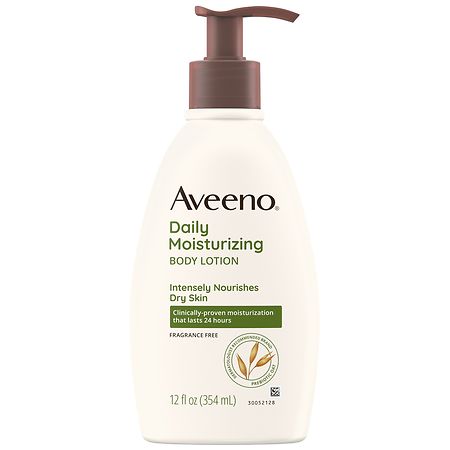
Aveeno Daily Moisturizing Body Lotion with Oat for Dry Skin 12 fl. oz
Analysis updated August 2026 · How Scout scores
At a glance
Summary
This body lotion contains beneficial ingredients like glycerin and oat kernel flour, which are known for their moisturizing and soothing properties. However, the presence of petrolatum, a petroleum-derived ingredient, is a concern due to potential contamination risks. The product also includes synthetic components like dimethicone, which contribute to a moderate level of processing.
Key ingredients 10
Avena Sativa (Oat) Kernel FlourVery Good
Oat Kernel Flour is known for its soothing and anti-inflammatory properties, making it beneficial for dry and irritated skin. It is a natural ingredient that is well-tolerated by most skin types.
Risks
There are minimal risks, though individuals with oat allergies should avoid it.
Benefits
It helps to soothe and calm irritated skin, providing relief from dryness and itchiness.
GlycerinGood
Glycerin is a humectant that attracts moisture to the skin, improving hydration. It is well-tolerated and suitable for sensitive skin types.
Risks
There are minimal risks associated with glycerin, though it may cause irritation in very rare cases.
Benefits
Glycerin helps maintain skin moisture levels, making it soft and supple.
WaterNeutral
Water is a common solvent used in cosmetics to dissolve other ingredients. It helps in the application and absorption of the product. It does not provide direct benefits or risks.
Risks
There are no significant risks associated with water in cosmetics.
Benefits
Water helps in hydrating the skin by acting as a vehicle for other moisturizing ingredients.
Distearyldimonium ChlorideNeutral
Distearyldimonium Chloride is a conditioning agent that helps improve the texture and feel of the skin. It is commonly used in lotions and creams.
Risks
It may cause mild irritation in sensitive individuals.
Benefits
It enhances the smoothness and softness of the skin.
Isopropyl PalmitateNeutral
Isopropyl Palmitate is an emollient that helps to soften and smooth the skin. It is derived from palm oil and is commonly used in cosmetics.
Risks
It may cause acne or irritation in some individuals with sensitive skin.
Benefits
It provides a smooth application and enhances the skin's texture.
Cetyl AlcoholNeutral
Standard formulation ingredient — neither beneficial nor harmful at typical use.
Risks
It is generally safe, but may cause irritation in very sensitive skin.
Benefits
It enhances the moisturizing properties of the lotion and improves skin feel.
Sodium ChlorideNeutral
Sodium Chloride, or table salt, is used as a thickening agent in cosmetics. It helps to improve the texture and consistency of the product.
Risks
Excessive use may lead to dryness or irritation.
Benefits
It helps to stabilize the formulation and improve product texture.
DimethiconeBad
Occlusive silicone film-former — flagged under clean-beauty doctrine.
Risks
It may cause build-up on the skin, potentially leading to clogged pores.
Benefits
It forms a protective barrier on the skin, preventing moisture loss.
Benzyl AlcoholBad
Processed additive flagged under Scout's ingredient doctrine.
Risks
It may cause irritation or allergic reactions in sensitive individuals.
Benefits
It helps to maintain the product's stability and extend its shelf life.
PetrolatumVery Bad
Petrolatum is a petroleum-derived occlusive agent that forms a barrier on the skin. It is effective in preventing moisture loss but is heavily criticized for being a petrochemical.
Risks
There are concerns about contamination with polycyclic aromatic hydrocarbons (PAHs) and its non-biodegradable nature.
Benefits
Petrolatum is effective in preventing moisture loss and protecting the skin barrier.
Get the full breakdown in the Scout appTake Scout shopping
Scan any product to see lab results, healthy alternatives, and your personalized analysis.
Download on theApp Store GET IT ONGoogle PlayAmazon pricing & content
Amazon price as of . Product prices and availability are accurate as of the date/time indicated and are subject to change. Any price and availability information displayed on Amazon.com at the time of purchase will apply to the purchase of this product.
CERTAIN CONTENT THAT APPEARS ON THIS SITE COMES FROM AMAZON. THIS CONTENT IS PROVIDED “AS IS” AND IS SUBJECT TO CHANGE OR REMOVAL AT ANY TIME.