
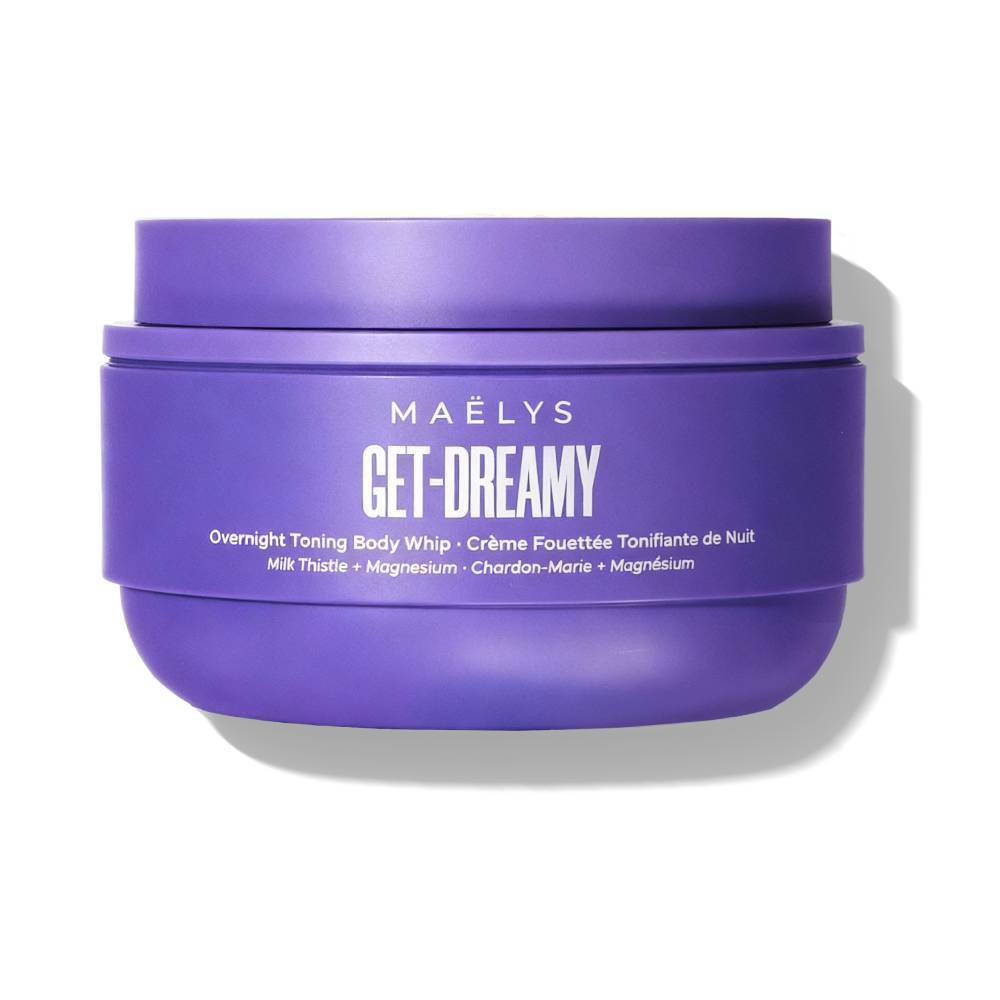
MAELYS Get-Dreamy Overnight Toning Whip - 6.8 fl oz - Ulta Beauty: Vegan, Paraben-Free Body Butter for Combination Skin
Analysis updated October 2026 · How Scout scores
At a glance
Summary
This body butter contains beneficial ingredients like shea butter, coconut oil, and chamomile extract, which are known for their moisturizing and soothing properties. However, the presence of polyacrylamide, a synthetic polymer with potential health concerns, and phenoxyethanol, a preservative that can cause irritation, lowers its overall safety profile. The product is moderately processed with a mix of natural and synthetic components, impacting its rating.
Key ingredients 37
Butyrospermum Parkii (Shea) ButterVery Good
Shea Butter is a natural fat extracted from the nuts of the shea tree, known for its moisturizing and anti-inflammatory properties. It is rich in vitamins and fatty acids, making it an excellent emollient. It is beneficial for dry and sensitive skin.
Risks
Generally considered safe with minimal risks.
Benefits
Moisturizes and soothes the skin, rich in vitamins and fatty acids.
Cocos Nucifera (Coconut) OilVery Good
Coconut Oil is a natural oil known for its moisturizing and antibacterial properties. It is rich in fatty acids and helps to nourish and protect the skin. It is beneficial for dry and sensitive skin.
Risks
Can be comedogenic for some skin types.
Benefits
Moisturizes and protects the skin, rich in fatty acids.
Chamomilla Recutita (Matricaria) Flower ExtractVery Good
Chamomile Extract is known for its soothing and anti-inflammatory properties. It helps to calm irritated skin and reduce redness. It is beneficial for sensitive and inflamed skin.
Risks
Generally considered safe with minimal risks.
Benefits
Soothes and calms irritated skin, reduces redness.
Magnesium Ascorbyl PhosphateVery Good
Magnesium Ascorbyl Phosphate is a stable form of Vitamin C used for its antioxidant properties. It helps to brighten the skin and reduce signs of aging. It is beneficial for improving skin tone and texture.
Risks
Generally considered safe with minimal risks.
Benefits
Brightens the skin and reduces signs of aging.
TocopherolVery Good
Tocopherol, also known as Vitamin E, is a powerful antioxidant that helps to protect the skin from free radical damage. It is widely used in skincare for its moisturizing and anti-aging properties. It is beneficial for maintaining healthy and youthful skin.
Risks
Generally considered safe with minimal risks.
Benefits
Protects the skin from free radical damage, moisturizes.
GlycerinGood
Glycerin is a powerful humectant that attracts moisture to the skin, helping to keep it hydrated. It is widely used in skincare products for its excellent moisturizing properties. It is safe and beneficial for most skin types.
Risks
Generally considered safe with minimal risks.
Benefits
Attracts moisture to the skin, keeping it hydrated.
MelatoninGood
Melatonin is a hormone that regulates sleep-wake cycles and has antioxidant properties. In skincare, it may help to protect the skin from oxidative stress. It is generally safe and beneficial for skin health.
Risks
Generally considered safe with minimal risks.
Benefits
Protects the skin from oxidative stress.
Valeriana Officinalis Root ExtractGood
Valerian Root Extract is known for its calming and soothing properties. It may help to relax the skin and reduce stress-related skin issues. It is generally safe and beneficial for sensitive skin.
Risks
Generally considered safe with minimal risks.
Benefits
Calms and soothes the skin, reduces stress-related issues.
Silybum Marianum ExtractGood
Milk Thistle Extract is known for its antioxidant and anti-inflammatory properties. It helps to protect the skin from environmental damage and reduce inflammation. It is beneficial for maintaining healthy skin.
Risks
Generally considered safe with minimal risks.
Benefits
Protects the skin from environmental damage, reduces inflammation.
Lactobacillus FermentGood
Lactobacillus Ferment is a probiotic ingredient that helps to balance the skin's microbiome. It may improve skin barrier function and reduce irritation. It is beneficial for maintaining healthy skin.
Risks
Generally considered safe with minimal risks.
Benefits
Balances the skin's microbiome, improves barrier function.
GluconolactoneGood
Gluconolactone is a polyhydroxy acid (PHA) used for its gentle exfoliating properties. It helps to improve skin texture and hydration. It is beneficial for sensitive skin as it is less irritating than other acids.
Risks
Generally considered safe with minimal risks.
Benefits
Gently exfoliates and improves skin texture.
Arctostaphylos Uva-Ursi Leaf ExtractGood
Uva-Ursi Leaf Extract is known for its skin-brightening and astringent properties. It helps to reduce hyperpigmentation and tighten pores. It is beneficial for improving skin tone and texture.
Risks
Generally considered safe with minimal risks.
Benefits
Reduces hyperpigmentation and tightens pores.
Passiflora Edulis Seed OilGood
Passion Fruit Seed Oil is rich in essential fatty acids and antioxidants. It helps to nourish and protect the skin, improving hydration and elasticity. It is beneficial for maintaining healthy and youthful skin.
Risks
Generally considered safe with minimal risks.
Benefits
Nourishes and protects the skin, improves hydration.
PhospholipidsGood
Phospholipids are natural components of cell membranes used for their moisturizing and skin-repairing properties. They help to improve skin barrier function and hydration. They are beneficial for maintaining healthy skin.
Risks
Generally considered safe with minimal risks.
Benefits
Moisturizes and repairs the skin, improves barrier function.
Water (Aqua, Eau)Neutral
Water is a common solvent used in cosmetics to dissolve other ingredients. It helps in the application and absorption of the product. It does not provide direct benefits or risks.
Risks
There are no direct risks associated with water in cosmetics.
Benefits
Water helps in the application and absorption of the product.
Ethylhexyl PalmitateNeutral
Ethylhexyl Palmitate is an emollient that helps to soften and smooth the skin. It is derived from palm oil and is commonly used in cosmetics. It is generally considered safe but can cause irritation in sensitive individuals.
Risks
May cause irritation in sensitive individuals.
Benefits
Helps to soften and smooth the skin.
Palmitic AcidNeutral
Palmitic Acid is a fatty acid used as an emollient and surfactant in cosmetics. It helps to improve the texture and feel of the product. It is generally safe but can be comedogenic for some skin types.
Risks
Can be comedogenic for some skin types.
Benefits
Improves texture and feel of the product.
Stearic AcidNeutral
Stearic Acid is a fatty acid used as an emulsifier and thickener in cosmetics. It helps to stabilize formulations and improve texture. It is generally safe but can cause irritation in sensitive skin.
Risks
May cause irritation in sensitive skin.
Benefits
Stabilizes formulations and improves texture.
Cetearyl AlcoholNeutral
Cetearyl Alcohol is a fatty alcohol used as an emollient and emulsifier in cosmetics. It helps to stabilize formulations and improve texture. It is generally safe and non-irritating.
Risks
Generally considered safe with minimal risks.
Benefits
Stabilizes formulations and improves texture.
Sarcothalia CircumcinctaNeutral
Sarcothalia Circumcincta is a type of red algae extract used for its moisturizing properties. It helps to hydrate the skin and improve texture. It is generally considered safe with minimal risks.
Risks
Generally considered safe with minimal risks.
Benefits
Hydrates the skin and improves texture.
PropanediolNeutral
Propanediol is a glycol used as a solvent and humectant in cosmetics. It helps to improve the texture and feel of the product. It is generally considered safe but can cause irritation in sensitive individuals.
Risks
Can cause irritation in sensitive individuals.
Benefits
Improves texture and feel of the product.
CarbomerNeutral
Carbomer is a thickening agent used to stabilize and improve the texture of cosmetic formulations. It helps to create a smooth and consistent product. It is generally considered safe with minimal risks.
Risks
Generally considered safe with minimal risks.
Benefits
Stabilizes and improves texture of formulations.
Sodium HydroxideNeutral
Sodium Hydroxide is used to adjust the pH of cosmetic formulations. It helps to maintain the stability and effectiveness of the product. It is generally safe in low concentrations but can be irritating in higher amounts.
Risks
Can be irritating in higher concentrations.
Benefits
Adjusts pH to maintain product stability.
Sodium PhytateNeutral
Sodium Phytate is a chelating agent used to stabilize cosmetic formulations. It helps to prevent the degradation of the product by binding metal ions. It is generally considered safe with minimal risks.
Risks
Generally considered safe with minimal risks.
Benefits
Stabilizes formulations by binding metal ions.
Cyathea Medullaris Leaf ExtractNeutral
Cyathea Medullaris Leaf Extract is used for its potential skin-tightening properties. It may help to improve the appearance of fine lines and wrinkles. It is generally considered safe with minimal risks.
Risks
Generally considered safe with minimal risks.
Benefits
May improve the appearance of fine lines and wrinkles.
Myristic AcidNeutral
Myristic Acid is a fatty acid used as an emulsifier and surfactant in cosmetics. It helps to improve the texture and feel of the product. It is generally considered safe but can be comedogenic for some skin types.
Risks
Can be comedogenic for some skin types.
Benefits
Improves texture and feel of the product.
C13-14 IsoparaffinNeutral
C13-14 Isoparaffin is a hydrocarbon used as a thickening agent in cosmetics. It helps to improve the texture and consistency of the product. It is generally considered safe but can cause irritation in sensitive individuals.
Risks
Can cause irritation in sensitive individuals.
Benefits
Improves texture and consistency of the product.
Laureth-7Neutral
Laureth-7 is a surfactant and emulsifier used to stabilize cosmetic formulations. It helps to improve the texture and spreadability of the product. It is generally considered safe but can cause irritation in sensitive skin.
Risks
Can cause irritation in sensitive skin.
Benefits
Improves texture and spreadability of the product.
EthylhexylglycerinNeutral
Ethylhexylglycerin is used as a preservative and skin conditioning agent in cosmetics. It helps to enhance the efficacy of other preservatives and improve skin feel. It is generally considered safe with minimal risks.
Risks
Generally considered safe with minimal risks.
Benefits
Enhances preservative efficacy and improves skin feel.
Calcium GluconateNeutral
Calcium Gluconate is used as a skin conditioning agent in cosmetics. It helps to improve skin texture and hydration. It is generally considered safe with minimal risks.
Risks
Generally considered safe with minimal risks.
Benefits
Improves skin texture and hydration.
Propylene GlycolBad
Processed additive flagged under Scout's ingredient doctrine.
Risks
Can cause irritation in some individuals.
Benefits
Helps to retain moisture in the skin.
DimethiconeBad
Occlusive silicone film-former — flagged under clean-beauty doctrine.
Risks
Can cause build-up on the skin with prolonged use.
Benefits
Provides a smooth application and locks in moisture.
Acrylates/C10-30 Alkyl Acrylate CrosspolymerBad
Processed additive flagged under Scout's ingredient doctrine.
Risks
May cause irritation in sensitive individuals.
Benefits
Improves texture and consistency of the product.
PhenoxyethanolBad
Phenoxyethanol is a preservative used to prevent microbial growth in cosmetics. It is effective but can cause irritation and allergic reactions in some individuals. It is considered a moderate-risk ingredient due to its potential for irritation.
Risks
Can cause irritation and allergic reactions.
Benefits
Prevents microbial growth, extending product shelf life.
Sodium BenzoateBad
Synthetic preservative that can form benzene in the presence of vitamin C.
Risks
Can cause irritation in sensitive individuals.
Benefits
Prevents microbial growth, extending product shelf life.
Potassium SorbateBad
Synthetic preservative — flagged in daily-use products.
Risks
Can cause irritation in sensitive skin.
Benefits
Inhibits mold and yeast growth, extending shelf life.
PolyacrylamideVery Bad
Polyacrylamide is used as a thickener and stabilizer in cosmetics. It is a synthetic polymer that can release acrylamide, a potential carcinogen. It is considered a high-risk ingredient due to its potential health concerns.
Risks
Potential to release acrylamide, a possible carcinogen.
Benefits
Improves texture and stability of formulations.
Get the full breakdown in the Scout appTake Scout shopping
Scan any product to see lab results, healthy alternatives, and your personalized analysis.
Download on theApp Store GET IT ONGoogle PlayAmazon pricing & content
Amazon price as of . Product prices and availability are accurate as of the date/time indicated and are subject to change. Any price and availability information displayed on Amazon.com at the time of purchase will apply to the purchase of this product.
CERTAIN CONTENT THAT APPEARS ON THIS SITE COMES FROM AMAZON. THIS CONTENT IS PROVIDED “AS IS” AND IS SUBJECT TO CHANGE OR REMOVAL AT ANY TIME.