
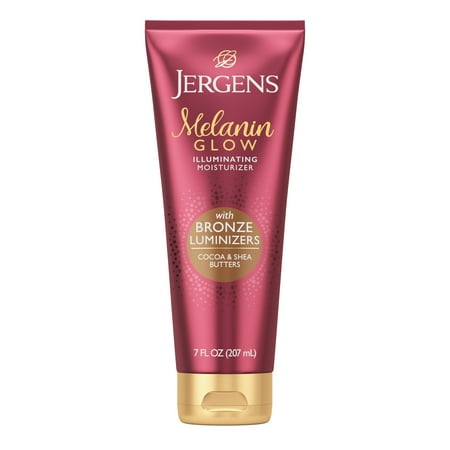


Jergens Hand and Body Lotion Melanin Glow Illuminating Moisturizer Bronze Luminizers 7 Oz
Analysis updated August 2026 · How Scout scores
At a glance
Summary
This body lotion contains beneficial ingredients like coconut oil, shea butter, and niacinamide, which are known for their moisturizing and skin-soothing properties. However, the presence of fragrance, phenoxyethanol, and other potential allergens like coumarin and linalool can cause skin irritation and sensitivity in some individuals. The inclusion of these synthetic components and potential irritants affects the overall safety and naturalness of the product.
Key ingredients 25
Cocos Nucifera (Coconut) OilVery Good
Coconut oil is a natural emollient that helps moisturize and soften the skin. It contains fatty acids that can improve skin barrier function. It is well-tolerated by most skin types.
Risks
Some individuals may experience allergic reactions or breakouts.
Benefits
Coconut oil provides deep hydration and has antimicrobial properties.
Butyrospermum Parkii (Shea) ButterVery Good
Shea butter is a rich source of vitamins and fatty acids, making it an excellent moisturizer. It helps soothe and condition the skin. It is particularly beneficial for dry and sensitive skin.
Risks
Rarely, it may cause allergic reactions in sensitive individuals.
Benefits
Shea butter deeply nourishes the skin and has anti-inflammatory properties.
Theobroma Cacao (Cocoa) Seed ButterVery Good
Cocoa butter is a natural fat extracted from cocoa beans, known for its moisturizing and skin-softening properties. It is rich in antioxidants and fatty acids. It is beneficial for improving skin elasticity.
Risks
May cause breakouts in acne-prone skin due to its comedogenic nature.
Benefits
Cocoa butter provides deep hydration and helps improve skin texture.
GlycerinGood
Glycerin is a humectant that attracts moisture to the skin, helping to keep it hydrated. It is widely used in skincare products for its moisturizing properties. It is generally safe and well-tolerated.
Risks
Overuse can lead to a sticky feeling on the skin.
Benefits
Glycerin helps maintain skin hydration and improves skin barrier function.
Caprylic/Capric TriglycerideGood
This ingredient is derived from coconut oil and glycerin, acting as an emollient and skin-replenishing agent. It helps to improve the spreadability of the lotion. It is lightweight and non-greasy.
Risks
Generally considered safe with minimal risk of irritation.
Benefits
Caprylic/Capric Triglyceride helps to moisturize and condition the skin.
MicaGood
Beneficial ingredient — whole-food or functional value in this product class.
Risks
Inhalation of mica particles can be harmful, but this is not a concern in lotion form.
Benefits
Adds a shimmering effect to the skin.
NiacinamideGood
Niacinamide is a form of vitamin B3 that offers multiple skin benefits, including improving skin tone and texture. It helps reduce inflammation and supports the skin barrier. It is well-tolerated by most skin types.
Risks
Rarely, it may cause mild irritation in very sensitive skin.
Benefits
Niacinamide improves skin texture, reduces inflammation, and supports the skin barrier.
Tocopheryl AcetateGood
Tocopheryl acetate is a form of vitamin E, known for its antioxidant properties. It helps protect the skin from environmental damage. It is commonly used in skincare for its moisturizing and protective benefits.
Risks
Generally considered safe with minimal risk of irritation.
Benefits
Provides antioxidant protection and moisturizes the skin.
Iron OxidesGood
Beneficial ingredient — whole-food or functional value in this product class.
Risks
Minimal risk of irritation.
Benefits
Provides color to the product.
WaterNeutral
Water is a common solvent used in cosmetic formulations. It helps dissolve other ingredients and provides a base for the lotion. It does not have any direct benefits or risks in this context.
Risks
There are no significant risks associated with water in cosmetics.
Benefits
Water helps in the application and absorption of the lotion.
Cetearyl AlcoholNeutral
Cetearyl alcohol is a fatty alcohol used as an emulsifier and thickener in cosmetics. It helps stabilize formulations and improve texture. It is not drying like other alcohols.
Risks
Rarely, it may cause irritation in very sensitive skin.
Benefits
Cetearyl alcohol helps improve the consistency and feel of the lotion.
HydroxyacetophenoneNeutral
Hydroxyacetophenone is an antioxidant and preservative used in cosmetics. It helps protect the product from degradation. It is considered safe for use in cosmetics.
Risks
Minimal risk of irritation or sensitization.
Benefits
Acts as an antioxidant and stabilizer in the formulation.
Ceteareth-20Neutral
Ceteareth-20 is an emulsifier that helps blend oil and water components in cosmetics. It improves the texture and spreadability of the product. It is generally considered safe for use in cosmetics.
Risks
May cause irritation in sensitive skin.
Benefits
Enhances the texture and application of the lotion.
Polyurethane-79Neutral
Polyurethane-79 is used as a film-former in cosmetics, providing a smooth finish. It helps improve the wear and durability of the product. It is considered safe for use in cosmetics.
Risks
Minimal risk of irritation.
Benefits
Improves the durability and finish of the lotion.
Magnesium Aluminum SilicateNeutral
This ingredient is used as a thickener and stabilizer in cosmetics. It helps improve the texture and consistency of the product. It is considered safe for use in cosmetics.
Risks
Minimal risk of irritation.
Benefits
Enhances the texture and stability of the lotion.
Sodium HydroxideNeutral
Sodium hydroxide is used to adjust the pH of cosmetic formulations. It is used in very small amounts to ensure product stability. It is considered safe in the concentrations used in cosmetics.
Risks
In high concentrations, it can be irritating, but this is not a concern in properly formulated products.
Benefits
Helps maintain the stability and effectiveness of the product.
SilicaNeutral
Silica is used as a thickening agent and absorbent in cosmetics. It helps improve the texture and feel of the product. It is considered safe for use in cosmetics.
Risks
Minimal risk of irritation.
Benefits
Improves the texture and feel of the lotion.
Orange 4Neutral
Orange 4 is a synthetic dye used to impart color to cosmetics. It is approved for use in cosmetics with certain restrictions. It is generally considered safe when used as directed.
Risks
May cause irritation in sensitive individuals.
Benefits
Adds color to the product.
Acrylates/C10-30 Alkyl Acrylate CrosspolymerBad
Processed additive flagged under Scout's ingredient doctrine.
Risks
May cause irritation in sensitive individuals.
Benefits
Improves the texture and stability of the lotion.
PhenoxyethanolBad
Phenoxyethanol is a preservative used to prevent microbial growth in cosmetics. It is effective but can cause irritation and allergic reactions in some individuals. It is often criticized for its potential to cause skin sensitivity.
Risks
Can cause skin irritation and allergic reactions.
Benefits
Prevents microbial growth and extends the shelf life of the product.
CoumarinBad
Coumarin is a fragrance ingredient that can cause allergic reactions and skin irritation. It is often used for its sweet scent. It is considered a potential allergen.
Risks
Can cause skin irritation and allergic reactions.
Benefits
Provides a sweet scent to the product.
LinaloolBad
Linalool is a fragrance component that can cause skin irritation and allergic reactions. It is commonly used for its floral scent. It is considered a potential allergen.
Risks
Can cause skin irritation and allergic reactions.
Benefits
Provides a floral scent to the product.
CaramelBad
Processed additive flagged under Scout's ingredient doctrine.
Risks
Minimal risk of irritation.
Benefits
Adds color to the product.
FragranceVery Bad
Fragrance is used to impart scent to the product but can be a common irritant and allergen. It may contain undisclosed chemicals that can cause skin sensitivity. It is often criticized for its potential to cause allergic reactions.
Risks
Fragrance can cause skin irritation and allergic reactions.
Benefits
Provides a pleasant scent to the product.
Yellow 5Very Bad
Heavily flagged ingredient class under Scout's doctrine.
Risks
May cause irritation in sensitive individuals.
Benefits
Adds color to the product.
Get the full breakdown in the Scout appTake Scout shopping
Scan any product to see lab results, healthy alternatives, and your personalized analysis.
Download on theApp Store GET IT ONGoogle PlayAmazon pricing & content
Amazon price as of . Product prices and availability are accurate as of the date/time indicated and are subject to change. Any price and availability information displayed on Amazon.com at the time of purchase will apply to the purchase of this product.
CERTAIN CONTENT THAT APPEARS ON THIS SITE COMES FROM AMAZON. THIS CONTENT IS PROVIDED “AS IS” AND IS SUBJECT TO CHANGE OR REMOVAL AT ANY TIME.