
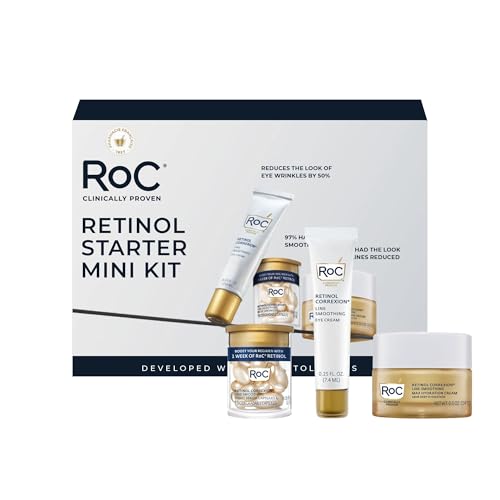

RoC Retinol Wrinkle Repair Anti-Aging Kit
Analysis updated July 2026 · How Scout scores
At a glance
Summary
The RoC Retinol Wrinkle Repair Anti-Aging Kit contains beneficial ingredients like retinol, which is known for its anti-aging properties, and other skin actives that support skin health. However, the presence of synthetic preservatives and potential irritants lowers its score. The product's formulation includes some synthetic chemicals that may not be ideal for sensitive skin, impacting its overall safety profile.
Key ingredients 19
African Shea ButterVery Good
African Shea Butter is a natural butter known for its moisturizing properties. It is rich in vitamins and fatty acids, making it an excellent emollient for the skin. It helps to soothe and hydrate dry skin.
Risks
There are minimal risks associated with African Shea Butter, though some individuals may experience mild allergic reactions.
Benefits
It provides deep hydration and nourishment to the skin, improving elasticity and reducing dryness.
TocopherolVery Good
Tocopherol, also known as Vitamin E, is a powerful antioxidant that helps to protect the skin from free radical damage. It is known for its moisturizing and anti-aging properties. It helps to improve skin texture and reduce the appearance of fine lines.
Risks
There are minimal risks associated with tocopherol, though it may cause irritation in very sensitive skin.
Benefits
It provides antioxidant protection and helps to maintain skin hydration and elasticity.
RetinolVery Good
Retinol is a form of Vitamin A known for its anti-aging benefits. It helps to promote cell turnover and reduce the appearance of fine lines and wrinkles. It is a well-researched ingredient with proven efficacy in improving skin texture and tone.
Risks
Retinol can cause irritation, redness, and peeling, especially in sensitive skin or when used in high concentrations.
Benefits
It helps to improve skin texture, reduce signs of aging, and promote a more youthful appearance.
Ascorbic AcidGood
Ascorbic Acid, also known as Vitamin C, is a powerful antioxidant that helps to protect the skin from free radical damage. It is known for its brightening and anti-aging properties. It can help to improve skin tone and texture.
Risks
High concentrations may cause irritation or redness in sensitive skin types.
Benefits
It promotes collagen production and helps to reduce the appearance of fine lines and wrinkles.
GlycerinGood
Glycerin is a humectant that attracts moisture to the skin, helping to keep it hydrated. It is a common ingredient in skincare products due to its moisturizing properties. It is well-tolerated and suitable for all skin types.
Risks
There are minimal risks associated with glycerin, though it may cause irritation in very sensitive skin.
Benefits
It helps to maintain skin hydration and improve the skin's barrier function.
Aluminum Starch OctenylsuccinateNeutral
Aluminum Starch Octenylsuccinate is used as a thickening agent and to improve the texture of cosmetic products. It helps to absorb excess oil and reduce shine on the skin. It is generally considered safe for use in cosmetics.
Risks
There are minimal risks, but it may cause irritation in sensitive individuals.
Benefits
It helps to mattify the skin and improve the texture of cosmetic formulations.
C12-15 Alkyl BenzoateNeutral
C12-15 Alkyl Benzoate is an emollient that helps to improve the texture and feel of cosmetic products. It provides a silky, smooth finish and enhances spreadability. It is generally considered safe for use in cosmetics.
Risks
There are minimal risks, though it may cause irritation in very sensitive skin.
Benefits
It enhances the sensory experience of products and provides a lightweight, non-greasy feel.
Caprylyl GlycolNeutral
Caprylyl Glycol is a skin conditioning agent and preservative booster. It helps to improve the moisture content of the skin and enhances the efficacy of preservatives. It is generally well-tolerated in cosmetic formulations.
Risks
There are minimal risks, but it may cause irritation in sensitive individuals.
Benefits
It helps to maintain skin hydration and improve the longevity of cosmetic products.
CarbomerNeutral
Carbomer is a thickening agent used to create gel-like textures in cosmetic products. It helps to stabilize emulsions and improve product consistency. It is widely used and considered safe in cosmetics.
Risks
There are minimal risks, though it may cause irritation if used in high concentrations.
Benefits
It provides a smooth, gel-like texture and helps to stabilize formulations.
WaterNeutral
Water is a universal solvent used as a base in many cosmetic formulations. It helps to dissolve other ingredients and provides hydration to the skin. It is essential for the formulation of most cosmetic products.
Risks
There are no significant risks associated with water in cosmetics.
Benefits
It hydrates the skin and acts as a carrier for other beneficial ingredients.
Pentaerythrityl TetraethylhexanoateNeutral
Pentaerythrityl Tetraethylhexanoate is an emollient that provides a smooth, silky feel to cosmetic products. It helps to improve the spreadability and texture of formulations. It is generally considered safe for use in cosmetics.
Risks
There are minimal risks, though it may cause irritation in sensitive skin.
Benefits
It enhances the sensory experience of products and provides a lightweight, non-greasy feel.
PPG-15 Stearyl EtherNeutral
PPG-15 Stearyl Ether is an emollient and conditioning agent used in cosmetics. It provides a smooth, silky feel and helps to improve the spreadability of products. It is generally considered safe for use in cosmetics.
Risks
There are minimal risks, though it may cause irritation in sensitive skin.
Benefits
It enhances the sensory experience of products and provides a lightweight, non-greasy feel.
Nylon-12Neutral
Nylon-12 is a synthetic polymer used to improve the texture and feel of cosmetic products. It provides a soft, smooth finish and helps to absorb excess oil. It is generally considered safe for use in cosmetics.
Risks
There are minimal risks, though it may cause irritation in sensitive skin.
Benefits
It helps to mattify the skin and improve the texture of cosmetic formulations.
Butylene GlycolNeutral
Butylene Glycol is a humectant and solvent used in cosmetics to improve texture and moisture content. It helps to enhance the penetration of other ingredients. It is generally considered safe for use in cosmetics.
Risks
There are minimal risks, though it may cause irritation in sensitive skin.
Benefits
It helps to maintain skin hydration and improve the texture of cosmetic formulations.
Stearyl AlcoholNeutral
Stearyl Alcohol is a fatty alcohol used as an emollient and thickening agent in cosmetics. It helps to stabilize emulsions and improve the texture of products. It is generally considered safe for use in cosmetics.
Risks
There are minimal risks, though it may cause irritation in sensitive skin.
Benefits
It provides a smooth, creamy texture and helps to stabilize formulations.
Cetearyl AlcoholNeutral
Cetearyl Alcohol is a fatty alcohol used as an emollient and emulsifier in cosmetics. It helps to stabilize formulations and improve texture. It is generally considered safe for use in cosmetics.
Risks
There are minimal risks, though it may cause irritation in sensitive skin.
Benefits
It provides a smooth, creamy texture and helps to stabilize formulations.
Zinc GluconateNeutral
Zinc Gluconate is a zinc salt used for its skin-soothing and anti-inflammatory properties. It helps to regulate sebum production and reduce acne. It is generally considered safe for use in cosmetics.
Risks
There are minimal risks, though it may cause irritation in sensitive skin.
Benefits
It helps to soothe the skin and reduce inflammation, making it beneficial for acne-prone skin.
BHTBad
BHT (Butylated Hydroxytoluene) is a synthetic antioxidant used to extend the shelf life of products. It has been associated with potential health concerns, including endocrine disruption. Its safety in cosmetics is debated.
Risks
There are concerns about its potential to cause skin irritation and its long-term health effects.
Benefits
It helps to stabilize formulations and prevent oxidation of other ingredients.
PEG-8Bad
Processed additive flagged under Scout's ingredient doctrine.
Risks
There are concerns about potential contamination with ethylene oxide and 1,4-dioxane.
Benefits
It enhances the texture and moisture content of cosmetic formulations.
Get the full breakdown in the Scout appTake Scout shopping
Scan any product to see lab results, healthy alternatives, and your personalized analysis.
Download on theApp Store GET IT ONGoogle PlayAmazon pricing & content
Amazon price as of . Product prices and availability are accurate as of the date/time indicated and are subject to change. Any price and availability information displayed on Amazon.com at the time of purchase will apply to the purchase of this product.
CERTAIN CONTENT THAT APPEARS ON THIS SITE COMES FROM AMAZON. THIS CONTENT IS PROVIDED “AS IS” AND IS SUBJECT TO CHANGE OR REMOVAL AT ANY TIME.