

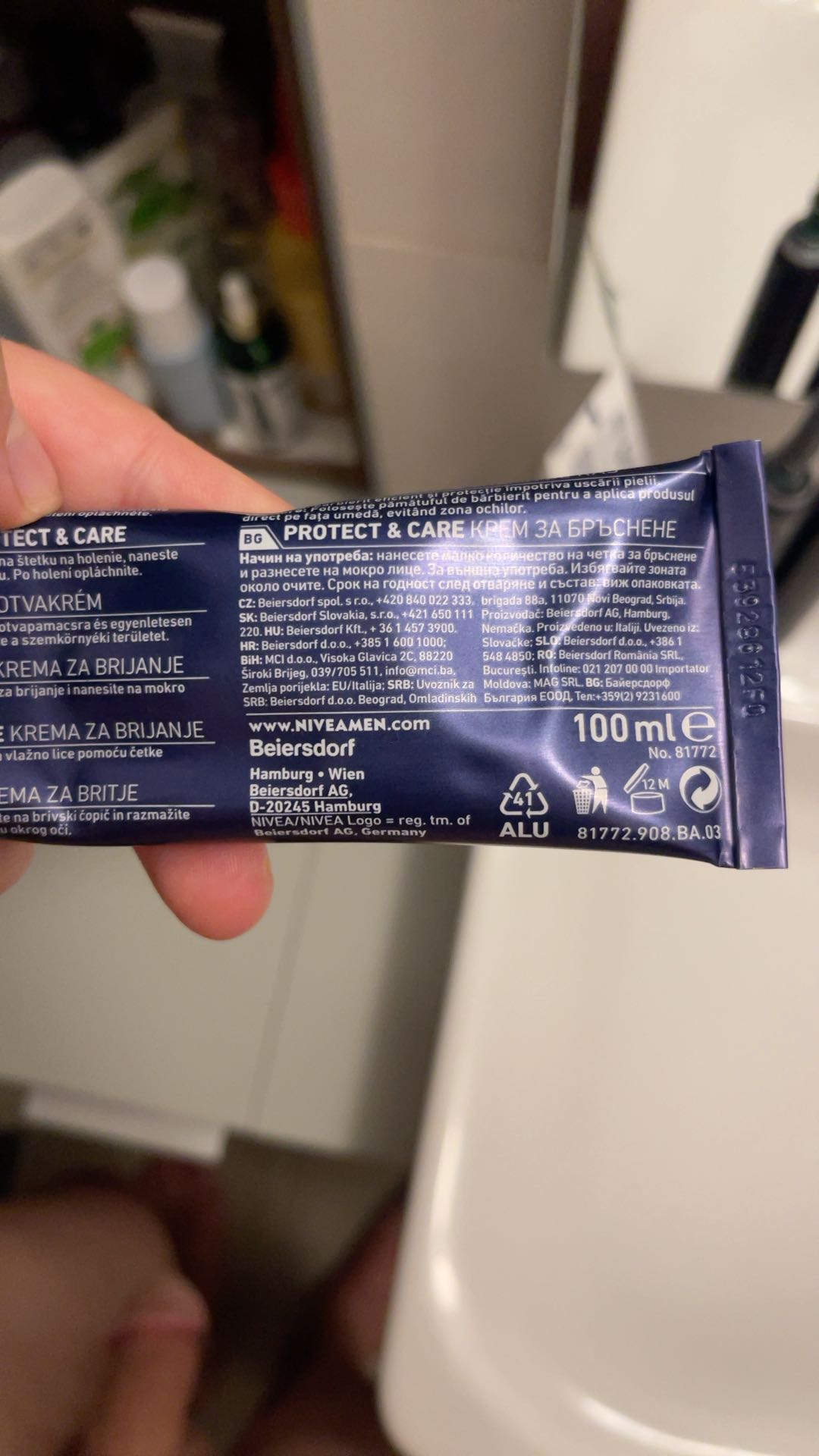
NIVEA Derma Control Defend Douchegel
Analysis updated July 2026 · How Scout scores
At a glance
Summary
This product contains sodium laureth sulfate, which poses a contamination risk, and synthetic fragrance, which can be irritating to the skin. However, it also includes beneficial ingredients like sodium hyaluronate and panthenol, which are known for their hydrating and soothing properties. The presence of these skin-friendly components provides some balance to the formulation, but the inclusion of potentially irritating and synthetic ingredients affects its overall safety profile.
Key ingredients 12
PanthenolVery Good
Panthenol, also known as provitamin B5, is a moisturizing agent that helps to improve skin hydration and elasticity. It has anti-inflammatory properties and can soothe irritated skin. It is widely used in skincare products for its beneficial effects.
Risks
Generally considered safe with no significant risks.
Benefits
Improves skin hydration and soothes irritation.
Coco-GlucosideGood
Coco-Glucoside is a mild, non-ionic surfactant derived from coconut oil and glucose. It is gentle on the skin and helps to stabilize the foam in cleansing products. It is biodegradable and considered safe for use in cosmetics.
Risks
Generally considered safe with minimal risk of irritation.
Benefits
Provides gentle cleansing and is environmentally friendly.
Sodium HyaluronateGood
Sodium Hyaluronate is the sodium salt of hyaluronic acid, known for its excellent moisturizing properties. It can hold up to 1000 times its weight in water, making it highly effective at hydrating the skin. It is well-tolerated and suitable for all skin types.
Risks
Generally considered safe with no significant risks.
Benefits
Provides deep hydration and helps to maintain skin moisture levels.
AquaNeutral
Aqua, or water, is a common solvent used in cosmetic formulations. It serves as a base for the product, allowing other ingredients to be dissolved and mixed. It does not have any direct benefits or risks associated with its use.
Risks
There are no significant risks associated with the use of water in cosmetics.
Benefits
Water acts as a solvent and helps in the application of the product.
Cocamidopropyl BetaineNeutral
Cocamidopropyl Betaine is a mild surfactant derived from coconut oil, used to reduce irritation from harsher surfactants. It helps to create a rich lather and improve the texture of the product. It is generally considered safe but can cause allergic reactions in some individuals.
Risks
Potential for allergic reactions in sensitive individuals.
Benefits
Helps to create a rich lather and reduce irritation from other surfactants.
Sodium ChlorideNeutral
Sodium Chloride, or table salt, is used to thicken the aqueous portion of the product. It helps to adjust the viscosity and improve the texture of the formulation. It is generally safe but can cause dryness if used in high concentrations.
Risks
May cause dryness if used in high concentrations.
Benefits
Helps to thicken and stabilize the product.
PantolactoneNeutral
Pantolactone is a derivative of pantothenic acid and is used as a humectant in cosmetics. It helps to retain moisture in the skin and improve the texture of the product. It is generally considered safe for use in personal care products.
Benefits
Helps to retain moisture and improve product texture.
Citric AcidNeutral
Citric Acid is used to adjust the pH of cosmetic formulations. It can also act as a mild exfoliant and antioxidant. While generally safe, it can cause irritation in sensitive skin if used in high concentrations.
Risks
May cause irritation in sensitive skin if used in high concentrations.
Benefits
Helps to adjust pH and provides mild exfoliation.
Glycol DistearateNeutral
Glycol Distearate is used as an opacifying agent and to give products a pearlescent appearance. It also helps to stabilize emulsions. It is generally considered safe for use in cosmetics.
Benefits
Enhances product appearance and stabilizes emulsions.
Hydrogenated Castor OilNeutral
Hydrogenated Castor Oil is used as an emollient and thickening agent in cosmetics. It helps to soften and smooth the skin. It is generally considered safe but can cause allergic reactions in some individuals.
Risks
Potential for allergic reactions in sensitive individuals.
Benefits
Softens and smooths the skin.
Sodium Laureth SulfateBad
Sodium Laureth Sulfate is a surfactant used for its cleansing and foaming properties. It is milder than Sodium Lauryl Sulfate but can still strip natural oils from the skin. There is also a risk of contamination with 1,4-dioxane, a potential carcinogen.
Risks
May cause skin irritation and dryness; potential contamination with 1,4-dioxane.
Benefits
Effective at removing dirt and oil from the skin.
ParfumBad
Parfum, or fragrance, is used to impart scent to cosmetic products. It can contain a mixture of various chemicals, some of which may cause skin irritation or allergic reactions. The exact composition is often undisclosed, leading to concerns about potential harmful effects.
Risks
May cause skin irritation or allergic reactions; composition is often undisclosed.
Benefits
Provides a pleasant scent to the product.
Get the full breakdown in the Scout appTake Scout shopping
Scan any product to see lab results, healthy alternatives, and your personalized analysis.
Download on theApp Store GET IT ONGoogle PlayAmazon pricing & content
Amazon price as of . Product prices and availability are accurate as of the date/time indicated and are subject to change. Any price and availability information displayed on Amazon.com at the time of purchase will apply to the purchase of this product.
CERTAIN CONTENT THAT APPEARS ON THIS SITE COMES FROM AMAZON. THIS CONTENT IS PROVIDED “AS IS” AND IS SUBJECT TO CHANGE OR REMOVAL AT ANY TIME.