
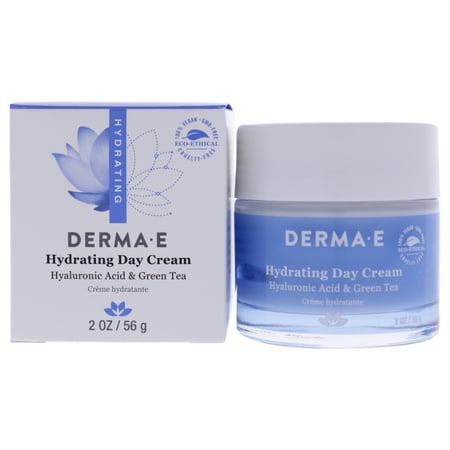

DERMA E Ultra Hydrating Antioxidant Moisturizing Day Cream Vegan Skin Care 2 oz
Analysis updated August 2026 · How Scout scores
At a glance
Summary
This moisturizer contains a variety of beneficial ingredients such as aloe vera, sodium hyaluronate, and squalane, which are known for their moisturizing and skin-protective properties. However, the presence of phenoxyethanol and natural fragrance oil, which can be irritating and sensitizing, slightly detracts from its overall safety profile. Despite these concerns, the product remains largely composed of natural and effective ingredients, making it a good choice for skincare.
Key ingredients 25
Aloe Barbadensis (Aloe Vera) Leaf JuiceVery Good
Aloe vera is known for its soothing and moisturizing properties. It helps to calm irritated skin and provides hydration. It is a natural botanical extract with a long history of use in skincare.
Risks
Rarely, aloe vera can cause allergic reactions in sensitive individuals.
Benefits
It provides anti-inflammatory and healing properties, making it beneficial for dry or sensitive skin.
SqualaneVery Good
Squalane is a lightweight, non-greasy oil that mimics the skin's natural sebum. It helps to moisturize and protect the skin. It is suitable for all skin types and is known for its excellent emollient properties.
Risks
There are no significant risks associated with squalane in cosmetics.
Benefits
It enhances skin hydration and provides a protective barrier against environmental damage.
Ceramide NGVery Good
Ceramide NG is a lipid that helps to restore the skin's natural barrier. It improves skin hydration and protects against moisture loss. It is a beneficial ingredient for maintaining healthy skin.
Risks
There are no significant risks associated with ceramide NG in cosmetics.
Benefits
It strengthens the skin barrier and enhances moisture retention.
Camellia Sinensis (Green Tea) Leaf ExtractVery Good
Green tea extract is rich in antioxidants that help to protect the skin from environmental damage. It has anti-inflammatory and soothing properties. It is a popular botanical ingredient in skincare.
Risks
There are minimal risks, though it may cause mild irritation in very sensitive skin.
Benefits
It provides antioxidant protection and helps to calm and soothe the skin.
PanthenolVery Good
Panthenol, also known as provitamin B5, is a humectant that helps to hydrate and soothe the skin. It improves skin barrier function and reduces irritation. It is widely used in skincare for its moisturizing and healing properties.
Risks
There are no significant risks associated with panthenol in cosmetics.
Benefits
It enhances skin hydration and promotes healing of damaged skin.
Simmondsia Chinensis (Jojoba) Seed OilVery Good
Jojoba oil is a natural oil that closely resembles the skin's natural sebum. It helps to moisturize and balance the skin. It is non-comedogenic and suitable for all skin types.
Risks
There are no significant risks associated with jojoba oil in cosmetics.
Benefits
It provides long-lasting moisture and helps to regulate oil production.
Caprylic/Capric TriglycerideGood
Caprylic/Capric Triglyceride is an emollient derived from coconut oil and glycerin. It helps to moisturize and replenish the skin's surface. It is lightweight and non-greasy, making it suitable for various skin types.
Risks
There are minimal risks associated with this ingredient, though it may cause mild irritation in very sensitive skin.
Benefits
It enhances the spreadability of the product and provides a silky feel.
GlycerinGood
Glycerin is a humectant that attracts moisture to the skin. It helps to keep the skin hydrated and soft. It is widely used in skincare for its moisturizing properties.
Risks
There are no significant risks associated with glycerin in cosmetics.
Benefits
It enhances skin hydration and improves the skin's barrier function.
Sodium HyaluronateGood
Sodium Hyaluronate is a form of hyaluronic acid known for its excellent moisture-retaining properties. It helps to hydrate and plump the skin. It is a highly effective skin active used in many moisturizing products.
Risks
There are no significant risks associated with sodium hyaluronate in cosmetics.
Benefits
It provides deep hydration and helps to reduce the appearance of fine lines and wrinkles.
Ascorbyl PalmitateGood
Ascorbyl Palmitate is a stable form of Vitamin C used for its antioxidant properties. It helps to protect the skin from free radical damage. It is less irritating than pure Vitamin C and suitable for sensitive skin.
Risks
There are minimal risks, though it may cause mild irritation in very sensitive skin.
Benefits
It provides antioxidant benefits and helps to brighten the skin.
Tocopheryl AcetateGood
Tocopheryl Acetate is a form of Vitamin E used for its antioxidant properties. It helps to protect the skin from oxidative stress. It is a common ingredient in skincare products for its moisturizing and protective benefits.
Risks
There are minimal risks, though it may cause mild irritation in very sensitive skin.
Benefits
It provides antioxidant protection and helps to moisturize the skin.
AllantoinGood
Allantoin is a soothing and moisturizing ingredient that helps to calm irritated skin. It promotes skin healing and improves moisture retention. It is widely used in skincare for its gentle and effective properties.
Risks
There are no significant risks associated with allantoin in cosmetics.
Benefits
It enhances skin comfort and supports the healing of damaged skin.
Purified WaterNeutral
Purified water is used as a solvent in cosmetic formulations. It helps dissolve other ingredients and provides a base for the product. It does not have any direct benefits or risks.
Risks
There are no known risks associated with purified water in cosmetics.
Benefits
It acts as a carrier for active ingredients, ensuring they are evenly distributed.
Cetyl AlcoholNeutral
Cetyl alcohol is a fatty alcohol used as an emollient and thickening agent. It helps to stabilize and improve the texture of the product. It is not drying like other alcohols and is generally well-tolerated.
Risks
In rare cases, it may cause mild irritation or allergic reactions.
Benefits
It helps to soften and smooth the skin, enhancing the product's moisturizing properties.
Stearic AcidNeutral
Stearic acid is a fatty acid used as an emulsifier and thickener in cosmetics. It helps to stabilize formulations and improve texture. It is generally considered safe and non-irritating.
Risks
There are minimal risks, though it may cause mild irritation in sensitive individuals.
Benefits
It contributes to the creamy consistency of the product and helps to maintain its stability.
Glyceryl Stearate SENeutral
Glyceryl Stearate SE is an emulsifier that helps to blend oil and water components. It stabilizes formulations and improves texture. It is generally considered safe and non-irritating.
Risks
There are minimal risks, though it may cause mild irritation in sensitive individuals.
Benefits
It helps to create a smooth and stable product consistency.
Glyceryl Stearate CitrateNeutral
Glyceryl Stearate Citrate is an emulsifier used to stabilize cosmetic formulations. It helps to blend oil and water components. It is generally considered safe and non-irritating.
Risks
There are minimal risks, though it may cause mild irritation in sensitive individuals.
Benefits
It contributes to the smooth texture and stability of the product.
Xanthan GumNeutral
Xanthan gum is a thickening agent used to stabilize cosmetic formulations. It helps to improve the texture and consistency of the product. It is generally considered safe and non-irritating.
Risks
There are minimal risks, though it may cause mild irritation in sensitive individuals.
Benefits
It contributes to the smooth texture and stability of the product.
Hamamelis Virginiana (Witch Hazel) ExtractNeutral
Witch hazel extract is known for its astringent and anti-inflammatory properties. It helps to tone and soothe the skin. It is commonly used in skincare for its calming effects.
Risks
In some cases, witch hazel can cause dryness or irritation, especially in sensitive skin.
Benefits
It helps to reduce inflammation and tighten the skin.
Diheptyl SuccinateNeutral
Diheptyl Succinate is an emollient used to improve the texture and feel of cosmetic products. It helps to provide a smooth application. It is generally considered safe and non-irritating.
Risks
There are minimal risks, though it may cause mild irritation in sensitive individuals.
Benefits
It enhances the spreadability and sensory experience of the product.
Capryloyl Glycerin/Sebacic Acid CopolymerNeutral
This copolymer is used as a film-forming agent in cosmetics. It helps to improve the texture and longevity of the product. It is generally considered safe and non-irritating.
Risks
There are minimal risks, though it may cause mild irritation in sensitive individuals.
Benefits
It provides a smooth and even application, enhancing the product's performance.
EthylhexylglycerinNeutral
Ethylhexylglycerin is used as a preservative and skin conditioning agent in cosmetics. It enhances the efficacy of other preservatives. It is generally considered safe and non-irritating.
Risks
There are minimal risks, though it may cause mild irritation in sensitive individuals.
Benefits
It helps to maintain the product's freshness and enhances skin feel.
Potassium SorbateBad
Synthetic preservative — flagged in daily-use products.
Risks
In rare cases, it may cause mild irritation or allergic reactions.
Benefits
It helps to maintain the product's freshness and safety.
PhenoxyethanolBad
Phenoxyethanol is a preservative used to prevent microbial growth in cosmetics. It is effective but can be irritating to the skin and eyes. It is a common alternative to parabens but still has potential risks.
Risks
It can cause skin irritation and allergic reactions in sensitive individuals.
Benefits
It helps to preserve the product and prevent contamination.
Natural Fragrance OilBad
Fragrance oils, even when labeled as natural, can cause skin irritation and allergic reactions. They are often complex mixtures that can be sensitizing. Fragrance is a common cause of contact dermatitis in cosmetics.
Risks
It can cause skin irritation, allergic reactions, and sensitization.
Benefits
It provides a pleasant scent to the product, enhancing user experience.
Get the full breakdown in the Scout appTake Scout shopping
Scan any product to see lab results, healthy alternatives, and your personalized analysis.
Download on theApp Store GET IT ONGoogle PlayAmazon pricing & content
Amazon price as of . Product prices and availability are accurate as of the date/time indicated and are subject to change. Any price and availability information displayed on Amazon.com at the time of purchase will apply to the purchase of this product.
CERTAIN CONTENT THAT APPEARS ON THIS SITE COMES FROM AMAZON. THIS CONTENT IS PROVIDED “AS IS” AND IS SUBJECT TO CHANGE OR REMOVAL AT ANY TIME.