
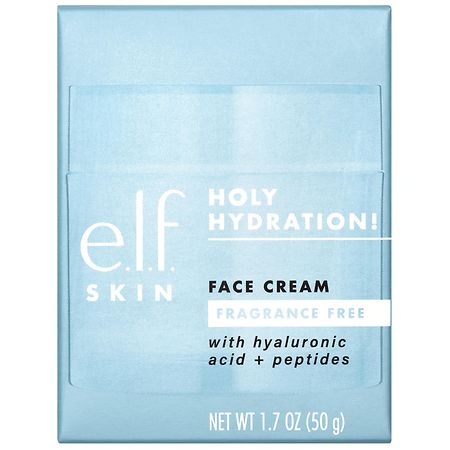

e.l.f. SKIN Holy Hydration Face Cream Fragrance Free - 1.8oz: Hydrating, Paraben-Free, Vegan, Normal Skin
Analysis updated August 2026 · How Scout scores
At a glance
Summary
This moisturizer contains several beneficial ingredients such as niacinamide, squalane, and peptides, which are known for their hydrating and anti-aging properties. However, the presence of phenoxyethanol, a potential skin irritant, and the use of PEG compounds slightly detract from its overall safety profile. Despite these concerns, the product is largely composed of skin-friendly ingredients and is free from parabens and fragrances, making it suitable for normal skin types.
Key ingredients 32
SqualaneVery Good
Squalane is a highly effective emollient that mimics the skin's natural oils, providing deep hydration. It is known for its ability to improve skin elasticity and texture. It is considered very beneficial for maintaining skin hydration and softness.
Risks
There are minimal risks associated with squalane in cosmetics.
Benefits
Squalane provides deep hydration and improves skin elasticity and texture.
Palmitoyl Tripeptide-1Very Good
Palmitoyl Tripeptide-1 is a peptide that helps to stimulate collagen production and improve skin elasticity. It is used in anti-aging formulations for its skin-rejuvenating properties. It is considered very beneficial for improving skin firmness and reducing wrinkles.
Risks
There are minimal risks associated with palmitoyl tripeptide-1 in cosmetics.
Benefits
It helps to stimulate collagen production and improve skin elasticity.
Palmitoyl Tetrapeptide-7Very Good
Palmitoyl Tetrapeptide-7 is a peptide that helps to reduce inflammation and improve skin elasticity. It is used in anti-aging formulations for its skin-rejuvenating properties. It is considered very beneficial for reducing inflammation and improving skin firmness.
Risks
There are minimal risks associated with palmitoyl tetrapeptide-7 in cosmetics.
Benefits
It helps to reduce inflammation and improve skin elasticity.
PanthenolVery Good
Panthenol is a form of Vitamin B5 that provides deep hydration and soothes the skin. It is known for its moisturizing and anti-inflammatory properties. It is highly beneficial for maintaining skin hydration and soothing irritation.
Risks
There are minimal risks associated with panthenol in cosmetics.
Benefits
Panthenol provides deep hydration and soothes the skin.
GlycerinGood
Glycerin is a humectant that attracts moisture to the skin, helping to keep it hydrated. It is widely used in skincare for its moisturizing properties. It is considered very beneficial for maintaining skin hydration.
Risks
There are minimal risks associated with glycerin in cosmetics.
Benefits
Glycerin helps to maintain skin hydration and improve skin barrier function.
NiacinamideGood
Niacinamide is a form of Vitamin B3 that offers multiple skin benefits, including improving skin tone and texture. It is known for its anti-inflammatory and brightening properties. It is highly beneficial for maintaining healthy skin.
Risks
There are minimal risks associated with niacinamide in cosmetics.
Benefits
Niacinamide helps to improve skin tone, reduce inflammation, and enhance skin barrier function.
Sodium HyaluronateGood
Sodium Hyaluronate is a form of hyaluronic acid that provides intense hydration to the skin. It is known for its ability to retain moisture and improve skin elasticity. It is highly beneficial for maintaining skin hydration and plumpness.
Risks
There are minimal risks associated with sodium hyaluronate in cosmetics.
Benefits
Sodium Hyaluronate provides intense hydration and improves skin elasticity.
Water (Aqua)Neutral
Water is a common solvent used in cosmetics to dissolve other ingredients. It helps in the application and absorption of the product. It does not provide direct benefits or risks.
Risks
There are no significant risks associated with water in cosmetics.
Benefits
Water helps in hydrating the skin by providing moisture.
IsohexadecaneNeutral
Isohexadecane is a lightweight emollient that provides a silky feel to the skin. It is often used to enhance the texture of cosmetic products. It is generally considered safe with no significant benefits or risks.
Risks
There are minimal risks associated with isohexadecane in cosmetics.
Benefits
It helps in improving the texture and spreadability of the product.
Stearyl HeptanoateNeutral
Stearyl Heptanoate is an emollient that helps to soften and smooth the skin. It is used to improve the texture of cosmetic formulations. It is generally safe with no significant benefits or risks.
Risks
There are minimal risks associated with stearyl heptanoate in cosmetics.
Benefits
It provides a smooth and soft feel to the skin.
Butylene GlycolNeutral
Butylene Glycol is a solvent and conditioning agent that helps to improve the texture of cosmetic products. It is generally considered safe for use in cosmetics. It does not provide significant benefits or risks.
Risks
There are minimal risks associated with butylene glycol in cosmetics.
Benefits
It helps in improving the texture and spreadability of the product.
Isopropyl IsostearateNeutral
Isopropyl Isostearate is an emollient that helps to soften and smooth the skin. It is used to improve the texture of cosmetic formulations. It is generally safe with no significant benefits or risks.
Risks
There are minimal risks associated with isopropyl isostearate in cosmetics.
Benefits
It provides a smooth and soft feel to the skin.
Cetearyl OlivateNeutral
Cetearyl Olivate is an emulsifier derived from olive oil that helps to blend oil and water components in formulations. It is generally considered safe for use in cosmetics. It does not provide significant benefits or risks.
Risks
There are minimal risks associated with cetearyl olivate in cosmetics.
Benefits
It helps in stabilizing emulsions and improving product texture.
TrehaloseNeutral
Trehalose is a sugar that acts as a humectant, helping to retain moisture in the skin. It is used in cosmetics for its moisturizing properties. It is generally safe with no significant benefits or risks.
Risks
There are minimal risks associated with trehalose in cosmetics.
Benefits
Trehalose helps to retain moisture and improve skin hydration.
Stearic AcidNeutral
Stearic Acid is a fatty acid used as an emulsifier and thickener in cosmetics. It helps to stabilize formulations and improve texture. It is generally safe with no significant benefits or risks.
Risks
There are minimal risks associated with stearic acid in cosmetics.
Benefits
It helps in stabilizing formulations and improving product texture.
Aluminum Starch OctenylsuccinateNeutral
Aluminum Starch Octenylsuccinate is used as an absorbent and anti-caking agent in cosmetics. It helps to improve the texture and feel of products. It is generally considered safe with no significant benefits or risks.
Risks
There are minimal risks associated with aluminum starch octenylsuccinate in cosmetics.
Benefits
It helps in improving the texture and feel of the product.
PolymethylsilsesquioxaneNeutral
Polymethylsilsesquioxane is a silicone-based ingredient used to provide a smooth, silky feel to the skin. It is used in cosmetics for its texture-enhancing properties. It is generally safe with no significant benefits or risks.
Risks
There are minimal risks associated with polymethylsilsesquioxane in cosmetics.
Benefits
It provides a smooth, silky feel to the skin.
SilicaNeutral
Silica is used as an absorbent and anti-caking agent in cosmetics. It helps to improve the texture and feel of products. It is generally considered safe with no significant benefits or risks.
Risks
There are minimal risks associated with silica in cosmetics.
Benefits
It helps in improving the texture and feel of the product.
Sorbitan OlivateNeutral
Sorbitan Olivate is an emulsifier derived from olive oil that helps to blend oil and water components in formulations. It is generally considered safe for use in cosmetics. It does not provide significant benefits or risks.
Risks
There are minimal risks associated with sorbitan olivate in cosmetics.
Benefits
It helps in stabilizing emulsions and improving product texture.
Cetearyl AlcoholNeutral
Cetearyl Alcohol is a fatty alcohol used as an emulsifier and thickener in cosmetics. It helps to stabilize formulations and improve texture. It is generally safe with no significant benefits or risks.
Risks
There are minimal risks associated with cetearyl alcohol in cosmetics.
Benefits
It helps in stabilizing formulations and improving product texture.
Glyceryl StearateNeutral
Glyceryl Stearate is an emulsifier that helps to blend oil and water components in formulations. It is generally considered safe for use in cosmetics. It does not provide significant benefits or risks.
Risks
There are minimal risks associated with glyceryl stearate in cosmetics.
Benefits
It helps in stabilizing emulsions and improving product texture.
PEG-100 StearateNeutral
PEG-100 Stearate is an emulsifier used to blend oil and water components in formulations. It is generally considered safe for use in cosmetics. It does not provide significant benefits or risks.
Risks
There are minimal risks associated with PEG-100 stearate in cosmetics.
Benefits
It helps in stabilizing emulsions and improving product texture.
Synthetic WaxNeutral
Synthetic Wax is used to provide texture and stability to cosmetic formulations. It is generally considered safe for use in cosmetics. It does not provide significant benefits or risks.
Risks
There are minimal risks associated with synthetic wax in cosmetics.
Benefits
It helps in providing texture and stability to the product.
Polyacrylate-13Neutral
Polyacrylate-13 is a film-forming agent used to provide texture and stability to cosmetic formulations. It is generally considered safe for use in cosmetics. It does not provide significant benefits or risks.
Risks
There are minimal risks associated with polyacrylate-13 in cosmetics.
Benefits
It helps in providing texture and stability to the product.
PolyisobuteneNeutral
Polyisobutene is a synthetic polymer used as a thickening agent in cosmetics. It is generally considered safe for use in cosmetics. It does not provide significant benefits or risks.
Risks
There are minimal risks associated with polyisobutene in cosmetics.
Benefits
It helps in providing thickness and stability to the product.
Polysorbate 20Neutral
Polysorbate 20 is an emulsifier used to blend oil and water components in formulations. It is generally considered safe for use in cosmetics. It does not provide significant benefits or risks.
Risks
There are minimal risks associated with polysorbate 20 in cosmetics.
Benefits
It helps in stabilizing emulsions and improving product texture.
Caprylyl GlycolNeutral
Caprylyl Glycol is a conditioning agent that helps to improve the texture and feel of cosmetic products. It is generally considered safe for use in cosmetics. It does not provide significant benefits or risks.
Risks
There are minimal risks associated with caprylyl glycol in cosmetics.
Benefits
It helps in improving the texture and feel of the product.
EthylhexylglycerinNeutral
Ethylhexylglycerin is a conditioning agent and preservative enhancer used in cosmetics. It is generally considered safe for use in cosmetics. It does not provide significant benefits or risks.
Risks
There are minimal risks associated with ethylhexylglycerin in cosmetics.
Benefits
It helps in enhancing the effectiveness of preservatives.
CarbomerNeutral
Carbomer is a thickening agent used to provide texture and stability to cosmetic formulations. It is generally considered safe for use in cosmetics. It does not provide significant benefits or risks.
Risks
There are minimal risks associated with carbomer in cosmetics.
Benefits
It helps in providing thickness and stability to the product.
DimethiconeBad
Occlusive silicone film-former — flagged under clean-beauty doctrine.
Risks
There are minimal risks associated with dimethicone in cosmetics.
Benefits
Dimethicone helps to smooth the skin and protect the skin barrier.
Disodium EDTABad
Processed additive flagged under Scout's ingredient doctrine.
Risks
There are minimal risks associated with disodium EDTA in cosmetics.
Benefits
It helps in improving the stability and shelf life of the product.
PhenoxyethanolBad
Phenoxyethanol is a preservative used to prevent microbial growth in cosmetics. It has been associated with skin irritation and allergic reactions in some individuals. It is considered a potential irritant, especially for sensitive skin.
Risks
Phenoxyethanol can cause skin irritation and allergic reactions in sensitive individuals.
Benefits
It helps in preserving the product by preventing microbial growth.
Processing
Processed Foods
Get the full breakdown in the Scout appTake Scout shopping
Scan any product to see lab results, healthy alternatives, and your personalized analysis.
Download on theApp Store GET IT ONGoogle PlayAmazon pricing & content
Amazon price as of . Product prices and availability are accurate as of the date/time indicated and are subject to change. Any price and availability information displayed on Amazon.com at the time of purchase will apply to the purchase of this product.
CERTAIN CONTENT THAT APPEARS ON THIS SITE COMES FROM AMAZON. THIS CONTENT IS PROVIDED “AS IS” AND IS SUBJECT TO CHANGE OR REMOVAL AT ANY TIME.