
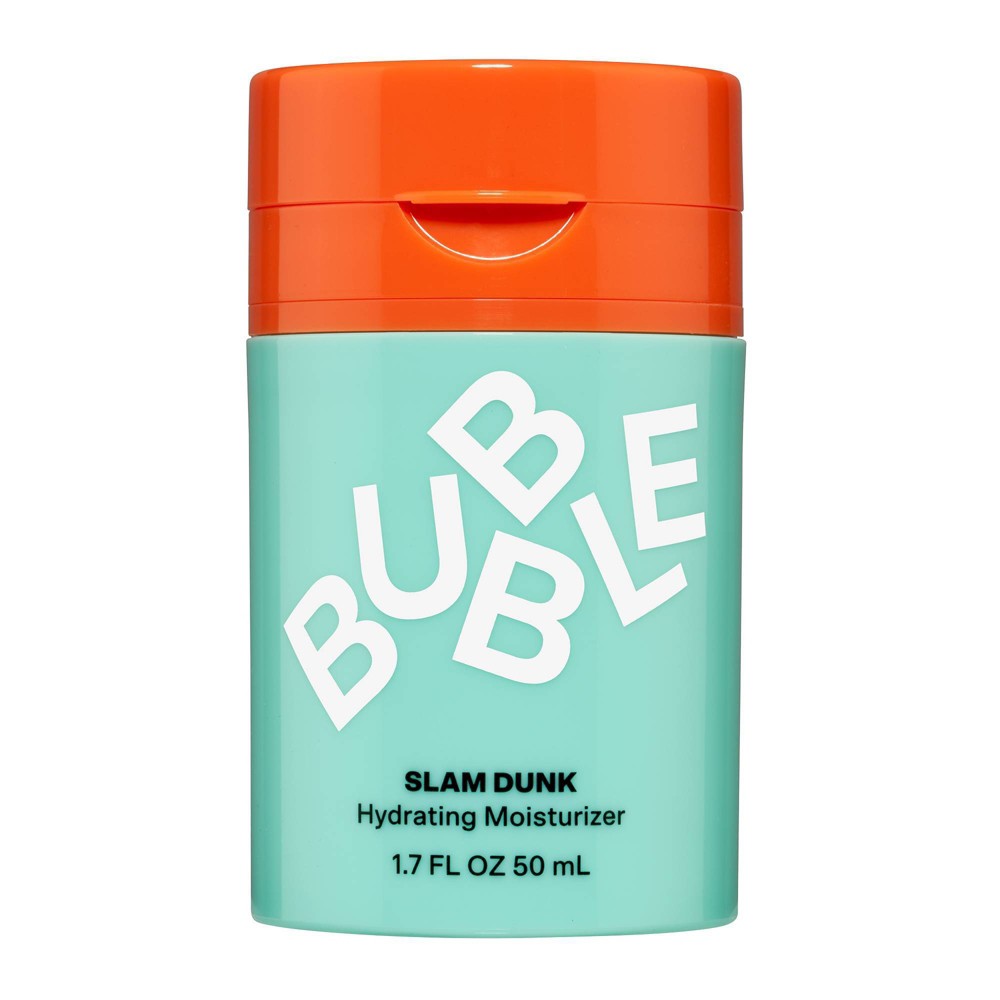

Bubble Skincare Slam Dunk Hydrating Moisturizer - 1.7 fl oz: Face Cream, Unscented, For Normal to Very Dry Skin, Alcohol-Free
Analysis updated August 2026 · How Scout scores
At a glance
Summary
This moisturizer contains a variety of beneficial natural ingredients such as aloe vera, avocado oil, and shea butter, which are known for their moisturizing and soothing properties. The product is alcohol-free and unscented, reducing potential irritation. However, the presence of phenoxyethanol, a preservative that can be irritating to some skin types, slightly lowers the overall score. The processing level of the product also limits its maximum potential score.
Key ingredients 25
Aloe Barbadensis Leaf Juice PowderVery Good
Aloe Barbadensis Leaf Juice Powder is derived from aloe vera and is known for its soothing and hydrating properties. It is widely used in skincare for its ability to calm irritated skin. It is considered safe and beneficial for most skin types.
Risks
There are no significant risks associated with aloe vera.
Benefits
It helps to soothe and hydrate the skin, reducing redness and irritation.
Persea Gratissima (Avocado) OilVery Good
Avocado Oil is a natural oil rich in fatty acids and vitamins. It is known for its moisturizing and nourishing properties. It is considered safe and beneficial for most skin types.
Risks
There are no significant risks associated with avocado oil.
Benefits
It helps to deeply moisturize and nourish the skin, improving elasticity.
Butyrospermum Parkii (Shea) ButterVery Good
Shea Butter is a natural butter known for its rich moisturizing properties. It is widely used in skincare for its ability to soften and protect the skin. It is considered safe and beneficial for most skin types.
Risks
There are no significant risks associated with shea butter.
Benefits
It helps to deeply moisturize and protect the skin, improving texture and softness.
Oenothera Biennis (Evening Primrose) OilVery Good
Evening Primrose Oil is a natural oil rich in essential fatty acids. It is known for its moisturizing and anti-inflammatory properties. It is considered safe and beneficial for most skin types.
Risks
There are no significant risks associated with evening primrose oil.
Benefits
It helps to moisturize and soothe the skin, reducing inflammation and improving texture.
Anthemis Nobilis Flower ExtractVery Good
Anthemis Nobilis Flower Extract, also known as chamomile extract, is known for its soothing and anti-inflammatory properties. It is widely used in skincare for its ability to calm irritated skin. It is considered safe and beneficial for most skin types.
Risks
There are no significant risks associated with chamomile extract.
Benefits
It helps to soothe and calm the skin, reducing redness and irritation.
GlycerinGood
Glycerin is a humectant that attracts moisture to the skin, keeping it hydrated. It is widely used in skincare for its moisturizing properties. It is considered safe and beneficial for most skin types.
Risks
There are no significant risks associated with glycerin.
Benefits
Glycerin helps to maintain skin hydration and improve skin barrier function.
Caprylic/Capric TriglycerideGood
Caprylic/Capric Triglyceride is an emollient derived from coconut oil and glycerin. It helps to moisturize and replenish the skin. It is considered safe and beneficial for most skin types.
Risks
There are minimal risks, though it may cause irritation in very sensitive skin.
Benefits
It provides a lightweight, non-greasy feel and helps to lock in moisture.
Hydrolyzed Pea ProteinGood
Hydrolyzed Pea Protein is a plant-derived protein that helps to strengthen and protect the skin. It is used for its conditioning properties. It is considered safe and beneficial for most skin types.
Risks
There are minimal risks, though it may cause irritation in very sensitive skin.
Benefits
It helps to improve skin texture and provides a protective barrier.
Tocopheryl AcetateGood
Tocopheryl Acetate is a form of Vitamin E used for its antioxidant properties. It helps to protect the skin from environmental damage. It is considered safe and beneficial for most skin types.
Risks
There are minimal risks, though it may cause irritation in very sensitive skin.
Benefits
It helps to protect the skin from free radical damage and improve skin health.
TocopherolGood
Tocopherol, or Vitamin E, is a powerful antioxidant that helps to protect the skin from environmental damage. It is widely used in skincare for its moisturizing and protective properties. It is considered safe and beneficial for most skin types.
Risks
There are minimal risks, though it may cause irritation in very sensitive skin.
Benefits
It helps to protect the skin from free radical damage and improve skin health.
Water (Aqua)Neutral
Water is a common solvent used in cosmetics to dissolve other ingredients. It helps in the application and absorption of the product. It does not provide direct benefits or risks.
Risks
There are no significant risks associated with water in skincare products.
Benefits
Water helps in spreading the product evenly on the skin.
Isononyl IsononanoateNeutral
Isononyl Isononanoate is an emollient that helps to soften and smooth the skin. It is used to improve the texture of the product. It is generally considered safe for use in cosmetics.
Risks
There are minimal risks, though it may cause irritation in very sensitive skin.
Benefits
It provides a silky feel and helps to lock in moisture.
Heptyl UndecylenateNeutral
Heptyl Undecylenate is an emollient that provides a smooth application. It is used to enhance the texture of the product. It is generally considered safe for use in cosmetics.
Risks
There are minimal risks, though it may cause irritation in very sensitive skin.
Benefits
It helps to improve the spreadability of the product.
Glyceryl Stearate CitrateNeutral
Glyceryl Stearate Citrate is an emulsifier that helps to blend oil and water components. It stabilizes the formulation and improves texture. It is generally considered safe for use in cosmetics.
Risks
There are minimal risks, though it may cause irritation in very sensitive skin.
Benefits
It helps to maintain the consistency of the product.
Polyglyceryl-3 StearateNeutral
Polyglyceryl-3 Stearate is an emulsifier that helps to blend oil and water components. It stabilizes the formulation and improves texture. It is generally considered safe for use in cosmetics.
Risks
There are minimal risks, though it may cause irritation in very sensitive skin.
Benefits
It helps to maintain the consistency of the product.
Cetyl AlcoholNeutral
Cetyl Alcohol is a fatty alcohol used as an emollient and thickener. It helps to soften the skin and improve the texture of the product. It is generally considered safe for use in cosmetics.
Risks
There are minimal risks, though it may cause irritation in very sensitive skin.
Benefits
It provides a creamy texture and helps to lock in moisture.
Sodium ChlorideNeutral
Sodium Chloride, or salt, is used as a thickening agent in skincare products. It helps to improve the texture and consistency of the product. It is generally considered safe for use in cosmetics.
Risks
There are minimal risks, though it may cause irritation in very sensitive skin.
Benefits
It helps to maintain the stability and consistency of the product.
Sodium SuccinateNeutral
Sodium Succinate is used as a buffering agent in skincare products. It helps to maintain the pH balance of the formulation. It is generally considered safe for use in cosmetics.
Risks
There are minimal risks, though it may cause irritation in very sensitive skin.
Benefits
It helps to stabilize the pH of the product, ensuring compatibility with the skin.
Hoya Lacunosa Flower ExtractNeutral
Hoya Lacunosa Flower Extract is used for its potential antioxidant properties. It is included in formulations for its skin-conditioning benefits. It is generally considered safe for use in cosmetics.
Risks
There are minimal risks, though it may cause irritation in very sensitive skin.
Benefits
It may provide antioxidant benefits, helping to protect the skin from environmental stressors.
Hydrogenated LecithinNeutral
Hydrogenated Lecithin is used as an emulsifier and skin-conditioning agent. It helps to improve the texture and stability of the product. It is generally considered safe for use in cosmetics.
Risks
There are minimal risks, though it may cause irritation in very sensitive skin.
Benefits
It helps to maintain the consistency of the product and provides skin-conditioning benefits.
ArginineNeutral
Arginine is an amino acid used for its skin-conditioning properties. It helps to improve the texture and hydration of the skin. It is generally considered safe for use in cosmetics.
Risks
There are minimal risks, though it may cause irritation in very sensitive skin.
Benefits
It helps to improve skin hydration and texture.
Sodium PhytateNeutral
Sodium Phytate is used as a chelating agent in skincare products. It helps to stabilize the formulation by binding metal ions. It is generally considered safe for use in cosmetics.
Risks
There are minimal risks, though it may cause irritation in very sensitive skin.
Benefits
It helps to stabilize the product and improve its shelf life.
Acrylates/C10-30 Alkyl Acrylate CrosspolymerBad
Processed additive flagged under Scout's ingredient doctrine.
Risks
There are minimal risks, though it may cause irritation in very sensitive skin.
Benefits
It helps to maintain the stability and consistency of the product.
GlucoseBad
Processed additive flagged under Scout's ingredient doctrine.
Risks
There are minimal risks, though it may cause irritation in very sensitive skin.
Benefits
It helps to maintain skin hydration by attracting moisture.
PhenoxyethanolBad
Phenoxyethanol is a preservative used to prevent microbial growth in cosmetics. It is effective in maintaining product safety but can be irritating to the skin. It is considered safe in low concentrations but has potential risks.
Risks
It may cause skin irritation and allergic reactions in sensitive individuals.
Benefits
It helps to preserve the product and prevent contamination.
Get the full breakdown in the Scout appTake Scout shopping
Scan any product to see lab results, healthy alternatives, and your personalized analysis.
Download on theApp Store GET IT ONGoogle PlayAmazon pricing & content
Amazon price as of . Product prices and availability are accurate as of the date/time indicated and are subject to change. Any price and availability information displayed on Amazon.com at the time of purchase will apply to the purchase of this product.
CERTAIN CONTENT THAT APPEARS ON THIS SITE COMES FROM AMAZON. THIS CONTENT IS PROVIDED “AS IS” AND IS SUBJECT TO CHANGE OR REMOVAL AT ANY TIME.