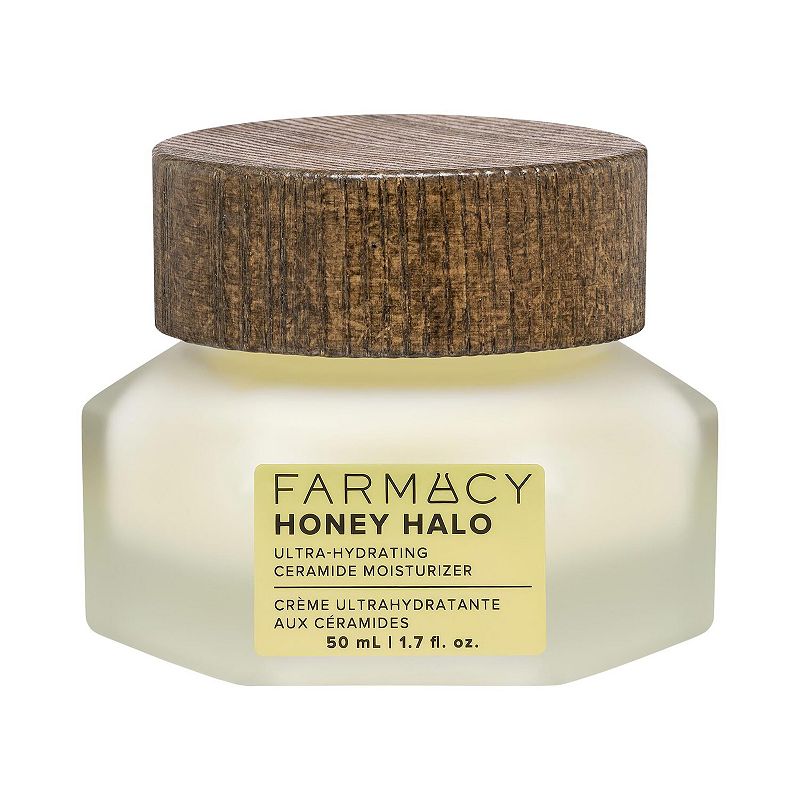
Farmacy Honey Halo Ultra-Hydrating Ceramide Daily Facial Moisturizer - 1.7 fl oz - Ulta Beauty: Normal, Combination, Mature, Dry, Very Dry Skin
At a glance
Summary
This moisturizer features a rich blend of natural and beneficial ingredients like shea butter, honey extract, and sunflower seed oil, which are known for their moisturizing and nourishing properties. The product is largely composed of safe and effective components, with only a minor concern due to the inclusion of 'flavor' which can be an irritant for sensitive skin. Overall, the formulation is clean and minimally processed, contributing to a high score.
Key ingredients 41
Butyrospermum Parkii (Shea) ButterVery Good
Shea butter is a natural fat extracted from the nuts of the shea tree. It is rich in vitamins and fatty acids, making it incredibly nourishing and moisturizing for the skin. It is well-tolerated by most skin types.
Risks
May cause allergic reactions in individuals with nut allergies.
Benefits
Deeply moisturizes and nourishes the skin, improving elasticity.
Honey Extract/Mel/Extrait de MielVery Good
Honey extract is known for its moisturizing and soothing properties. It is rich in antioxidants and helps to nourish the skin. It is well-tolerated by most skin types.
Risks
May cause allergic reactions in individuals with honey allergies.
Benefits
Moisturizes, soothes, and nourishes the skin.
PanthenolVery Good
Panthenol, also known as provitamin B5, is a humectant that attracts and retains moisture in the skin. It has soothing and anti-inflammatory properties. It is well-tolerated by most skin types.
Risks
Rarely, it may cause irritation in very sensitive skin.
Benefits
Attracts and retains moisture, soothes and calms the skin.
Helianthus Annuus (Sunflower) Seed Oil UnsaponifiablesVery Good
Sunflower seed oil unsaponifiables are rich in fatty acids and antioxidants. They help to nourish and protect the skin. They are well-tolerated by most skin types.
Risks
Generally considered safe with minimal risk of irritation.
Benefits
Nourishes and protects the skin, rich in antioxidants.
TocopherolVery Good
Tocopherol, also known as Vitamin E, is a powerful antioxidant that helps to protect the skin from free radical damage. It also has moisturizing and anti-inflammatory properties. It is well-tolerated by most skin types.
Risks
Generally considered safe with minimal risk of irritation.
Benefits
Protects the skin from free radical damage, moisturizes and soothes.
Hippophae Rhamnoides OilVery Good
Also known as sea buckthorn oil, it is rich in vitamins and fatty acids. It helps to nourish and rejuvenate the skin. It is well-tolerated by most skin types.
Risks
Generally considered safe with minimal risk of irritation.
Benefits
Nourishes and rejuvenates the skin, rich in vitamins.
BisabololVery Good
Bisabolol is a natural compound known for its soothing and anti-inflammatory properties. It helps to calm and protect the skin. It is well-tolerated by most skin types.
Risks
Generally considered safe with minimal risk of irritation.
Benefits
Soothes and calms the skin, has anti-inflammatory properties.
GlycerinGood
Glycerin is a humectant that attracts moisture to the skin, helping to keep it hydrated. It is widely used in skincare for its moisturizing properties. It is considered safe and beneficial for most skin types.
Risks
Rarely, it may cause irritation in very sensitive skin.
Benefits
Excellent for hydrating and maintaining moisture in the skin.
Caprylic/Capric TriglycerideGood
This ingredient is derived from coconut oil and glycerin, and is used as an emollient. It helps to smooth and soften the skin. It is lightweight and non-greasy, making it suitable for all skin types.
Risks
Generally considered safe with minimal risk of irritation.
Benefits
Provides a silky feel and helps to lock in moisture.
BetaineGood
Betaine is a natural amino acid derivative that acts as a humectant and anti-irritant. It helps to maintain skin hydration and reduce irritation. It is considered safe and beneficial for most skin types.
Risks
Generally considered safe with minimal risk of irritation.
Benefits
Helps to maintain skin hydration and reduce irritation.
Hydrogenated Rapeseed OilGood
Hydrogenated rapeseed oil is used as an emollient and skin conditioning agent. It helps to moisturize and soften the skin. It is considered safe for use in cosmetics.
Risks
Generally considered safe with minimal risk of irritation.
Benefits
Moisturizes and softens the skin.
Ceramide NPGood
Ceramide NP is a lipid that helps to restore and maintain the skin's natural barrier. It is essential for retaining moisture and protecting the skin from environmental stressors. It is well-tolerated by most skin types.
Risks
Generally considered safe with minimal risk of irritation.
Benefits
Restores and maintains the skin's natural barrier, retains moisture.
Propolis ExtractGood
Propolis extract is known for its anti-inflammatory and antimicrobial properties. It helps to soothe and protect the skin. It is well-tolerated by most skin types.
Risks
May cause allergic reactions in individuals with bee product allergies.
Benefits
Soothes and protects the skin, has antimicrobial properties.
Royal Jelly ExtractGood
Royal jelly extract is rich in vitamins and minerals, providing nourishment to the skin. It has moisturizing and anti-aging properties. It is well-tolerated by most skin types.
Risks
May cause allergic reactions in individuals with bee product allergies.
Benefits
Nourishes the skin, has moisturizing and anti-aging properties.
Ficus Carica (Fig) Fruit ExtractGood
Fig fruit extract is rich in antioxidants and vitamins, providing nourishment to the skin. It helps to improve skin hydration and elasticity. It is well-tolerated by most skin types.
Risks
Generally considered safe with minimal risk of irritation.
Benefits
Nourishes the skin, improves hydration and elasticity.
Water/Aqua/EauNeutral
Water is a common solvent used in cosmetics to dissolve other ingredients. It helps in the application and absorption of the product. It does not have any direct benefits or risks.
Benefits
Acts as a solvent and helps in the application of the product.
C13-15 AlkaneNeutral
C13-15 Alkane is used as an emollient and solvent in cosmetics. It helps to improve the texture and spreadability of the product. It is considered safe for use in cosmetics.
Benefits
Improves product texture and application.
Cetearyl AlcoholNeutral
Cetearyl Alcohol is a fatty alcohol used as an emollient and thickener in cosmetics. It helps to stabilize and thicken formulations. It is generally well-tolerated by the skin.
Risks
Rarely, it may cause irritation in very sensitive skin.
Benefits
Helps to stabilize and thicken cosmetic formulations.
Pentaerythrityl TetraisostearateNeutral
This ingredient is used as an emollient and skin conditioning agent. It helps to improve the texture and feel of the product. It is considered safe for use in cosmetics.
Benefits
Improves texture and provides a smooth application.
1, 2-HexanediolNeutral
1, 2-Hexanediol is used as a preservative and humectant in cosmetics. It helps to prevent microbial growth and retain moisture in the product. It is generally considered safe for use.
Risks
May cause irritation in very sensitive skin.
Benefits
Helps to preserve the product and retain moisture.
Bis-Diglyceryl Polyacyladipate-1Neutral
This ingredient is used as an emollient and thickener in cosmetics. It helps to improve the texture and feel of the product. It is considered safe for use in cosmetics.
Benefits
Improves texture and provides a smooth application.
Diisostearyl MalateNeutral
Diisostearyl Malate is used as an emollient and skin conditioning agent. It helps to improve the texture and feel of the product. It is considered safe for use in cosmetics.
Benefits
Improves texture and provides a smooth application.
XylitylglucosideNeutral
Xylitylglucoside is used as a humectant and skin conditioning agent. It helps to retain moisture in the skin. It is considered safe for use in cosmetics.
Benefits
Helps to retain moisture in the skin.
XylitolNeutral
Xylitol is a sugar alcohol used as a humectant in cosmetics. It helps to retain moisture in the skin. It is considered safe for use in cosmetics.
Benefits
Helps to retain moisture in the skin.
AnhydroxylitolNeutral
Anhydroxylitol is used as a humectant and skin conditioning agent. It helps to retain moisture in the skin. It is considered safe for use in cosmetics.
Benefits
Helps to retain moisture in the skin.
Cetearyl GlucosideNeutral
Cetearyl Glucoside is used as an emulsifier in cosmetics. It helps to blend oil and water-based ingredients. It is considered safe for use in cosmetics.
Benefits
Helps to blend oil and water-based ingredients.
TrioleinNeutral
Triolein is used as an emollient and skin conditioning agent. It helps to improve the texture and feel of the product. It is considered safe for use in cosmetics.
Benefits
Improves texture and provides a smooth application.
Hydroxyethyl Acrylate/Sodium Acryloyldimethyl Taurate CopolymerNeutral
This ingredient is used as a thickener and stabilizer in cosmetics. It helps to improve the texture and consistency of the product. It is considered safe for use in cosmetics.
Benefits
Improves texture and consistency of the product.
ArginineNeutral
Arginine is an amino acid used as a skin conditioning agent. It helps to improve the texture and feel of the product. It is considered safe for use in cosmetics.
Benefits
Improves texture and provides a smooth application.
HydroxyacetophenoneNeutral
Hydroxyacetophenone is used as an antioxidant and preservative in cosmetics. It helps to protect the product from degradation. It is considered safe for use in cosmetics.
Benefits
Protects the product from degradation.
Xanthan GumNeutral
Xanthan gum is used as a thickener and stabilizer in cosmetics. It helps to improve the texture and consistency of the product. It is considered safe for use in cosmetics.
Benefits
Improves texture and consistency of the product.
Glyceryl DioleateNeutral
Glyceryl dioleate is used as an emulsifier and skin conditioning agent. It helps to blend oil and water-based ingredients. It is considered safe for use in cosmetics.
Benefits
Helps to blend oil and water-based ingredients.
Sodium Dilauramidoglutamide LysineNeutral
This ingredient is used as an emulsifier and skin conditioning agent. It helps to improve the texture and feel of the product. It is considered safe for use in cosmetics.
Benefits
Improves texture and provides a smooth application.
Sodium PhytateNeutral
Sodium phytate is used as a chelating agent in cosmetics. It helps to stabilize the product by binding metal ions. It is considered safe for use in cosmetics.
Benefits
Stabilizes the product by binding metal ions.
Sorbitan IsostearateNeutral
Sorbitan isostearate is used as an emulsifier in cosmetics. It helps to blend oil and water-based ingredients. It is considered safe for use in cosmetics.
Benefits
Helps to blend oil and water-based ingredients.
Citric AcidNeutral
Citric acid is used as a pH adjuster in cosmetics. It helps to maintain the stability and effectiveness of the product. It is considered safe for use in cosmetics.
Risks
May cause irritation in very sensitive skin.
Benefits
Helps to maintain the stability and effectiveness of the product.
GlucoseBad
Processed additive flagged under Scout's ingredient doctrine.
Benefits
Helps to retain moisture in the skin.
Acrylates/C10-30 Alkyl Acrylate CrosspolymerBad
Processed additive flagged under Scout's ingredient doctrine.
Benefits
Improves texture and consistency of the product.
Flavor (Aroma)Bad
Flavor or aroma in cosmetics can be a source of irritation or allergic reactions for sensitive individuals. It is often a mixture of various chemicals. It is generally not necessary for skincare products.
Risks
May cause irritation or allergic reactions in sensitive individuals.
Benefits
Provides a pleasant scent to the product.
Potassium SorbateBad
Synthetic preservative — flagged in daily-use products.
Risks
May cause irritation in very sensitive skin.
Benefits
Prevents microbial growth and extends shelf life.
Sodium BenzoateBad
Synthetic preservative that can form benzene in the presence of vitamin C.
Risks
May cause irritation in very sensitive skin.
Benefits
Prevents microbial growth and extends shelf life.
Processing
Processed Foods
Get the full breakdown in the Scout appTake Scout shopping
Scan any product to see lab results, healthy alternatives, and your personalized analysis.
Are you Farmacy? Fix an error Get the badge Get tested
Amazon pricing & content
Amazon price as of . Product prices and availability are accurate as of the date/time indicated and are subject to change. Any price and availability information displayed on Amazon.com at the time of purchase will apply to the purchase of this product.
CERTAIN CONTENT THAT APPEARS ON THIS SITE COMES FROM AMAZON. THIS CONTENT IS PROVIDED “AS IS” AND IS SUBJECT TO CHANGE OR REMOVAL AT ANY TIME.