
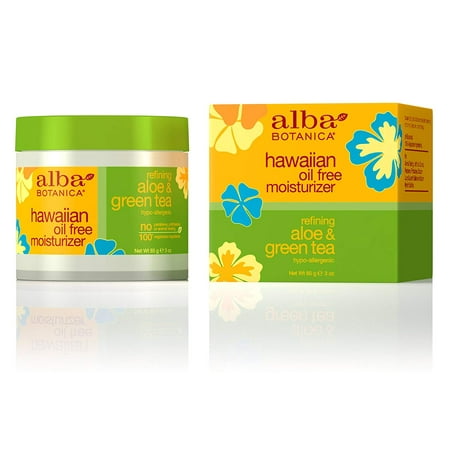

Alba Botanica Refining Aloe & Green Tea Hawaiian Oil-Free Moisturizer 3 oz.
Analysis updated August 2026 · How Scout scores
At a glance
Summary
This moisturizer contains a variety of beneficial ingredients such as aloe vera, green tea extract, and hyaluronic acid, which are known for their hydrating and soothing properties. However, the presence of phenoxyethanol, a preservative that can be irritating to some individuals, slightly lowers its overall safety profile. The product is moderately processed, which also impacts its rating.
Key ingredients 24
Aloe Barbadensis Leaf JuiceVery Good
Aloe Barbadensis Leaf Juice is known for its soothing and hydrating properties. It is widely used in skincare for its ability to calm irritated skin and provide moisture. It is considered beneficial for all skin types.
Risks
There are minimal risks; it is generally well-tolerated.
Benefits
It helps to soothe and hydrate the skin, reducing redness and irritation.
Camellia Sinensis Leaf ExtractVery Good
Camellia Sinensis Leaf Extract, commonly known as green tea extract, is rich in antioxidants and has anti-inflammatory properties. It is used in skincare for its ability to protect the skin from environmental damage and reduce redness. It is considered beneficial for all skin types.
Risks
There are minimal risks; it is generally well-tolerated.
Benefits
It helps to protect the skin from oxidative stress and soothe irritation.
Centella Asiatica ExtractVery Good
Centella Asiatica Extract is known for its healing and soothing properties. It is used in skincare for its ability to calm irritated skin and promote collagen production. It is considered beneficial for all skin types, especially sensitive skin.
Risks
There are minimal risks; it is generally well-tolerated.
Benefits
It helps to soothe and repair the skin, reducing redness and promoting a healthy complexion.
PanthenolVery Good
Panthenol, also known as provitamin B5, is a humectant that helps to attract and retain moisture in the skin. It is used in skincare for its moisturizing and soothing properties. It is considered beneficial for all skin types.
Risks
There are minimal risks; it is generally well-tolerated.
Benefits
It helps to hydrate and soothe the skin, improving its overall texture and appearance.
AllantoinVery Good
Allantoin is known for its soothing and skin-conditioning properties. It is used in skincare to calm irritated skin and promote healing. It is considered beneficial for all skin types, especially sensitive skin.
Risks
There are minimal risks; it is generally well-tolerated.
Benefits
It helps to soothe and protect the skin, reducing redness and irritation.
GlycerinGood
Glycerin is a humectant that attracts moisture to the skin, helping to keep it hydrated. It is widely used in skincare for its moisturizing properties. It is considered safe and beneficial for most skin types.
Risks
There are minimal risks associated with glycerin; it is generally well-tolerated.
Benefits
Glycerin helps to maintain the skin's moisture balance and improve skin barrier function.
Caprylic/Capric TriglycerideGood
Caprylic/Capric Triglyceride is derived from coconut oil and glycerin, used as an emollient and dispersing agent. It helps to moisturize and replenish the skin. It is lightweight and non-greasy, making it suitable for all skin types.
Risks
There are minimal risks associated with its use; it is generally well-tolerated.
Benefits
It helps to improve skin hydration and provides a silky feel to the product.
Ananas Sativus (Pineapple) Fruit ExtractGood
Pineapple Fruit Extract is rich in antioxidants and enzymes that help to exfoliate and brighten the skin. It is used in skincare for its ability to improve skin texture and tone. It is generally considered beneficial for most skin types.
Risks
It may cause irritation in sensitive skin due to its enzymatic activity.
Benefits
It helps to gently exfoliate the skin, promoting a brighter and more even complexion.
Carica Papaya (Papaya) Fruit ExtractGood
Papaya Fruit Extract contains enzymes that help to exfoliate and rejuvenate the skin. It is used in skincare for its ability to improve skin texture and promote a radiant complexion. It is generally considered beneficial for most skin types.
Risks
It may cause irritation in sensitive skin due to its enzymatic activity.
Benefits
It helps to gently exfoliate the skin, promoting a smoother and more even appearance.
Cucumis Sativus (Cucumber) Fruit ExtractGood
Cucumber Fruit Extract is known for its cooling and soothing properties. It is used in skincare for its ability to hydrate and calm the skin. It is generally considered beneficial for all skin types.
Risks
There are minimal risks; it is generally well-tolerated.
Benefits
It helps to soothe and hydrate the skin, reducing puffiness and irritation.
Hyaluronic AcidGood
Hyaluronic Acid is a powerful humectant that attracts and retains moisture in the skin. It is widely used in skincare for its ability to hydrate and plump the skin. It is considered beneficial for all skin types.
Risks
There are minimal risks; it is generally well-tolerated.
Benefits
It helps to deeply hydrate the skin, improving its elasticity and reducing the appearance of fine lines.
Sodium PCAGood
Sodium PCA is a natural component of the skin's natural moisturizing factor. It is used in skincare for its ability to attract moisture and improve skin hydration. It is considered beneficial for all skin types.
Risks
There are minimal risks; it is generally well-tolerated.
Benefits
It helps to maintain skin hydration and improve its overall texture and appearance.
WaterNeutral
Water is a common solvent used in cosmetics to dissolve other ingredients. It helps in the application and absorption of the product. It does not have any direct benefits or risks associated with its use in skincare.
Risks
There are no significant risks associated with water in cosmetics.
Benefits
Water helps in hydrating the skin by acting as a vehicle for other moisturizing ingredients.
Cetearyl AlcoholNeutral
Cetearyl Alcohol is a fatty alcohol used as an emollient and thickener in cosmetics. It helps to stabilize and improve the texture of the product. It is not drying like other alcohols and is generally considered safe.
Risks
Rarely, it may cause irritation in sensitive individuals.
Benefits
It helps to soften and smooth the skin, enhancing the product's feel.
Ethylhexyl PalmitateNeutral
Ethylhexyl Palmitate is an ester used as an emollient and texture enhancer in cosmetics. It provides a smooth application and helps to condition the skin. It is generally considered safe for use in skincare products.
Risks
It may cause mild irritation in sensitive skin types.
Benefits
It helps to improve the spreadability of the product and leaves the skin feeling soft.
Stearic AcidNeutral
Stearic Acid is a fatty acid used as an emulsifier and thickener in cosmetics. It helps to stabilize formulations and improve texture. It is generally considered safe for use in skincare products.
Risks
It may cause mild irritation in sensitive individuals.
Benefits
It helps to maintain the consistency of the product and provides a smooth application.
Glyceryl StearateNeutral
Glyceryl Stearate is an emulsifier that helps to blend oil and water components in formulations. It improves the texture and stability of the product. It is generally considered safe for use in cosmetics.
Risks
It may cause mild irritation in sensitive skin types.
Benefits
It helps to maintain the consistency of the product and enhances its moisturizing properties.
Glyceryl LaurateNeutral
Glyceryl Laurate is an emulsifier and surfactant used in cosmetics to stabilize formulations. It helps to blend ingredients and improve product texture. It is generally considered safe for use in skincare products.
Risks
It may cause mild irritation in sensitive individuals.
Benefits
It helps to maintain the consistency of the product and enhances its spreadability.
Hedychium Coronarium Root ExtractNeutral
Hedychium Coronarium Root Extract is used in cosmetics for its fragrance and potential antioxidant properties. It is not widely studied in skincare. It is generally considered safe for use in cosmetics.
Risks
It may cause irritation in sensitive individuals due to its fragrance components.
Benefits
It may provide antioxidant benefits, protecting the skin from environmental stressors.
Potassium HydroxideNeutral
Potassium Hydroxide is used in cosmetics as a pH adjuster. It helps to balance the acidity of the product, ensuring it is safe for skin application. It is generally considered safe in low concentrations.
Risks
In high concentrations, it can be irritating to the skin.
Benefits
It helps to maintain the stability and effectiveness of the product by balancing its pH.
Xanthan GumNeutral
Xanthan Gum is used as a thickening agent and stabilizer in cosmetics. It helps to improve the texture and consistency of the product. It is generally considered safe for use in skincare products.
Risks
There are minimal risks; it is generally well-tolerated.
Benefits
It helps to stabilize the formulation, ensuring a smooth and even application.
EthylhexylglycerinNeutral
Ethylhexylglycerin is used as a preservative and skin-conditioning agent in cosmetics. It helps to enhance the efficacy of other preservatives and improve skin feel. It is generally considered safe for use in skincare products.
Risks
It may cause mild irritation in sensitive individuals.
Benefits
It helps to preserve the product and improve its overall texture and application.
DimethiconeBad
Occlusive silicone film-former — flagged under clean-beauty doctrine.
Risks
It may cause breakouts in acne-prone skin due to its occlusive nature.
Benefits
It helps to create a barrier on the skin, preventing moisture loss and improving texture.
PhenoxyethanolBad
Phenoxyethanol is a preservative used in cosmetics to prevent microbial growth. It is effective in low concentrations but can be irritating to the skin and eyes. It is considered a moderate risk ingredient in skincare.
Risks
It may cause irritation and allergic reactions, especially in sensitive skin.
Benefits
It helps to preserve the product, extending its shelf life and preventing contamination.
Get the full breakdown in the Scout appTake Scout shopping
Scan any product to see lab results, healthy alternatives, and your personalized analysis.
Download on theApp Store GET IT ONGoogle PlayAmazon pricing & content
Amazon price as of . Product prices and availability are accurate as of the date/time indicated and are subject to change. Any price and availability information displayed on Amazon.com at the time of purchase will apply to the purchase of this product.
CERTAIN CONTENT THAT APPEARS ON THIS SITE COMES FROM AMAZON. THIS CONTENT IS PROVIDED “AS IS” AND IS SUBJECT TO CHANGE OR REMOVAL AT ANY TIME.