
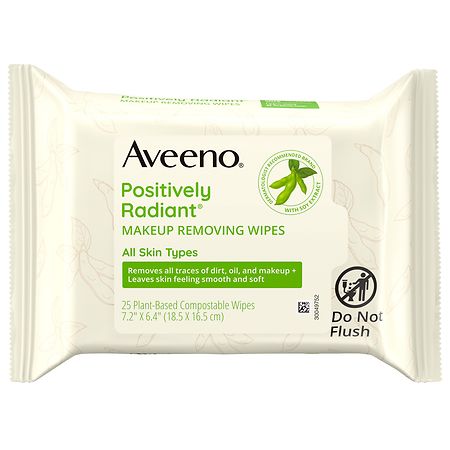


Aveeno Positively Radiant Oil-Free Makeup Removal Facial Wipes for All Skin Types - 25 ct: Hypoallergenic, Paraben-Free, Alcohol-Free
AveenoAnalysis updated September 2026 · How Scout scores
At a glance
Summary
This product contains beneficial ingredients like Glycine Soja Protein, which is nourishing for the skin. However, it also includes potentially irritating components such as phenoxyethanol and parfum, which can cause allergic reactions and skin irritation. The presence of synthetic ingredients and preservatives contributes to a moderate processing level, impacting the overall score.
Key ingredients 21
Glycine Soja (Soybean) ProteinGood
Glycine Soja Protein is used as a skin conditioning agent in cosmetics. It helps in nourishing and moisturizing the skin. It is derived from soybeans and is generally considered beneficial for skin health.
Risks
There are minimal risks, though it may cause allergic reactions in individuals with soy allergies.
Benefits
It helps in improving skin elasticity and providing nourishment.
WaterNeutral
Water is a common solvent used in cosmetics to dissolve other ingredients. It helps in the application and absorption of the product. It is generally considered safe and non-irritating.
Risks
There are no significant risks associated with water in cosmetics.
Benefits
Water helps in hydrating the skin and acts as a carrier for other beneficial ingredients.
Isononyl IsononanoateNeutral
Isononyl Isononanoate is an emollient that helps to soften and smooth the skin. It is commonly used in cosmetics for its non-greasy feel. It is generally considered safe for use in skincare products.
Risks
There are minimal risks associated with this ingredient, though it may cause irritation in very sensitive skin.
Benefits
It provides a silky feel to the skin and helps in maintaining skin moisture.
Pentaerythrityl TetraethylhexanoateNeutral
This ingredient is used as an emollient and skin conditioning agent. It helps to improve the texture of the product and provides a smooth application. It is considered safe for use in cosmetics.
Risks
There are no significant risks associated with this ingredient.
Benefits
It enhances the skin's appearance by providing a soft and smooth texture.
Cetyl EthylhexanoateNeutral
Cetyl Ethylhexanoate is an emollient that helps to soften and condition the skin. It is used for its ability to provide a smooth and silky feel. It is generally regarded as safe in cosmetics.
Risks
There are minimal risks, though it may cause mild irritation in sensitive individuals.
Benefits
It helps in improving the skin's texture and provides a non-greasy finish.
Isostearyl PalmitateNeutral
Isostearyl Palmitate is an emollient that provides a smooth application and helps to condition the skin. It is commonly used in cosmetics for its non-greasy feel. It is considered safe for use.
Risks
There are minimal risks associated with this ingredient.
Benefits
It helps to improve the skin's texture and provides a soft, smooth feel.
CyclopentasiloxaneNeutral
Cyclopentasiloxane is a silicone-based compound used to provide a silky, smooth feel to the skin. It helps in the even application of the product. It is generally considered safe for use in cosmetics.
Risks
There are minimal risks, though it may cause irritation in sensitive skin.
Benefits
It provides a smooth application and helps in reducing the appearance of fine lines.
Hexylene GlycolNeutral
Hexylene Glycol is used as a solvent and viscosity agent in cosmetics. It helps in the even distribution of the product. It is generally considered safe for use.
Risks
There are minimal risks, though it may cause irritation in sensitive skin.
Benefits
It helps in improving the texture and consistency of the product.
PEG-6 Caprylic/Capric GlyceridesNeutral
This ingredient is used as an emulsifier and surfactant in cosmetics. It helps in mixing oil and water-based ingredients. It is generally considered safe for use.
Risks
There are minimal risks, though it may cause irritation in sensitive skin.
Benefits
It helps in stabilizing the formulation and improving product texture.
Sucrose CocoateNeutral
Sucrose Cocoate is an emulsifier and surfactant derived from sugar and coconut oil. It helps in mixing oil and water-based ingredients. It is generally considered safe for use in cosmetics.
Risks
There are minimal risks associated with this ingredient.
Benefits
It helps in stabilizing the formulation and improving product texture.
Sodium HydroxideNeutral
Sodium Hydroxide is used to adjust the pH of cosmetics. It helps in maintaining the stability and effectiveness of the product. It is generally considered safe when used in small amounts.
Risks
In high concentrations, it can be corrosive and cause irritation.
Benefits
It helps in maintaining the pH balance of the product.
PEG-4 LaurateNeutral
PEG-4 Laurate is used as an emulsifier and surfactant in cosmetics. It helps in mixing oil and water-based ingredients. It is generally considered safe for use.
Risks
There are minimal risks, though it may cause irritation in sensitive skin.
Benefits
It helps in stabilizing the formulation and improving product texture.
Benzoic AcidNeutral
Benzoic Acid is used as a preservative in cosmetics to prevent microbial growth. It helps in extending the shelf life of products. It is generally considered safe for use.
Risks
It may cause irritation in sensitive skin.
Benefits
It helps in preserving the product and preventing contamination.
Butylene GlycolNeutral
Butylene Glycol is used as a solvent and humectant in cosmetics. It helps in retaining moisture and improving product texture. It is generally considered safe for use.
Risks
There are minimal risks, though it may cause irritation in sensitive skin.
Benefits
It helps in hydrating the skin and improving product texture.
Dehydroacetic AcidNeutral
Dehydroacetic Acid is used as a preservative in cosmetics to prevent microbial growth. It helps in extending the shelf life of products. It is generally considered safe for use.
Risks
There are minimal risks associated with this ingredient.
Benefits
It helps in preserving the product and preventing contamination.
EthylhexylglycerinNeutral
Ethylhexylglycerin is used as a preservative and skin conditioning agent in cosmetics. It helps in enhancing the effectiveness of other preservatives. It is generally considered safe for use.
Risks
There are minimal risks associated with this ingredient.
Benefits
It helps in preserving the product and improving skin feel.
Iodopropynyl ButylcarbamateNeutral
Iodopropynyl Butylcarbamate is used as a preservative in cosmetics to prevent microbial growth. It helps in extending the shelf life of products. It is generally considered safe for use in low concentrations.
Risks
It may cause irritation in sensitive skin.
Benefits
It helps in preserving the product and preventing contamination.
Polyaminopropyl BiguanideNeutral
Polyaminopropyl Biguanide is used as a preservative in cosmetics to prevent microbial growth. It helps in extending the shelf life of products. It is generally considered safe for use.
Risks
There are minimal risks associated with this ingredient.
Benefits
It helps in preserving the product and preventing contamination.
PhenoxyethanolBad
Phenoxyethanol is a preservative used to prevent microbial growth in cosmetics. It is effective in extending the shelf life of products. However, it can cause irritation and allergic reactions in some individuals.
Risks
It may cause skin irritation and allergic reactions, especially in sensitive individuals.
Benefits
It helps in preserving the product and preventing contamination.
ParfumBad
Parfum, or fragrance, is used to impart a pleasant scent to cosmetics. However, it is a common allergen and can cause skin irritation and sensitization. It is often criticized for its potential to cause allergic reactions.
Risks
It can cause skin irritation, allergic reactions, and sensitization.
Benefits
It provides a pleasant scent to the product.
Acrylates/C10-30 Alkyl Acrylate CrosspolymerBad
Processed additive flagged under Scout's ingredient doctrine.
Risks
There are minimal risks associated with this ingredient.
Benefits
It helps in improving the texture and consistency of the product.
Get the full breakdown in the Scout appTake Scout shopping
Scan any product to see lab results, healthy alternatives, and your personalized analysis.
Download on theApp Store GET IT ONGoogle PlayAmazon pricing & content
Amazon price as of . Product prices and availability are accurate as of the date/time indicated and are subject to change. Any price and availability information displayed on Amazon.com at the time of purchase will apply to the purchase of this product.
CERTAIN CONTENT THAT APPEARS ON THIS SITE COMES FROM AMAZON. THIS CONTENT IS PROVIDED “AS IS” AND IS SUBJECT TO CHANGE OR REMOVAL AT ANY TIME.