
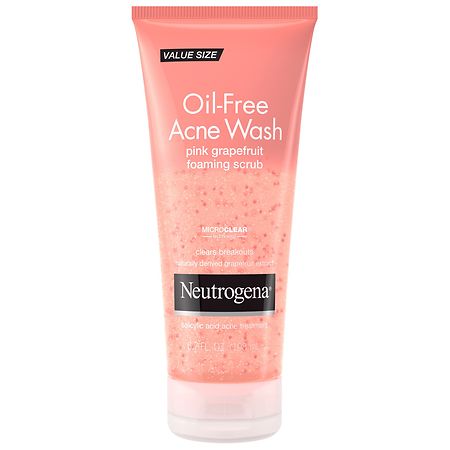


Neutrogena Oil Free Pink Grapefruit Acne Face Wash with Vitamin C for Breakouts - 6.7 fl oz: Noncomedogenic, Paraben-Free, Sulfate-Free, For Normal
Analysis updated August 2026 · How Scout scores
At a glance
Summary
This face wash contains beneficial ingredients like Aloe Barbadensis Leaf Extract and Chamomilla Recutita Flower Extract, which provide soothing and anti-inflammatory benefits. However, the presence of Sodium C14-16 Olefin Sulfonate, a harsh surfactant, and fragrance, which can cause irritation, detracts from its overall safety profile. The product is moderately processed, which further impacts its rating.
Key ingredients 25
Aloe Barbadensis Leaf ExtractVery Good
Aloe Barbadensis Leaf Extract is known for its soothing and moisturizing properties. It helps to calm irritated skin and provide hydration. It is widely used in skincare for its beneficial effects.
Risks
There are no significant risks associated with this ingredient.
Benefits
Soothes and hydrates the skin, reducing irritation.
Anthemis Nobilis Flower ExtractVery Good
Anthemis Nobilis Flower Extract, also known as chamomile extract, is used for its calming and anti-inflammatory properties. It helps to soothe and reduce redness in the skin. It is beneficial for sensitive or irritated skin.
Risks
There are no significant risks associated with this ingredient.
Benefits
Calms and soothes the skin, reducing inflammation.
Chamomilla Recutita (Matricaria) Flower ExtractVery Good
Chamomilla Recutita Flower Extract is known for its soothing and anti-inflammatory properties. It helps to calm irritated skin and reduce redness. It is beneficial for sensitive or reactive skin types.
Risks
There are no significant risks associated with this ingredient.
Benefits
Soothes and calms the skin, reducing irritation and redness.
Ascorbyl PalmitateGood
Ascorbyl Palmitate is a stable form of Vitamin C used for its antioxidant properties. It helps to protect the skin from free radical damage. It is generally well-tolerated and beneficial for skin health.
Risks
There are no significant risks associated with this ingredient.
Benefits
Provides antioxidant protection and supports skin health.
Citrus Grandis (Grapefruit) Fruit ExtractGood
Citrus Grandis Fruit Extract is used for its antioxidant and astringent properties. It helps to tighten pores and protect the skin from free radical damage. It is beneficial for oily or acne-prone skin.
Risks
May cause irritation in very sensitive skin types.
Benefits
Provides antioxidant protection and helps to tighten pores.
WaterNeutral
Water is a common solvent used in cosmetics to dissolve other ingredients. It does not provide any direct skincare benefits or risks. It serves as a base for the formulation.
Risks
There are no known risks associated with water in cosmetic formulations.
Benefits
Water helps to dissolve and distribute other ingredients evenly.
Cocamidopropyl BetaineNeutral
Cocamidopropyl Betaine is a mild surfactant derived from coconut oil. It is used to reduce irritation potential of other surfactants. It is generally well-tolerated by most skin types.
Risks
In rare cases, it may cause allergic reactions or irritation.
Benefits
Helps to create a rich lather and improve the texture of the product.
Sodium ChlorideNeutral
Sodium Chloride, or table salt, is used to thicken the consistency of the product. It does not provide direct skincare benefits. It is generally considered safe in cosmetic formulations.
Risks
Excessive use may lead to dryness or irritation.
Benefits
Helps to adjust the viscosity of the formulation.
PEG-120 Methyl Glucose DioleateNeutral
PEG-120 Methyl Glucose Dioleate is an emulsifier and thickener used to stabilize formulations. It is generally considered safe for use in cosmetics. It does not provide direct skincare benefits.
Risks
May cause irritation in very sensitive skin types.
Benefits
Helps to maintain product consistency and stability.
Polysorbate 20Neutral
Polysorbate 20 is an emulsifier used to mix oil and water-based ingredients. It is generally regarded as safe in cosmetic formulations. It does not provide direct skincare benefits.
Risks
May cause mild irritation in sensitive individuals.
Benefits
Improves the texture and stability of the product.
Linoleamidopropyl PG-Dimonium Chloride PhosphateNeutral
This ingredient is used as a conditioning agent in cosmetics. It helps to improve the feel of the skin after use. It is generally considered safe for use.
Risks
There are no significant risks associated with this ingredient.
Benefits
Enhances the skin's softness and smoothness.
PEG-80 Sorbitan LaurateNeutral
PEG-80 Sorbitan Laurate is an emulsifier used to stabilize formulations. It is generally considered safe for use in cosmetics. It does not provide direct skincare benefits.
Risks
May cause mild irritation in sensitive individuals.
Benefits
Improves the texture and stability of the product.
Benzalkonium ChlorideNeutral
Benzalkonium Chloride is a preservative and antimicrobial agent used in cosmetics. It helps to prevent the growth of bacteria and mold in the product. It is generally considered safe for use in low concentrations.
Risks
May cause irritation or allergic reactions in sensitive individuals.
Benefits
Prevents microbial contamination, extending the product's shelf life.
C12-15 Alkyl LactateNeutral
C12-15 Alkyl Lactate is an emollient used to improve the texture of the product. It helps to soften and smooth the skin. It is generally considered safe for use in cosmetics.
Risks
There are no significant risks associated with this ingredient.
Benefits
Enhances the skin's softness and smoothness.
Polyquaternium-7Neutral
Polyquaternium-7 is a conditioning agent used to improve the feel of the skin. It helps to reduce static and enhance the texture of the product. It is generally considered safe for use in cosmetics.
Risks
There are no significant risks associated with this ingredient.
Benefits
Improves the texture and feel of the skin.
Sodium Benzotriazolyl Butylphenol SulfonateNeutral
This ingredient is used as a UV absorber in cosmetics. It helps to protect the product from degradation due to light exposure. It is generally considered safe for use in cosmetics.
Risks
There are no significant risks associated with this ingredient.
Benefits
Protects the product from UV-induced degradation.
Cocamidopropyl PG-Dimonium Chloride PhosphateNeutral
This ingredient is used as a conditioning agent in cosmetics. It helps to improve the feel of the skin after use. It is generally considered safe for use.
Risks
There are no significant risks associated with this ingredient.
Benefits
Enhances the skin's softness and smoothness.
Citric AcidNeutral
Citric Acid is used to adjust the pH of cosmetic formulations. It does not provide direct skincare benefits. It is generally considered safe for use in cosmetics.
Risks
May cause irritation in sensitive skin types if used in high concentrations.
Benefits
Helps to maintain the stability and efficacy of the product.
Sodium HydroxideNeutral
Sodium Hydroxide is used to adjust the pH of cosmetic formulations. It is generally considered safe when used in low concentrations. It does not provide direct skincare benefits.
Risks
May cause irritation if used in high concentrations.
Benefits
Helps to maintain the stability and efficacy of the product.
Red 40Neutral
Red 40 is a synthetic dye used to impart color to cosmetic products. It is generally considered safe for use in cosmetics. It does not provide direct skincare benefits.
Risks
May cause allergic reactions in sensitive individuals.
Benefits
Enhances the visual appeal of the product.
Violet 2Neutral
Violet 2 is a synthetic dye used to impart color to cosmetic products. It is generally considered safe for use in cosmetics. It does not provide direct skincare benefits.
Risks
May cause allergic reactions in sensitive individuals.
Benefits
Enhances the visual appeal of the product.
Sodium C14-16 Olefin SulfonateBad
Sodium C14-16 Olefin Sulfonate is a surfactant used for its cleansing properties. It can be harsh on the skin, potentially causing dryness or irritation. It is considered a less gentle alternative to other surfactants.
Risks
May cause skin irritation or dryness, especially in sensitive skin types.
Benefits
Effectively removes dirt and oil from the skin.
Propylene GlycolBad
Processed additive flagged under Scout's ingredient doctrine.
Risks
May cause irritation in sensitive skin types.
Benefits
Helps to maintain skin hydration.
Disodium EDTABad
Processed additive flagged under Scout's ingredient doctrine.
Risks
There are no significant risks associated with this ingredient.
Benefits
Helps to maintain product stability and efficacy.
FragranceVery Bad
Fragrance is used to impart a pleasant scent to the product. It can cause allergic reactions or irritation in sensitive individuals. It is often criticized for its potential to cause skin sensitivity.
Risks
May cause skin irritation or allergic reactions.
Benefits
Enhances the sensory experience of using the product.
Get the full breakdown in the Scout appTake Scout shopping
Scan any product to see lab results, healthy alternatives, and your personalized analysis.
Download on theApp Store GET IT ONGoogle PlayAmazon pricing & content
Amazon price as of . Product prices and availability are accurate as of the date/time indicated and are subject to change. Any price and availability information displayed on Amazon.com at the time of purchase will apply to the purchase of this product.
CERTAIN CONTENT THAT APPEARS ON THIS SITE COMES FROM AMAZON. THIS CONTENT IS PROVIDED “AS IS” AND IS SUBJECT TO CHANGE OR REMOVAL AT ANY TIME.