
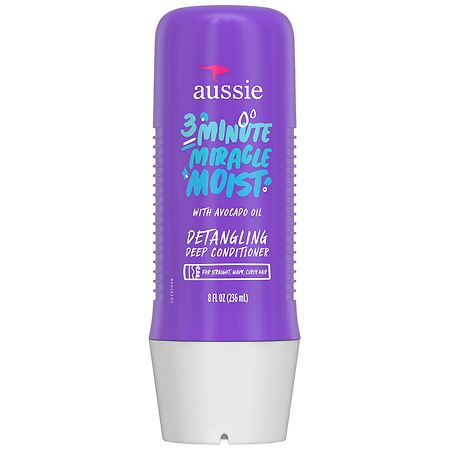
Aussie Paraben-Free Miracle Moist 3 Minute Miracle with Avocado for Dry Hair Repair - 8 fl oz: Deep Conditioner, Sulfate-Free, Contains Jojoba Oil
Analysis updated August 2026 · How Scout scores
At a glance
Summary
This deep conditioner is free from sulfates and parabens, which is beneficial for hair health. However, it contains non-water-soluble silicone (Bis-Aminopropyl Dimethicone) and synthetic fragrance, which can lead to buildup and potential irritation. Additionally, the presence of preservatives like Methylchloroisothiazolinone and Methylisothiazolinone, known for causing allergic reactions, further impacts its overall safety profile.
Key ingredients 14
Persea Gratissima (Avocado) OilVery Good
Avocado Oil is rich in vitamins and fatty acids, providing deep nourishment to hair. It is known for its moisturizing and strengthening properties. It is highly beneficial for dry and damaged hair.
Risks
There are minimal risks, primarily related to potential allergic reactions in sensitive individuals.
Benefits
Avocado Oil deeply conditions and strengthens hair, improving its elasticity and shine.
Simmondsia Chinensis (Jojoba) Seed OilVery Good
Jojoba Oil closely resembles the natural oils of the scalp, making it an excellent moisturizer. It helps to balance oil production and condition hair. It is highly regarded for its nourishing properties.
Risks
There are minimal risks, with rare cases of allergic reactions.
Benefits
Jojoba Oil moisturizes and conditions hair, promoting a healthy scalp and shiny hair.
WaterNeutral
Water is a common solvent used in cosmetic formulations. It helps to dissolve other ingredients and provides a base for the product. It is generally considered safe and non-reactive.
Risks
There are no significant risks associated with water in cosmetic products.
Benefits
Water helps to hydrate and distribute other ingredients evenly across the hair.
Stearyl AlcoholNeutral
Standard formulation ingredient — neither beneficial nor harmful at typical use.
Risks
There are minimal risks associated with Stearyl Alcohol, primarily related to potential skin irritation in sensitive individuals.
Benefits
It provides moisture and improves the texture of hair, making it feel softer and more manageable.
Cetyl AlcoholNeutral
Standard formulation ingredient — neither beneficial nor harmful at typical use.
Risks
There is a low risk of skin irritation, but it is generally well-tolerated.
Benefits
Cetyl Alcohol helps to condition and soften hair, enhancing its overall feel and appearance.
Stearamidopropyl DimethylamineNeutral
Stearamidopropyl Dimethylamine is a conditioning agent that helps to detangle hair. It is used to improve the manageability of hair. It is considered safe for use in hair care products.
Risks
There is a potential for mild irritation in sensitive individuals.
Benefits
It helps to reduce static and improve the smoothness of hair.
Glutamic AcidNeutral
Glutamic Acid is an amino acid used as a conditioning agent. It helps to improve the texture and manageability of hair. It is generally considered safe for use in hair care products.
Risks
There are minimal risks associated with Glutamic Acid in cosmetic formulations.
Benefits
It helps to condition and strengthen hair, improving its overall health.
Citric AcidNeutral
Citric Acid is used to adjust the pH of cosmetic formulations. It helps to maintain the stability and effectiveness of the product. It is generally considered safe for use in hair care products.
Risks
There is a low risk of irritation, especially if used in high concentrations.
Benefits
It helps to balance the pH of the product, ensuring it is gentle on hair and scalp.
EDTANeutral
EDTA is a chelating agent used to improve the stability of cosmetic formulations. It helps to bind metal ions and prevent them from affecting the product. It is generally considered safe for use in cosmetics.
Risks
There is a low risk of irritation, but it is generally well-tolerated.
Benefits
It enhances the stability and effectiveness of the product by binding metal ions.
Bis-Aminopropyl DimethiconeBad
Bis-Aminopropyl Dimethicone is a silicone used for its smoothing and conditioning properties. It can cause buildup on hair over time, leading to dullness and brittleness. It is often criticized for being non-water-soluble.
Risks
It can lead to product buildup, making hair feel heavy and less manageable.
Benefits
It provides immediate smoothness and shine to hair, reducing frizz.
Benzyl AlcoholBad
Benzyl Alcohol is used as a preservative and solvent. It can be drying and irritating to the skin and scalp. It is often criticized for its potential to cause irritation.
Risks
It can cause skin and scalp irritation, particularly in sensitive individuals.
Benefits
It acts as a preservative, extending the shelf life of the product.
MethylchloroisothiazolinoneBad
Methylchloroisothiazolinone is a preservative with antimicrobial properties. It is known to cause allergic reactions and skin sensitization in some individuals. It is often criticized for its potential to cause irritation.
Risks
It can cause skin irritation and allergic reactions, particularly in sensitive individuals.
Benefits
It provides effective preservation, preventing microbial growth in the product.
FragranceVery Bad
Fragrance is a synthetic or natural compound used to impart scent. It can cause allergic reactions and sensitivities in some individuals. It is often criticized for its lack of transparency regarding specific components.
Risks
Fragrance can cause skin irritation and allergic reactions, especially in sensitive individuals.
Benefits
It provides a pleasant scent to the product, enhancing user experience.
MethylisothiazolinoneVery Bad
Methylisothiazolinone is a preservative used for its antimicrobial properties. It is associated with skin sensitization and allergic reactions. It is often criticized for its potential to cause irritation.
Risks
It can cause skin irritation and allergic reactions, especially in sensitive individuals.
Benefits
It helps to preserve the product by preventing microbial growth.
Processing
Processed Foods
Get the full breakdown in the Scout appTake Scout shopping
Scan any product to see lab results, healthy alternatives, and your personalized analysis.
Download on theApp Store GET IT ONGoogle PlayAmazon pricing & content
Amazon price as of . Product prices and availability are accurate as of the date/time indicated and are subject to change. Any price and availability information displayed on Amazon.com at the time of purchase will apply to the purchase of this product.
CERTAIN CONTENT THAT APPEARS ON THIS SITE COMES FROM AMAZON. THIS CONTENT IS PROVIDED “AS IS” AND IS SUBJECT TO CHANGE OR REMOVAL AT ANY TIME.