
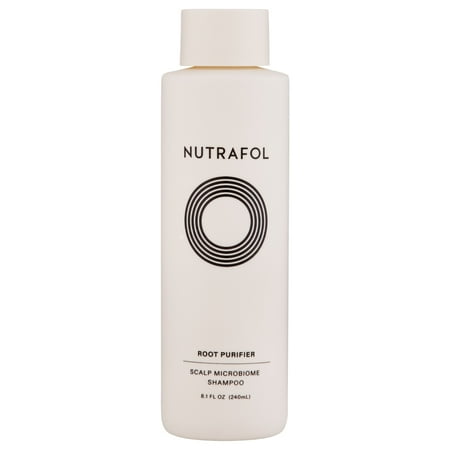

Nutrafol Root Purifier Shampoo null
Analysis updated August 2026 · How Scout scores
At a glance
Summary
This shampoo contains beneficial ingredients like Cocamidopropyl Betaine and Hydrolyzed Quinoa, which are gentle and nourishing for the hair. However, the presence of sodium chloride, synthetic fragrance, and benzyl alcohol raises concerns due to their potential to cause dryness and irritation. The product is moderately processed, which impacts its overall rating.
Key ingredients 34
GlycerinGood
Glycerin is a well-known humectant that attracts moisture to the hair and scalp, helping to maintain hydration. It is derived from natural sources and is considered safe and effective for all hair types. It enhances the moisturizing properties of the shampoo.
Risks
Generally considered safe with minimal risk of irritation.
Benefits
Helps to retain moisture, improving hair hydration and softness.
GlycolipidsGood
Glycolipids are natural surfactants that help to gently cleanse the hair while maintaining moisture balance. They are derived from sugar and fatty acids and are known for their mildness and skin compatibility. They enhance the overall conditioning effect of the shampoo.
Risks
Low risk of irritation or allergic reaction.
Benefits
Provides gentle cleansing and helps maintain moisture balance.
Hydrolyzed QuinoaGood
Hydrolyzed Quinoa is a protein that helps to strengthen and protect the hair shaft. It is known for its ability to enhance hair shine and smoothness. It is derived from quinoa seeds and is considered a beneficial ingredient for hair health.
Risks
Minimal risk of irritation; generally well-tolerated.
Benefits
Strengthens hair and improves shine and smoothness.
Kunzea Pomifera Fruit ExtractGood
This extract is rich in antioxidants and is used for its protective and soothing properties. It is derived from the native Australian plant and is known for its ability to calm and nourish the scalp. It is considered a beneficial addition to hair care products.
Risks
Low risk of irritation; generally safe for use.
Benefits
Provides antioxidant protection and soothes the scalp.
Syzygium Luehmannii Fruit ExtractGood
This fruit extract is known for its high antioxidant content, which helps to protect the hair and scalp from environmental damage. It is derived from the Australian rainforest and is valued for its nourishing properties. It contributes to the overall health of the hair.
Risks
Minimal risk of irritation; generally considered safe.
Benefits
Offers antioxidant protection and nourishes the hair and scalp.
Tasmannia Lanceolata Fruit ExtractGood
This extract is known for its anti-inflammatory and soothing properties, making it beneficial for sensitive scalps. It is derived from the Tasmanian pepperberry and is used to calm irritation and redness. It enhances the soothing effect of the shampoo.
Risks
Low risk of irritation; generally safe for sensitive skin.
Benefits
Soothes and calms the scalp, reducing irritation.
Caprylyl/Capryl GlucosideGood
This is a mild, non-ionic surfactant derived from coconut oil and glucose. It is used for its gentle cleansing properties and is suitable for sensitive skin. It is considered a safe and effective alternative to harsher surfactants.
Risks
Minimal risk of irritation; generally safe for sensitive skin.
Benefits
Provides gentle cleansing and is suitable for sensitive skin.
Aqua (Water, Eau)Neutral
Water is the primary solvent in most cosmetic products, providing a base for other ingredients. It helps to dissolve other components and facilitates application. It does not have any direct risks or benefits.
Benefits
Essential for dissolving and distributing other ingredients.
Sodium C14-16 Olefin SulfonateNeutral
This is a surfactant used for its cleansing properties, helping to remove dirt and oil from the hair. It is considered less harsh than traditional sulfates but can still cause dryness in some individuals. It is generally well-tolerated but may not be suitable for very sensitive scalps.
Risks
Potential to cause dryness or irritation in sensitive individuals.
Benefits
Effective in cleansing and removing oils and impurities from hair.
Cocamidopropyl BetaineNeutral
Standard formulation ingredient — neither beneficial nor harmful at typical use.
Risks
Rare cases of allergic reactions have been reported.
Benefits
Enhances foam and reduces irritation, making the formula milder.
PropanediolNeutral
Propanediol is used as a solvent and humectant, helping to retain moisture in the hair. It is derived from corn sugar and is considered a safer alternative to propylene glycol. It is generally well-tolerated in cosmetic formulations.
Risks
Low risk of irritation or allergic reaction.
Benefits
Helps to maintain moisture and improve texture of the product.
Sodium ChlorideNeutral
Standard formulation ingredient — neither beneficial nor harmful at typical use.
Risks
Can cause dryness and irritation, particularly in sensitive scalps.
Benefits
Used to adjust the viscosity of the product.
Aspergillus FermentNeutral
Aspergillus Ferment is used for its conditioning and moisturizing properties. It is a fermentation product that can enhance the texture and feel of the hair. It is generally considered safe and effective in cosmetic formulations.
Risks
Low risk of irritation or allergic reaction.
Benefits
Improves hair texture and provides conditioning benefits.
Glycol DistearateNeutral
Glycol Distearate is used as an opacifying agent and to improve the texture of the shampoo. It helps to create a pearlescent appearance and enhance the product's aesthetic appeal. It is generally considered safe for use in cosmetics.
Risks
Low risk of irritation; generally well-tolerated.
Benefits
Enhances the visual appeal and texture of the product.
Guar Hydroxypropyltrimonium ChlorideNeutral
This ingredient is used as a conditioning agent to improve the manageability and feel of the hair. It is derived from guar gum and helps to reduce static and frizz. It is generally considered safe and effective in hair care products.
Risks
Low risk of irritation; generally well-tolerated.
Benefits
Improves hair manageability and reduces static and frizz.
Alpha-Glucan OligosaccharideNeutral
Alpha-Glucan Oligosaccharide is used for its prebiotic properties, helping to support the natural balance of the scalp microbiome. It is derived from natural sugars and is considered safe for use in cosmetics. It contributes to the overall health of the scalp.
Risks
Low risk of irritation; generally safe for use.
Benefits
Supports scalp health by promoting a balanced microbiome.
Cocamide MIPANeutral
Cocamide MIPA is used as a foaming agent and to enhance the texture of the shampoo. It is derived from coconut oil and is considered a mild surfactant. It is generally well-tolerated in cosmetic formulations.
Risks
Low risk of irritation; generally considered safe.
Benefits
Enhances foam and improves texture of the product.
Hydroxypropyl MethylcelluloseNeutral
This ingredient is used as a thickening agent and to improve the texture of the shampoo. It is derived from cellulose and is considered safe for use in cosmetics. It helps to stabilize the formulation and improve application.
Risks
Low risk of irritation; generally well-tolerated.
Benefits
Improves texture and stability of the product.
Diisopropyl AdipateNeutral
Diisopropyl Adipate is used as an emollient to improve the spreadability and feel of the shampoo. It is considered safe for use in cosmetics and helps to enhance the product's sensory attributes. It is generally well-tolerated in formulations.
Risks
Low risk of irritation; generally considered safe.
Benefits
Improves spreadability and feel of the product.
Polyquaternium-73Neutral
Polyquaternium-73 is used as a conditioning agent to improve the manageability and feel of the hair. It helps to reduce static and enhance the smoothness of the hair. It is generally considered safe for use in hair care products.
Risks
Low risk of irritation; generally well-tolerated.
Benefits
Improves hair manageability and reduces static.
Caprylyl Glyceryl EtherNeutral
This ingredient is used as an emollient and to improve the texture of the shampoo. It is derived from natural sources and is considered safe for use in cosmetics. It helps to enhance the product's sensory attributes.
Risks
Low risk of irritation; generally considered safe.
Benefits
Improves texture and feel of the product.
Triethyl CitrateNeutral
Triethyl Citrate is used as a fragrance ingredient and to improve the stability of the product. It is derived from citric acid and is considered safe for use in cosmetics. It helps to enhance the scent and stability of the formulation.
Risks
Low risk of irritation; generally considered safe.
Benefits
Enhances fragrance and stability of the product.
Tetrasodium Glutamate DiacetateNeutral
This ingredient is used as a chelating agent to improve the stability and efficacy of the shampoo. It helps to bind metal ions and prevent them from affecting the product's performance. It is generally considered safe for use in cosmetics.
Risks
Low risk of irritation; generally well-tolerated.
Benefits
Improves stability and efficacy of the product.
Sodium HydroxideNeutral
Sodium Hydroxide is used to adjust the pH of cosmetic formulations. It is a strong alkaline compound that is used in very small amounts to ensure product stability. It is generally considered safe when used appropriately.
Risks
Potential for irritation if used in high concentrations.
Benefits
Adjusts pH to ensure product stability and performance.
Citric AcidNeutral
Citric Acid is used to adjust the pH of cosmetic formulations and as a chelating agent. It is derived from citrus fruits and is considered safe for use in cosmetics. It helps to maintain the stability and performance of the product.
Risks
Low risk of irritation; generally considered safe.
Benefits
Adjusts pH and improves stability of the product.
GeraniolNeutral
Geraniol is a fragrance ingredient used to impart a rose-like scent to cosmetic products. It is naturally occurring in essential oils such as rose and citronella. It is generally considered safe but can cause allergic reactions in sensitive individuals.
Risks
Potential for allergic reactions in sensitive individuals.
Benefits
Provides a pleasant rose-like scent to the product.
Sodium Lauroyl SarcosinateBad
Processed additive flagged under Scout's ingredient doctrine.
Risks
Minimal risk of irritation compared to harsher surfactants.
Benefits
Provides gentle cleansing without stripping natural oils.
Benzyl AlcoholBad
Benzyl Alcohol is used as a preservative and solvent in cosmetic formulations. It can cause irritation and allergic reactions in some individuals, particularly those with sensitive skin. It is often criticized for its potential to cause dryness and irritation.
Risks
Potential for irritation and allergic reactions, especially in sensitive individuals.
Benefits
Acts as a preservative to extend shelf life of the product.
Sodium BenzoateBad
Synthetic preservative that can form benzene in the presence of vitamin C.
Risks
Low risk of irritation; generally considered safe.
Benefits
Prevents microbial growth and extends shelf life.
Potassium SorbateBad
Synthetic preservative — flagged in daily-use products.
Risks
Low risk of irritation; generally considered safe.
Benefits
Inhibits mold and yeast growth, preserving product safety.
CitralBad
Processed additive flagged under Scout's ingredient doctrine.
Risks
Potential for allergic reactions in sensitive individuals.
Benefits
Provides a pleasant lemon-like scent to the product.
LimoneneBad
Processed additive flagged under Scout's ingredient doctrine.
Risks
Potential for allergic reactions in sensitive individuals.
Benefits
Provides a pleasant citrus-like scent to the product.
LinaloolBad
Processed additive flagged under Scout's ingredient doctrine.
Risks
Potential for allergic reactions in sensitive individuals.
Benefits
Provides a pleasant floral scent to the product.
Parfum (Fragrance)Very Bad
Synthetic fragrances can contain a variety of undisclosed chemicals, some of which may cause allergic reactions or irritation. They are often criticized for their lack of transparency and potential endocrine-disrupting properties. Fragrances are a common cause of contact dermatitis.
Risks
Potential for allergic reactions and irritation; lack of ingredient transparency.
Benefits
Provides a pleasant scent to the product.
Get the full breakdown in the Scout appTake Scout shopping
Scan any product to see lab results, healthy alternatives, and your personalized analysis.
Download on theApp Store GET IT ONGoogle PlayAmazon pricing & content
Amazon price as of . Product prices and availability are accurate as of the date/time indicated and are subject to change. Any price and availability information displayed on Amazon.com at the time of purchase will apply to the purchase of this product.
CERTAIN CONTENT THAT APPEARS ON THIS SITE COMES FROM AMAZON. THIS CONTENT IS PROVIDED “AS IS” AND IS SUBJECT TO CHANGE OR REMOVAL AT ANY TIME.