
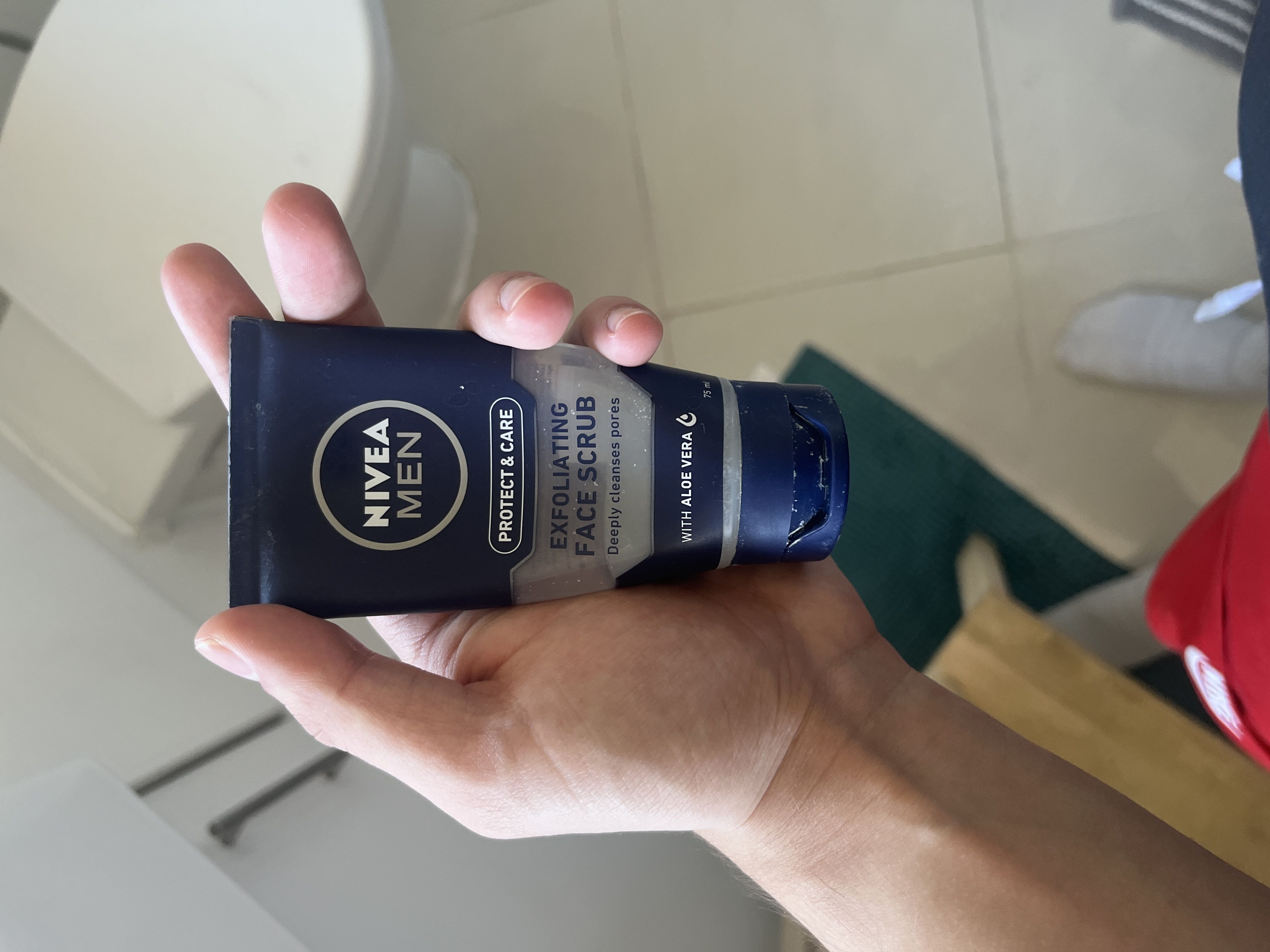
3 X Nivea Men Originals Exfoliating Face Scrub - 75ml Each
Summary
This face scrub contains some synthetic ingredients like sodium myreth sulfate, which poses a contamination risk, and acrylates copolymer, a synthetic polymer. While it lacks heavily penalized ingredients like parabens or synthetic fragrances, the presence of these synthetic components and the processed nature of the product limit its score. The formula does not include any natural oils or botanicals that could have improved its rating.
At a glance
Key ingredients 7
Aqua
Aqua, or water, is a common solvent used in cosmetics to dissolve other ingredients. It helps in forming emulsions by combining with oils and other substances. It is generally considered safe and non-irritating.
Risks
There are no significant risks associated with water in cosmetic formulations.
Benefits
Water is essential for hydration and helps in the application of the product.
Microcrystalline Cellulose
Microcrystalline cellulose is used as a gentle exfoliant in skincare products. It helps to remove dead skin cells without causing irritation. It is derived from plant fibers and is considered safe for use.
Risks
There are minimal risks associated with microcrystalline cellulose, though over-exfoliation can lead to skin irritation.
Benefits
It provides gentle exfoliation, improving skin texture and appearance.
Cocamidopropyl Betaine
Cocamidopropyl betaine is a surfactant derived from coconut oil, used to create foam and cleanse the skin. It is milder than other surfactants and helps to reduce irritation. It is commonly used in personal care products for its gentle cleansing properties.
Risks
Some individuals may experience allergic reactions or irritation from cocamidopropyl betaine.
Benefits
It effectively cleanses the skin while being less irritating than harsher surfactants.
Sodium Myreth Sulfate
Sodium myreth sulfate is a surfactant used for its cleansing and foaming properties. It is an ethoxylated compound, which can lead to contamination with 1,4-dioxane, a potential carcinogen. It is considered milder than sodium lauryl sulfate but can still strip natural oils from the skin.
Risks
Potential contamination with 1,4-dioxane and skin irritation are concerns with sodium myreth sulfate.
Benefits
It provides effective cleansing and foaming, enhancing the product's usability.
Acrylates Copolymer
Acrylates copolymer is used as a film-forming agent in cosmetics, providing texture and stability to the product. It helps in forming a protective layer on the skin. It is generally considered safe for use in cosmetics.
Risks
There are minimal risks associated with acrylates copolymer, though it can cause irritation in sensitive individuals.
Benefits
It enhances the texture and stability of the product, improving application and wear.
PEG-200 Hydrogenated Glyceryl Palmate
PEG-200 hydrogenated glyceryl palmate is an emulsifier and surfactant used to stabilize formulations and improve texture. It is derived from palm oil and ethylene oxide. While effective, it carries a risk of contamination with 1,4-dioxane.
Risks
Potential contamination with 1,4-dioxane and skin irritation are concerns with PEG compounds.
Benefits
It helps to stabilize and improve the texture of cosmetic formulations.
Decyl Glucoside
Decyl glucoside is a mild, non-ionic surfactant derived from glucose and coconut oil. It is used for its gentle cleansing properties and is suitable for sensitive skin. It is biodegradable and considered environmentally friendly.
Risks
There are minimal risks associated with decyl glucoside, though it may cause irritation in very sensitive individuals.
Benefits
It provides gentle cleansing without stripping the skin's natural oils, making it suitable for sensitive skin.
Processing
Processed Foods
Get the full breakdown in the Scout app
Scan any product to see lab results, healthy alternatives, and your personalized analysis.
Download on theApp Store