
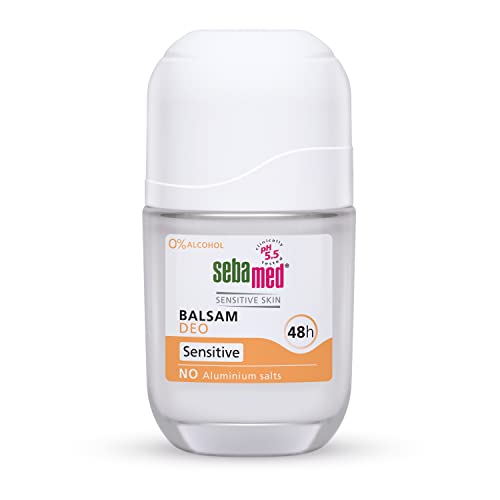
Sebamed Balsam Deodorant Roll-on 50ml/1.75oz - Sensitive
Summary
This deodorant contains talc, which is a concerning ingredient due to potential health risks, and synthetic fragrance, which can cause irritation and allergic reactions. However, it does not contain aluminum, which is a positive aspect, and includes some beneficial ingredients like zinc ricinoleate and bisabolol that help with odor control and skin soothing. The presence of processed ingredients limits its overall score.
At a glance
Key ingredients 19
Aqua
Aqua, or water, is used as a solvent in many cosmetic products. It helps to dissolve other ingredients and provides a base for the formulation. It is generally considered safe and non-irritating.
Risks
There are no significant risks associated with water in cosmetic formulations.
Benefits
Water is essential for dissolving ingredients and ensuring even application of the product.
Cyclodextrin
Cyclodextrin is used to encapsulate and stabilize volatile compounds, such as fragrances. It can help control the release of these compounds over time. It is generally regarded as safe for use in cosmetics.
Risks
There are minimal risks associated with cyclodextrin, though it may cause mild irritation in sensitive individuals.
Benefits
Cyclodextrin can enhance the stability and longevity of fragrances in deodorants.
Cetearyl Isononanoate
Cetearyl Isononanoate is an emollient that provides a smooth application and helps to soften the skin. It is commonly used in cosmetic formulations for its moisturizing properties. It is considered safe for use in cosmetics.
Risks
There are minimal risks associated with this ingredient, though it may cause mild irritation in sensitive individuals.
Benefits
It helps to improve the texture of the product and provides skin-conditioning benefits.
Caprylyl Glycol
Caprylyl Glycol is used as a skin-conditioning agent and preservative booster. It helps to improve the moisture content of the skin and enhances the efficacy of preservatives. It is generally considered safe for use in cosmetics.
Risks
There are minimal risks associated with caprylyl glycol, though it may cause mild irritation in sensitive individuals.
Benefits
It provides moisturizing benefits and helps to extend the shelf life of the product.
Zinc Ricinoleate
Zinc Ricinoleate is used as an odor-absorbing agent in deodorants. It traps and neutralizes odor molecules, making it effective in controlling body odor. It is considered safe for use in cosmetics.
Risks
There are minimal risks associated with zinc ricinoleate, though it may cause mild irritation in sensitive individuals.
Benefits
It effectively neutralizes odors without blocking sweat glands.
Parfum
Parfum, or fragrance, is used to impart a pleasant scent to the product. It is a common ingredient in many personal care products. However, it can be a mixture of various chemicals, some of which may cause irritation.
Risks
Parfum can cause allergic reactions and skin irritation in sensitive individuals due to undisclosed chemical components.
Benefits
It provides a pleasant scent to the product, enhancing user experience.
Xanthan Gum
Xanthan Gum is used as a thickening agent and stabilizer in cosmetic formulations. It helps to improve the texture and consistency of the product. It is considered safe for use in cosmetics.
Risks
There are minimal risks associated with xanthan gum, though it may cause mild irritation in sensitive individuals.
Benefits
It enhances the texture and stability of the product, ensuring even application.
Malic Acid
Malic Acid is used as a pH adjuster and exfoliant in cosmetic formulations. It helps to maintain the acidity of the product and can provide mild exfoliation. It is generally considered safe for use in cosmetics.
Risks
Malic acid can cause irritation and sensitivity, especially in individuals with sensitive skin.
Benefits
It helps to maintain the product's pH and can improve skin texture through mild exfoliation.
Hydroxypropyl Starch Phosphate
Hydroxypropyl Starch Phosphate is used as a thickening agent and stabilizer in cosmetic formulations. It helps to improve the texture and consistency of the product. It is considered safe for use in cosmetics.
Risks
There are minimal risks associated with this ingredient, though it may cause mild irritation in sensitive individuals.
Benefits
It enhances the texture and stability of the product, ensuring even application.
Glycerin
Glycerin is a humectant that attracts moisture to the skin, helping to keep it hydrated. It is widely used in cosmetics for its moisturizing properties. It is considered safe and beneficial for most skin types.
Risks
There are minimal risks associated with glycerin, though it may cause mild irritation in sensitive individuals.
Benefits
It provides excellent moisturizing benefits, helping to maintain skin hydration.
1, 2-Hexanediol
1, 2-Hexanediol is used as a solvent and preservative in cosmetic formulations. It helps to dissolve other ingredients and prevent microbial growth. It is generally considered safe for use in cosmetics.
Risks
There are minimal risks associated with 1, 2-hexanediol, though it may cause mild irritation in sensitive individuals.
Benefits
It enhances the stability and shelf life of the product by preventing microbial growth.
Polyglyceryl-3 Caprylate
Polyglyceryl-3 Caprylate is used as an emulsifier and skin-conditioning agent in cosmetic formulations. It helps to blend oil and water components and provides moisturizing benefits. It is considered safe for use in cosmetics.
Risks
There are minimal risks associated with this ingredient, though it may cause mild irritation in sensitive individuals.
Benefits
It improves the texture of the product and provides skin-conditioning benefits.
Bisabolol
Bisabolol is used for its soothing and anti-inflammatory properties. It is derived from chamomile and is effective in reducing skin irritation. It is considered safe and beneficial for sensitive skin.
Risks
There are minimal risks associated with bisabolol, though it may cause mild irritation in sensitive individuals.
Benefits
It provides soothing and anti-inflammatory benefits, making it ideal for sensitive skin.
Glucose
Glucose is used as a humectant and skin-conditioning agent in cosmetic formulations. It helps to attract moisture to the skin and improve hydration. It is considered safe for use in cosmetics.
Risks
There are minimal risks associated with glucose, though it may cause mild irritation in sensitive individuals.
Benefits
It provides moisturizing benefits, helping to maintain skin hydration.
Glucuronic Acid
Glucuronic Acid is used as a skin-conditioning agent and exfoliant in cosmetic formulations. It helps to improve skin texture and hydration. It is generally considered safe for use in cosmetics.
Risks
Glucuronic acid can cause irritation and sensitivity, especially in individuals with sensitive skin.
Benefits
It helps to improve skin texture and hydration through mild exfoliation.
Disodium EDTA
Disodium EDTA is used as a chelating agent in cosmetic formulations. It helps to stabilize the product by binding metal ions that can cause spoilage. It is considered safe for use in cosmetics.
Risks
There are minimal risks associated with disodium EDTA, though it may cause mild irritation in sensitive individuals.
Benefits
It enhances the stability and shelf life of the product by preventing metal ion-induced spoilage.
Sodium Malate
Sodium Malate is used as a pH adjuster and skin-conditioning agent in cosmetic formulations. It helps to maintain the acidity of the product and provides moisturizing benefits. It is considered safe for use in cosmetics.
Risks
There are minimal risks associated with sodium malate, though it may cause mild irritation in sensitive individuals.
Benefits
It helps to maintain the product's pH and provides moisturizing benefits.
Squalane
Squalane is used as an emollient and moisturizer in cosmetic formulations. It helps to soften and hydrate the skin, improving its texture. It is considered safe and beneficial for most skin types.
Risks
There are minimal risks associated with squalane, though it may cause mild irritation in sensitive individuals.
Benefits
It provides excellent moisturizing benefits, helping to maintain skin hydration and softness.
Talc
Talc is used as an absorbent and anti-caking agent in cosmetic formulations. It helps to absorb moisture and improve the texture of the product. However, there are concerns about asbestos contamination in talc.
Risks
Talc can pose a risk of asbestos contamination, which is a known carcinogen.
Benefits
It helps to absorb moisture and improve the texture of the product.
Processing
Processed Foods
Get the full breakdown in the Scout app
Scan any product to see lab results, healthy alternatives, and your personalized analysis.
Download on theApp Store