
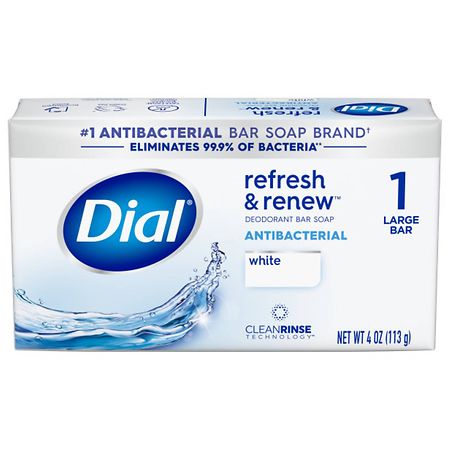
Dial Deodorant Bar Soap Iconic Dial Soap Scent 4 oz 36/Carton 5233692633
Analysis updated August 2026 · How Scout scores
At a glance
Summary
This soap contains a mix of natural and synthetic ingredients. While it includes beneficial glycerin for skin hydration, it also contains fragrance, which can be a common allergen and irritant. The presence of artificial colorants and alcohol further contributes to its processed nature, impacting its overall safety and skin-friendliness.
Key ingredients 18
GlycerinGood
Glycerin is a humectant that attracts moisture to the skin. It is widely used in skincare for its hydrating properties. It is considered safe and beneficial for most skin types.
Risks
There are minimal risks, primarily related to potential stickiness if used in high concentrations.
Benefits
It helps to keep the skin hydrated and soft.
Sodium PalmateNeutral
Sodium Palmate is a common soap base derived from palm oil. It is used for its cleansing properties and ability to create a solid bar form. It is generally considered safe for use in cosmetics.
Risks
There are environmental concerns related to palm oil production, including deforestation.
Benefits
It provides effective cleansing and is a stable ingredient in soap formulations.
Sodium Palm KernelateNeutral
Sodium Palm Kernelate is a surfactant derived from palm kernel oil. It helps to cleanse the skin by removing dirt and oils. It is widely used in soap making.
Risks
Similar to Sodium Palmate, it shares environmental concerns due to palm oil sourcing.
Benefits
It contributes to the soap's ability to lather and cleanse effectively.
Sodium CocoateNeutral
Sodium Cocoate is a surfactant derived from coconut oil. It is used for its cleansing and foaming properties in soap. It is considered safe for use in personal care products.
Risks
There are minimal risks associated with its use, primarily related to potential skin dryness.
Benefits
It provides good cleansing and foaming action in soap formulations.
WaterNeutral
Water is used as a solvent in many cosmetic products. It helps to dissolve other ingredients and form the product's base. It is essential for the formulation of most personal care products.
Risks
There are no significant risks associated with water in cosmetics.
Benefits
It acts as a solvent and helps in the application of the product.
Stearic AcidNeutral
Stearic Acid is a fatty acid used as an emulsifier and thickener in cosmetics. It helps to stabilize formulations and improve texture. It is generally considered safe for use in personal care products.
Risks
There are minimal risks associated with its use, primarily related to potential skin irritation in sensitive individuals.
Benefits
It helps to stabilize and thicken formulations, improving product texture.
Coconut AcidNeutral
Coconut Acid is derived from coconut oil and used for its cleansing properties. It is a common ingredient in soap making. It is considered safe for use in cosmetics.
Risks
There are minimal risks, primarily related to potential skin dryness.
Benefits
It provides effective cleansing and contributes to the soap's lather.
Palm AcidNeutral
Palm Acid is a fatty acid derived from palm oil used in soap making. It helps to create a solid bar and provides cleansing properties. It is generally considered safe for use in cosmetics.
Risks
Environmental concerns related to palm oil production are a primary risk.
Benefits
It contributes to the soap's structure and cleansing ability.
Palm Kernel AcidNeutral
Palm Kernel Acid is derived from palm kernel oil and used for its cleansing properties. It is a common ingredient in soap formulations. It is considered safe for use in cosmetics.
Risks
Environmental concerns related to palm oil sourcing are a primary risk.
Benefits
It provides effective cleansing and contributes to the soap's lather.
SorbitolNeutral
Sorbitol is a sugar alcohol used as a humectant and thickener in cosmetics. It helps to retain moisture in the skin. It is generally considered safe for use in personal care products.
Risks
There are minimal risks, primarily related to potential stickiness if used in high concentrations.
Benefits
It helps to keep the skin hydrated and improve product texture.
Sodium ChlorideNeutral
Sodium Chloride, or table salt, is used as a thickener and stabilizer in cosmetics. It helps to improve the texture and consistency of products. It is considered safe for use in personal care products.
Risks
There are minimal risks, primarily related to potential skin dryness.
Benefits
It helps to stabilize formulations and improve product texture.
Tetrasodium Glutamate DiacetateNeutral
Tetrasodium Glutamate Diacetate is a chelating agent used to improve the stability and efficacy of cosmetic formulations. It helps to bind metal ions and prevent product degradation. It is considered safe for use in cosmetics.
Risks
There are minimal risks associated with its use.
Benefits
It enhances the stability and shelf life of cosmetic products.
Titanium DioxideNeutral
Titanium Dioxide is used as a pigment and UV filter in cosmetics. It provides opacity and sun protection in formulations. It is generally considered safe for use in personal care products.
Risks
Inhalation of its powder form can pose respiratory risks.
Benefits
It provides UV protection and enhances product opacity.
AlcoholNeutral
Alcohol is used as a solvent and preservative in cosmetics. It helps to dissolve other ingredients and enhance product stability. It is generally considered safe for use in personal care products.
Risks
It can cause skin dryness and irritation in some individuals.
Benefits
It acts as a solvent and helps to preserve the product.
Yellow 8Neutral
Yellow 8 is a synthetic dye used to impart color to cosmetic products. It is approved for use in cosmetics but can cause allergic reactions in some individuals. It is considered safe when used within regulatory limits.
Risks
It can cause allergic reactions in sensitive individuals.
Benefits
It provides vibrant color to cosmetic formulations.
Red 4Neutral
Red 4 is a synthetic dye used to impart color to cosmetic products. It is approved for use in cosmetics but can cause allergic reactions in some individuals. It is considered safe when used within regulatory limits.
Risks
It can cause allergic reactions in sensitive individuals.
Benefits
It provides vibrant color to cosmetic formulations.
FragranceVery Bad
Fragrance is used to impart scent to cosmetic products. It is a common allergen and can cause skin irritation. The specific components of fragrance are often undisclosed, leading to potential safety concerns.
Risks
Fragrance can cause allergic reactions and skin irritation in sensitive individuals.
Benefits
It enhances the sensory experience of the product.
Yellow 5Very Bad
Heavily flagged ingredient class under Scout's doctrine.
Risks
It can cause allergic reactions in sensitive individuals.
Benefits
It provides vibrant color to cosmetic formulations.
Get the full breakdown in the Scout appTake Scout shopping
Scan any product to see lab results, healthy alternatives, and your personalized analysis.
Download on theApp Store GET IT ONGoogle Play