

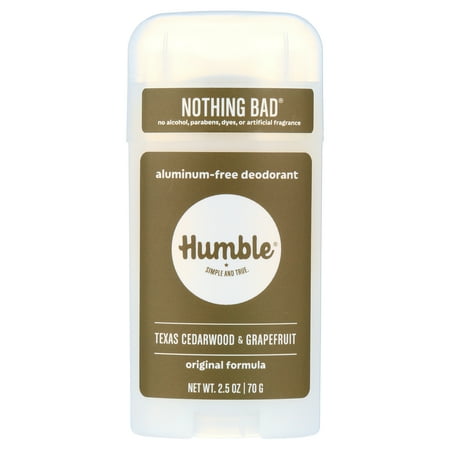
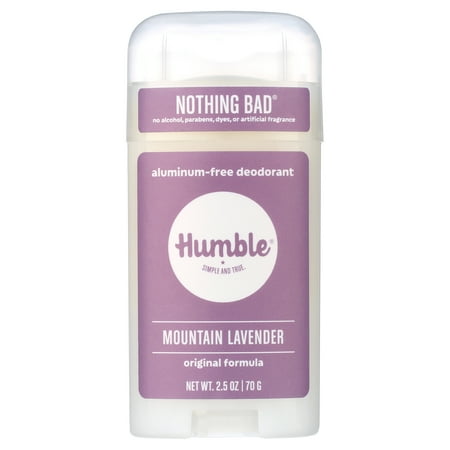
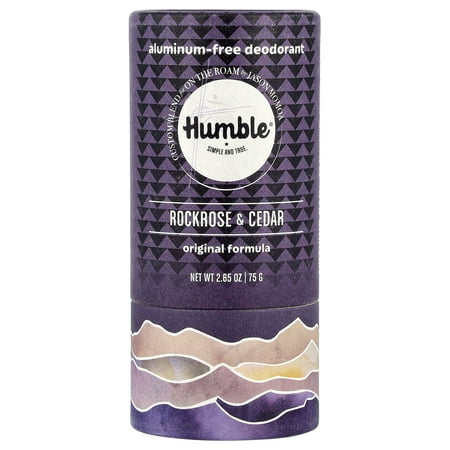

Humble Brands Aluminum-Free Deodorant Rosemary & Mint 2.5 oz (70 g)
Analysis updated June 2026 · How Scout scores
At a glance
Summary
This deodorant is aluminum-free and contains beneficial ingredients like baking soda and corn starch, which are effective for odor control and moisture absorption. However, the presence of synthetic fragrance, which can include undisclosed chemicals, slightly lowers its safety profile. Despite being ultra-processed, the product maintains a relatively clean ingredient list with minimal harmful additives.
Key ingredients 8
SODIUM BICARBONATE (BAKING SODA)Very Good
Sodium Bicarbonate, commonly known as baking soda, is a natural odor neutralizer. It works by altering the pH of the skin, making it less hospitable to odor-causing bacteria. It is a popular ingredient in natural deodorants for its effectiveness.
Risks
Some individuals may experience skin irritation or sensitivity due to its alkaline nature.
Benefits
It is highly effective at neutralizing odors, making it a key ingredient in natural deodorants.
CAPRYLIC/CAPRIC TRIGLYCERIDE (MCT)Good
Caprylic/Capric Triglyceride is a mixed triester derived from coconut oil and glycerin. It is used for its emollient properties, providing a smooth application and helping to retain moisture in the skin. It is considered a safe and effective ingredient in personal care products.
Risks
There are minimal risks associated with this ingredient, primarily limited to rare allergic reactions.
Benefits
It helps to moisturize and soften the skin, enhancing the overall feel of the product.
ZEA MAYS (CORN) STARCHGood
Zea Mays (Corn) Starch is a natural absorbent used to help control moisture. It is derived from corn and is often used in natural deodorants as a safer alternative to talc. It is generally recognized as safe for use in cosmetics.
Risks
There is a low risk of skin irritation, particularly for those with corn allergies.
Benefits
It effectively absorbs moisture, helping to keep the underarm area dry.
CERA ALBA (BEESWAX)Neutral
Cera Alba, or beeswax, is used as a thickening agent and to provide structure to the deodorant. It helps to form a protective barrier on the skin, locking in moisture. Beeswax is a natural ingredient and is generally considered safe.
Risks
There is a minimal risk of allergic reactions, particularly for those with bee product allergies.
Benefits
It helps to stabilize the product and provides a smooth application.
GERANIOLNeutral
Geraniol is a naturally occurring compound found in essential oils such as rose and citronella. It is used for its pleasant floral scent and is a common ingredient in fragrances. It is generally considered safe in low concentrations.
Risks
Geraniol can cause skin irritation or allergic reactions in sensitive individuals.
Benefits
It provides a natural fragrance, contributing to the overall scent profile of the product.
LIMONENEBad
Processed additive flagged under Scout's ingredient doctrine.
Risks
Limonene can oxidize and cause skin irritation or allergic reactions in some individuals.
Benefits
It provides a refreshing citrus scent, enhancing the fragrance of the product.
LINALOOLBad
Processed additive flagged under Scout's ingredient doctrine.
Risks
Linalool can cause skin irritation or allergic reactions, particularly when oxidized.
Benefits
It contributes a floral note to the fragrance, enhancing the overall scent profile.
FRAGRANCEVery Bad
Fragrance in personal care products often contains a mixture of various chemicals. These can include phthalates, which are linked to reproductive and organ damage. The exact composition is usually proprietary, making it difficult to assess safety.
Risks
Potential risks include skin irritation and allergic reactions, as well as possible endocrine disruption.
Benefits
Fragrance can enhance the sensory experience of the product, providing a pleasant scent.
Get the full breakdown in the Scout appTake Scout shopping
Scan any product to see lab results, healthy alternatives, and your personalized analysis.
Download on theApp Store GET IT ONGoogle PlayAmazon pricing & content
Amazon price as of . Product prices and availability are accurate as of the date/time indicated and are subject to change. Any price and availability information displayed on Amazon.com at the time of purchase will apply to the purchase of this product.
CERTAIN CONTENT THAT APPEARS ON THIS SITE COMES FROM AMAZON. THIS CONTENT IS PROVIDED “AS IS” AND IS SUBJECT TO CHANGE OR REMOVAL AT ANY TIME.