
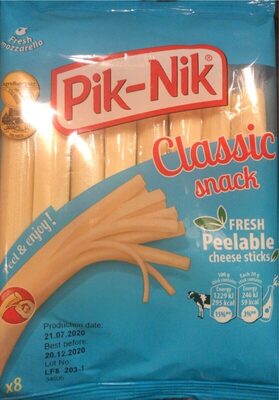


Pik-Nik
Summary
This cheese product is primarily made from milk, which is a good source of calcium and protein, and microbiological rennet, which is a safe and necessary ingredient for cheese production. The ingredient list is short and free from harmful additives, artificial colors, or seed oils, which contributes positively to its health profile. However, as a processed food, its score is limited by its processing level, despite the clean ingredient list.
At a glance
Key ingredients 5
MilkGood
Milk is a primary source of calcium and protein, essential for bone health and muscle maintenance. It is minimally processed, retaining most of its natural nutrients. The quality of milk can vary based on whether it is organic or grass-fed, which can enhance its nutritional profile.
Risks
Some individuals may be lactose intolerant or allergic to milk proteins, which can cause digestive issues.
Benefits
Rich in calcium and vitamin D, supporting bone health and providing a complete protein source with all essential amino acids.
SaltNeutral
Salt is used as a preservative and flavor enhancer in cheese production. It is a simple, minimally processed ingredient. Excessive consumption can lead to health issues such as hypertension.
Risks
High sodium intake is associated with increased risk of hypertension and cardiovascular diseases.
Benefits
Essential for maintaining fluid balance and nerve function in the body when consumed in moderation.
Citric acidNeutral
Citric acid is used as a natural preservative and to add acidity to cheese. It is a common additive in food processing. It is generally recognized as safe when used in food products.
Risks
Excessive consumption may cause tooth enamel erosion or gastrointestinal discomfort.
Benefits
Helps preserve food and enhance flavor without significant health risks when used appropriately.
Microbiological rennetGood
Microbiological rennet is used to coagulate milk in cheese production, offering a vegetarian alternative to animal-derived rennet. It is produced through fermentation processes. This ingredient is essential for cheese making and does not pose significant health risks.
Benefits
Provides a vegetarian-friendly option for cheese production, maintaining the texture and flavor of traditional cheeses.
Starter culturesNeutral
Starter cultures are used to initiate the fermentation process in cheese making, contributing to flavor and texture development. They are naturally occurring bacteria used in controlled fermentation. These cultures are essential for the development of cheese characteristics but do not provide direct health benefits.
Benefits
Essential for developing the flavor and texture of cheese through fermentation.
Processing
Processed Foods
Get the full breakdown in the Scout app
Scan any product to see lab results, healthy alternatives, and your personalized analysis.
Download on theApp Store