
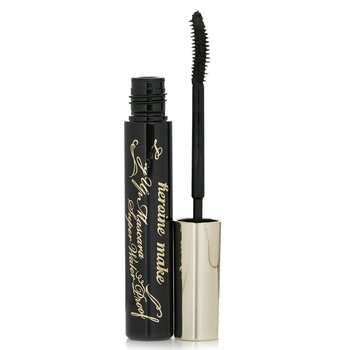

KISS MEHeroine Make Long Up Mascara Super Waterproof - # 01 Jet Black 6g/0.2oz
Analysis updated September 2026 · How Scout scores
At a glance
Summary
This mascara contains several beneficial natural oils and butters, such as argan oil, shea butter, and sweet almond oil, which provide moisturizing and nourishing properties. However, it also includes synthetic polymers and acrylates, which are more processed ingredients. The presence of these synthetic components slightly lowers the overall ingredient safety score despite the beneficial natural ingredients.
Key ingredients 32
Argania Spinosa Kernel OilVery Good
Argania Spinosa Kernel Oil, also known as argan oil, is a natural oil rich in fatty acids and antioxidants. It is used for its moisturizing and nourishing properties. It is considered highly beneficial in cosmetics.
Risks
There are minimal risks associated with argan oil.
Benefits
It provides deep hydration and nourishment to the skin and hair.
ArginineVery Good
Arginine is an amino acid used for its moisturizing and conditioning properties in cosmetics. It helps in improving the texture and hydration of the skin. It is considered beneficial in cosmetics.
Risks
There are minimal risks associated with arginine.
Benefits
It provides hydration and improves the texture of the skin.
Butyrospermum Parkii (Shea) ButterVery Good
Butyrospermum Parkii, also known as shea butter, is a natural butter rich in fatty acids and vitamins. It is used for its moisturizing and nourishing properties. It is considered highly beneficial in cosmetics.
Risks
There are minimal risks associated with shea butter.
Benefits
It provides deep hydration and nourishment to the skin.
Camellia Japonica Seed OilVery Good
Camellia Japonica Seed Oil is a natural oil rich in fatty acids and antioxidants. It is used for its moisturizing and nourishing properties. It is considered highly beneficial in cosmetics.
Risks
There are minimal risks associated with camellia japonica seed oil.
Benefits
It provides deep hydration and nourishment to the skin and hair.
Prunus Amygdalus Dulcis (Sweet Almond) OilVery Good
Prunus Amygdalus Dulcis, also known as sweet almond oil, is a natural oil rich in fatty acids and vitamins. It is used for its moisturizing and nourishing properties. It is considered highly beneficial in cosmetics.
Risks
There are minimal risks associated with sweet almond oil.
Benefits
It provides deep hydration and nourishment to the skin.
Rosa Canina Fruit OilVery Good
Rosa Canina Fruit Oil, also known as rosehip oil, is a natural oil rich in fatty acids and antioxidants. It is used for its moisturizing and nourishing properties. It is considered highly beneficial in cosmetics.
Risks
There are minimal risks associated with rosehip oil.
Benefits
It provides deep hydration and nourishment to the skin.
Vitis Vinifera (Grape) Seed OilVery Good
Vitis Vinifera, also known as grape seed oil, is a natural oil rich in fatty acids and antioxidants. It is used for its moisturizing and nourishing properties. It is considered highly beneficial in cosmetics.
Risks
There are minimal risks associated with grape seed oil.
Benefits
It provides deep hydration and nourishment to the skin.
MicaGood
Beneficial ingredient — whole-food or functional value in this product class.
Risks
Inhalation of mica particles can be a concern in loose powder forms.
Benefits
It provides a natural shimmer and glow to cosmetic products.
IsododecaneNeutral
Isododecane is a hydrocarbon commonly used as a solvent in cosmetics. It helps in the even application of products and provides a lightweight feel. It is generally considered safe for use in cosmetics.
Risks
There are minimal risks associated with isododecane, though it can cause mild irritation if it comes into contact with the eyes.
Benefits
It helps in providing a smooth application and quick drying time for cosmetic products.
TrimethylsiloxysilicateNeutral
Trimethylsiloxysilicate is a silicone-based ingredient used to form a film on the skin. It enhances the water resistance of products. It is generally regarded as safe for use in cosmetics.
Risks
There are minimal risks, though it can cause mild irritation in sensitive individuals.
Benefits
It provides long-lasting wear and water resistance to cosmetic formulations.
Microcrystalline WaxNeutral
Microcrystalline wax is a refined wax used to thicken and stabilize formulations. It helps in providing structure to cosmetic products. It is considered safe for use in cosmetics.
Risks
There are minimal risks associated with microcrystalline wax.
Benefits
It helps in maintaining the consistency and stability of cosmetic products.
Disteardimonium HectoriteNeutral
Disteardimonium Hectorite is a clay-derived thickening agent used to stabilize emulsions. It helps in suspending pigments in formulations. It is considered safe for use in cosmetics.
Risks
There are minimal risks associated with disteardimonium hectorite.
Benefits
It enhances the texture and stability of cosmetic products.
CI 77499Neutral
CI 77499, also known as iron oxide black, is a pigment used to provide color in cosmetics. It is commonly used in eye makeup products. It is considered safe for use in cosmetics.
Risks
There are minimal risks associated with CI 77499.
Benefits
It provides rich, deep color to cosmetic products.
Dextrin Palmitate/EthylhexanoateNeutral
Dextrin Palmitate/Ethylhexanoate is an ester used as an emollient and thickening agent in cosmetics. It helps in improving the texture of products. It is considered safe for use in cosmetics.
Risks
There are minimal risks associated with this ingredient.
Benefits
It enhances the texture and spreadability of cosmetic products.
Hydrogenated PolyisobuteneNeutral
Hydrogenated Polyisobutene is a synthetic polymer used as an emollient and moisturizer in cosmetics. It provides a smooth application and enhances the texture of products. It is considered safe for use in cosmetics.
Risks
There are minimal risks associated with hydrogenated polyisobutene.
Benefits
It provides a smooth, non-greasy feel to cosmetic products.
Synthetic FluorphlogopiteNeutral
Synthetic Fluorphlogopite is a synthetic mica used to add shimmer and shine to cosmetics. It is used as an alternative to natural mica. It is considered safe for use in cosmetics.
Risks
There are minimal risks associated with synthetic fluorphlogopite.
Benefits
It provides a consistent shimmer and shine to cosmetic products.
Propylene CarbonateNeutral
Propylene Carbonate is a solvent used to dissolve other ingredients in cosmetics. It helps in improving the texture and spreadability of products. It is considered safe for use in cosmetics.
Risks
There are minimal risks associated with propylene carbonate.
Benefits
It enhances the texture and spreadability of cosmetic products.
Nylon-66Neutral
Nylon-66 is a synthetic polymer used to add texture and volume to cosmetics. It is commonly used in mascara formulations. It is considered safe for use in cosmetics.
Risks
There are minimal risks associated with nylon-66.
Benefits
It provides volume and texture to cosmetic products.
Sucrose TristearateNeutral
Sucrose Tristearate is an ester used as an emulsifier and thickening agent in cosmetics. It helps in stabilizing formulations. It is considered safe for use in cosmetics.
Risks
There are minimal risks associated with sucrose tristearate.
Benefits
It enhances the stability and texture of cosmetic products.
Trimethylsiloxysilylcarbamoyl PullulanNeutral
Trimethylsiloxysilylcarbamoyl Pullulan is a film-forming agent used to provide long-lasting wear in cosmetics. It enhances the water resistance of products. It is considered safe for use in cosmetics.
Risks
There are minimal risks associated with this ingredient.
Benefits
It provides long-lasting wear and water resistance to cosmetic products.
Aluminum DistearateNeutral
Aluminum Distearate is a thickening agent used to stabilize emulsions in cosmetics. It helps in maintaining the consistency of products. It is considered safe for use in cosmetics.
Risks
There are minimal risks associated with aluminum distearate.
Benefits
It enhances the stability and texture of cosmetic products.
Glyceryl IsostearateNeutral
Glyceryl Isostearate is an ester used as an emollient and emulsifier in cosmetics. It helps in improving the texture and spreadability of products. It is considered safe for use in cosmetics.
Risks
There are minimal risks associated with glyceryl isostearate.
Benefits
It enhances the texture and spreadability of cosmetic products.
Zinc LaurateNeutral
Zinc Laurate is a zinc salt used as an antimicrobial agent in cosmetics. It helps in preserving the product and preventing microbial growth. It is considered safe for use in cosmetics.
Risks
There are minimal risks associated with zinc laurate.
Benefits
It provides antimicrobial properties to cosmetic products.
SilicaNeutral
Silica is a mineral used to improve the texture and absorbency of cosmetics. It helps in providing a matte finish to products. It is considered safe for use in cosmetics.
Risks
Inhalation of silica particles can be a concern in loose powder forms.
Benefits
It provides a smooth, matte finish to cosmetic products.
PolymethylsilsesquioxaneNeutral
Polymethylsilsesquioxane is a silicone-based ingredient used to improve the texture and spreadability of cosmetics. It provides a smooth, silky feel to products. It is considered safe for use in cosmetics.
Risks
There are minimal risks associated with polymethylsilsesquioxane.
Benefits
It enhances the texture and spreadability of cosmetic products.
Titanium DioxideNeutral
Titanium Dioxide is a mineral used as a pigment and UV filter in cosmetics. It provides opacity and sun protection to products. It is considered safe for use in cosmetics.
Risks
Inhalation of titanium dioxide particles can be a concern in loose powder forms.
Benefits
It provides opacity and sun protection to cosmetic products.
Acrylates/Ethylhexyl Acrylate CopolymerNeutral
Acrylates/Ethylhexyl Acrylate Copolymer is a film-forming agent used to provide long-lasting wear in cosmetics. It enhances the water resistance of products. It is considered safe for use in cosmetics.
Risks
There are minimal risks associated with this ingredient.
Benefits
It provides long-lasting wear and water resistance to cosmetic products.
Ammonium Acrylates CopolymerNeutral
Ammonium Acrylates Copolymer is a film-forming agent used to provide long-lasting wear in cosmetics. It enhances the water resistance of products. It is considered safe for use in cosmetics.
Risks
There are minimal risks associated with this ingredient.
Benefits
It provides long-lasting wear and water resistance to cosmetic products.
Hydroxyethyl Acrylate/Methoxyethyl Acrylate CopolymerNeutral
Hydroxyethyl Acrylate/Methoxyethyl Acrylate Copolymer is a film-forming agent used to provide long-lasting wear in cosmetics. It enhances the water resistance of products. It is considered safe for use in cosmetics.
Risks
There are minimal risks associated with this ingredient.
Benefits
It provides long-lasting wear and water resistance to cosmetic products.
Sodium DehydroacetateNeutral
Sodium Dehydroacetate is a preservative used to prevent microbial growth in cosmetics. It helps in preserving the product and extending its shelf life. It is considered safe for use in cosmetics.
Risks
There are minimal risks associated with sodium dehydroacetate.
Benefits
It provides antimicrobial properties and extends the shelf life of cosmetic products.
CeresinBad
Processed additive flagged under Scout's ingredient doctrine.
Risks
There are minimal risks associated with ceresin.
Benefits
It helps in maintaining the consistency and stability of cosmetic products.
DimethiconeBad
Occlusive silicone film-former — flagged under clean-beauty doctrine.
Risks
There are minimal risks associated with dimethicone.
Benefits
It enhances the texture and spreadability of cosmetic products.
Get the full breakdown in the Scout appTake Scout shopping
Scan any product to see lab results, healthy alternatives, and your personalized analysis.
Download on theApp Store GET IT ONGoogle Play