
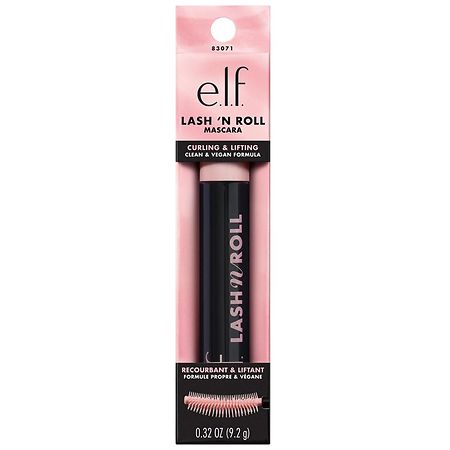

e.l.f. Lash 'N Roll® Curling & Lifting Mascara - Black - 0.32 fl oz: Vegan, Finish, Volumizing
Analysis updated September 2026 · How Scout scores
At a glance
Summary
This mascara contains beneficial ingredients like castor seed oil, carnauba wax, and tocopherol, which provide moisturizing and conditioning benefits. However, it also includes phenoxyethanol, a preservative that can cause irritation in some individuals. The presence of synthetic components like styrene/acrylates copolymer and polyacrylic acid indicates a moderate level of processing, which affects the overall score.
Key ingredients 32
Ricinus Communis (Castor) Seed OilVery Good
Castor oil is a natural oil known for its moisturizing properties. It can help condition and strengthen lashes. It is well-regarded for its ability to promote healthy hair growth.
Risks
There is a low risk of allergic reactions in sensitive individuals.
Benefits
It provides nourishment and hydration to the lashes, potentially enhancing their appearance.
Copernicia Cerifera (Carnauba) WaxGood
Carnauba wax is a natural wax derived from the leaves of the carnauba palm. It is used to add thickness and shine to cosmetics. It is valued for its hypoallergenic and emollient properties.
Risks
There is a low risk of irritation or allergic reaction.
Benefits
It provides a glossy finish and helps in maintaining the mascara's structure.
KaolinGood
Beneficial ingredient — whole-food or functional value in this product class.
Risks
There are no significant risks associated with kaolin.
Benefits
It enhances the texture and application of the mascara.
TocopherolGood
Tocopherol, also known as Vitamin E, is an antioxidant used in cosmetics to protect the product from oxidation. It also provides conditioning benefits to the lashes. It is well-regarded for its skin-nourishing properties.
Risks
There is a low risk of allergic reactions in sensitive individuals.
Benefits
It helps in nourishing and protecting the lashes, enhancing their appearance.
Water (Aqua)Neutral
Water is a common solvent used in cosmetics to dissolve other ingredients. It helps in forming the base of the product. It does not have any direct benefits or risks in the context of mascara.
Risks
There are no significant risks associated with water in cosmetics.
Benefits
Water helps in blending other ingredients and provides a smooth application.
Glyceryl StearateNeutral
Glyceryl stearate is an emulsifier that helps blend water and oil components in cosmetics. It contributes to the smooth texture of the mascara. It is generally considered safe for use in cosmetics.
Risks
There are no significant risks associated with glyceryl stearate.
Benefits
It helps in achieving a stable and uniform product consistency.
PVPNeutral
PVP is a film-forming agent that helps the mascara adhere to lashes. It provides hold and durability to the product. It is widely used in cosmetics and considered safe.
Risks
There is a minimal risk of irritation if it comes into contact with the eyes.
Benefits
It enhances the mascara's staying power and prevents flaking.
Polyamide-5Neutral
Polyamide-5 is used as a film-forming agent in cosmetics, providing water resistance and flexibility. It helps the mascara adhere to lashes. It is generally considered safe for use in cosmetics.
Risks
There is a minimal risk of irritation if it comes into contact with the eyes.
Benefits
It enhances the longevity and wear of the mascara, preventing smudging.
Polyacrylic AcidNeutral
Polyacrylic acid is used as a thickening agent in cosmetics. It helps in achieving the desired viscosity and texture of the mascara. It is generally considered safe for use in cosmetics.
Risks
There is a minimal risk of irritation if it comes into contact with the eyes.
Benefits
It contributes to the smooth application and consistency of the mascara.
Palmitic AcidNeutral
Palmitic acid is a fatty acid used as an emollient and thickening agent in cosmetics. It helps in providing a smooth texture to the mascara. It is generally considered safe for use in cosmetics.
Risks
There are no significant risks associated with palmitic acid.
Benefits
It helps in achieving a creamy consistency and smooth application.
PEG-8 Caprylic/Capric GlyceridesNeutral
PEG-8 caprylic/capric glycerides are used as emulsifiers and skin conditioning agents in cosmetics. They help in blending ingredients and improving product texture. They are generally considered safe for use in cosmetics.
Risks
There is a minimal risk of irritation or allergic reaction.
Benefits
They contribute to the smooth application and stability of the mascara.
Stearic AcidNeutral
Stearic acid is a fatty acid used as an emulsifier and thickening agent in cosmetics. It helps in providing a smooth texture to the mascara. It is generally considered safe for use in cosmetics.
Risks
There are no significant risks associated with stearic acid.
Benefits
It helps in achieving a creamy consistency and smooth application.
Magnesium Aluminum SilicateNeutral
Magnesium aluminum silicate is a naturally occurring mineral used as a thickening agent in cosmetics. It helps in stabilizing emulsions and improving product texture. It is generally considered safe for use in cosmetics.
Risks
There are no significant risks associated with magnesium aluminum silicate.
Benefits
It contributes to the smooth application and consistency of the mascara.
PEG-100 StearateNeutral
PEG-100 stearate is an emulsifier used to blend water and oil components in cosmetics. It contributes to the smooth texture of the mascara. It is generally considered safe for use in cosmetics.
Risks
There is a minimal risk of irritation or allergic reaction.
Benefits
It helps in achieving a stable and uniform product consistency.
Nylon-12Neutral
Nylon-12 is used as a bulking agent and texture enhancer in cosmetics. It provides a smooth and silky feel to the product. It is generally considered safe for use in cosmetics.
Risks
There are no significant risks associated with nylon-12.
Benefits
It enhances the texture and application of the mascara.
Ceteareth-25Neutral
Ceteareth-25 is an emulsifier used to blend water and oil components in cosmetics. It contributes to the smooth texture of the mascara. It is generally considered safe for use in cosmetics.
Risks
There is a minimal risk of irritation or allergic reaction.
Benefits
It helps in achieving a stable and uniform product consistency.
Butylene GlycolNeutral
Butylene glycol is a common humectant that helps retain moisture in cosmetic products. It improves the texture and spreadability of the mascara. It is generally recognized as safe for use in cosmetics.
Risks
In rare cases, it may cause irritation or allergic reactions.
Benefits
It helps keep the mascara from drying out, ensuring smooth application.
PEG-40 Hydrogenated Castor OilNeutral
PEG-40 hydrogenated castor oil is used as an emulsifier and surfactant in cosmetics. It helps in blending ingredients and improving product texture. It is generally considered safe for use in cosmetics.
Risks
There is a minimal risk of irritation or allergic reaction.
Benefits
It contributes to the smooth application and stability of the mascara.
EthylhexylglycerinNeutral
Ethylhexylglycerin is used as a preservative and skin conditioning agent in cosmetics. It helps in enhancing the effectiveness of other preservatives. It is generally considered safe for use in cosmetics.
Risks
There is a minimal risk of irritation or allergic reaction.
Benefits
It helps in maintaining the product's integrity by preventing microbial contamination.
Polyquaternium-10Neutral
Polyquaternium-10 is used as a conditioning agent in cosmetics, providing a smooth and silky feel. It helps in improving the texture and application of the mascara. It is generally considered safe for use in cosmetics.
Risks
There is a minimal risk of irritation if it comes into contact with the eyes.
Benefits
It enhances the texture and application of the mascara.
PEG-90MNeutral
PEG-90M is used as a thickening agent and film former in cosmetics. It helps in providing structure and consistency to the mascara. It is generally considered safe for use in cosmetics.
Risks
There is a minimal risk of irritation or allergic reaction.
Benefits
It helps in achieving the desired texture and application of the mascara.
Caprylyl GlycolNeutral
Caprylyl glycol is used as a preservative and skin conditioning agent in cosmetics. It helps in enhancing the effectiveness of other preservatives. It is generally considered safe for use in cosmetics.
Risks
There is a minimal risk of irritation or allergic reaction.
Benefits
It helps in maintaining the product's integrity by preventing microbial contamination.
SilicaNeutral
Silica is used as a thickening agent and absorbent in cosmetics. It helps in improving the texture and application of the mascara. It is generally considered safe for use in cosmetics.
Risks
There are no significant risks associated with silica.
Benefits
It enhances the texture and application of the mascara.
Xanthan GumNeutral
Xanthan gum is used as a thickening agent and stabilizer in cosmetics. It helps in achieving the desired viscosity and texture of the mascara. It is generally considered safe for use in cosmetics.
Risks
There are no significant risks associated with xanthan gum.
Benefits
It contributes to the smooth application and consistency of the mascara.
Black 2 (Ci 77266) (Nano)Neutral
Black 2 is a pigment used to provide color in cosmetics. It is used in nano form to achieve a deep black color. It is generally considered safe for use in cosmetics.
Risks
There is ongoing debate about the safety of nanoparticles, but current evidence suggests minimal risk.
Benefits
It provides a rich, intense color to the mascara.
Ultramarines (Ci 77007)Neutral
Ultramarines are pigments used to provide color in cosmetics. They are used to achieve specific shades and tones. They are generally considered safe for use in cosmetics.
Risks
There are no significant risks associated with ultramarines.
Benefits
They provide vibrant color to the mascara.
Styrene/Acrylates CopolymerBad
Processed additive flagged under Scout's ingredient doctrine.
Risks
There is a minimal risk of irritation if it comes into contact with the eyes.
Benefits
It enhances the longevity and wear of the mascara, preventing smudging.
Propylene GlycolBad
Processed additive flagged under Scout's ingredient doctrine.
Risks
In rare cases, it may cause irritation or allergic reactions.
Benefits
It helps keep the mascara from drying out, ensuring smooth application.
Synthetic BeeswaxBad
Processed additive flagged under Scout's ingredient doctrine.
Risks
There are no significant risks associated with synthetic beeswax.
Benefits
It helps in achieving the desired texture and application of the mascara.
PhenoxyethanolBad
Phenoxyethanol is a preservative used to prevent microbial growth in cosmetics. It is effective in extending the shelf life of products. However, it can cause irritation and allergic reactions in some individuals.
Risks
There is a risk of skin irritation and allergic reactions, especially in sensitive individuals.
Benefits
It helps in maintaining the product's integrity by preventing microbial contamination.
Aminomethyl PropanolBad
Processed additive flagged under Scout's ingredient doctrine.
Risks
There is a minimal risk of irritation if it comes into contact with the eyes.
Benefits
It helps in maintaining the optimal pH balance of the mascara.
Sodium BenzoateBad
Synthetic preservative that can form benzene in the presence of vitamin C.
Risks
There is a minimal risk of irritation or allergic reaction.
Benefits
It helps in maintaining the product's integrity by preventing microbial contamination.
Get the full breakdown in the Scout appTake Scout shopping
Scan any product to see lab results, healthy alternatives, and your personalized analysis.
Download on theApp Store GET IT ONGoogle Play