
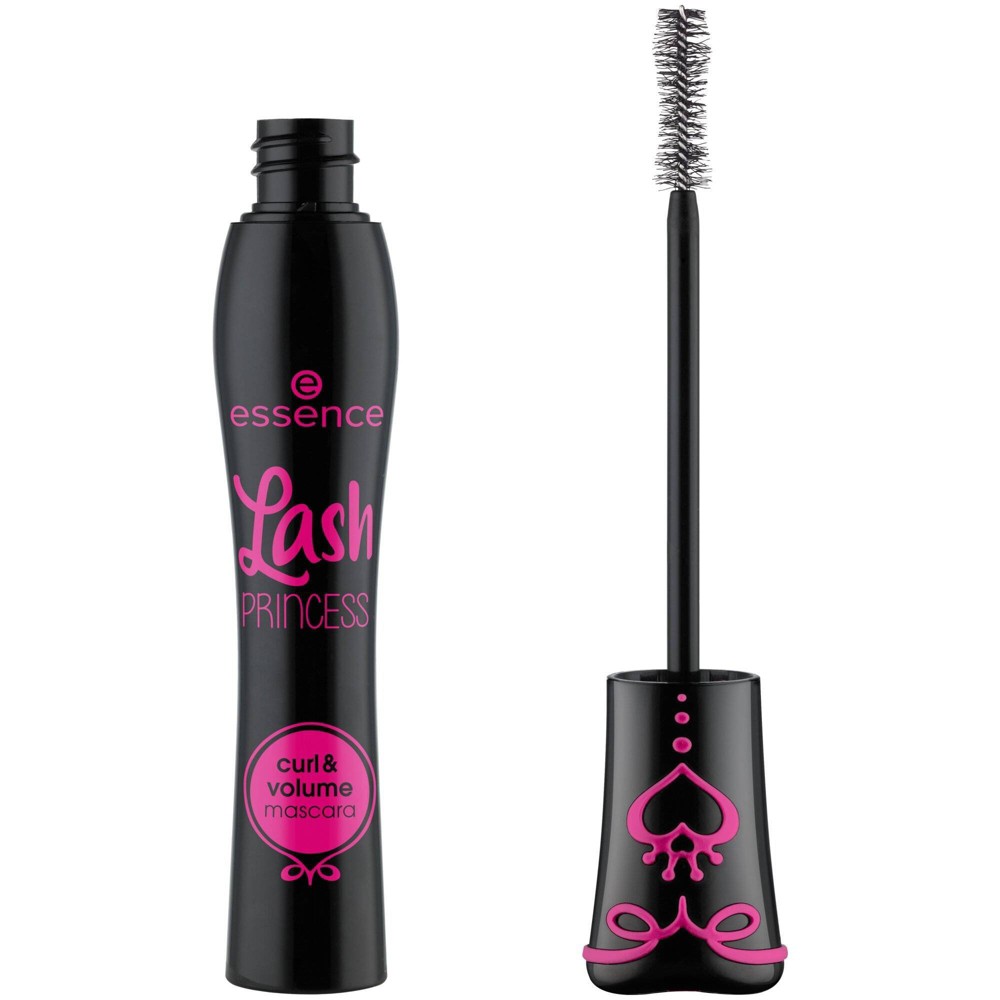
essence Lash Princess Curl & Volume Mascara - Gluten & Cruelty Free - 0.4 fl oz
Analysis updated August 2026 · How Scout scores
At a glance
Summary
This mascara contains several beneficial natural oils such as sunflower seed oil, sweet almond oil, and jojoba oil, which provide moisturizing and nourishing properties. The presence of tocopherol and tocopheryl acetate adds antioxidant benefits. However, the inclusion of phenoxyethanol as a preservative, which can cause irritation, slightly lowers the score. Overall, the product has a clean ingredient list with minimal processing concerns.
Key ingredients 28
HELIANTHUS ANNUUS (SUNFLOWER) SEED OILVery Good
Sunflower Seed Oil is a natural oil rich in fatty acids and vitamins. It is used for its moisturizing and nourishing properties.
Risks
Minimal risk of irritation or allergic reaction.
Benefits
Provides hydration and nourishment to the lashes.
PRUNUS AMYGDALUS DULCIS (SWEET ALMOND) OILVery Good
Sweet Almond Oil is a natural oil known for its emollient properties. It helps in moisturizing and conditioning the lashes.
Risks
Low risk of allergic reactions.
Benefits
Enhances lash health and provides a smooth application.
SIMMONDSIA CHINENSIS (JOJOBA) SEED OILVery Good
Jojoba Oil is a natural oil that closely resembles the skin's natural sebum. It is used for its moisturizing and protective properties.
Risks
Generally safe with minimal risk of irritation.
Benefits
Moisturizes and conditions the lashes, promoting healthy growth.
TOCOPHEROLVery Good
Tocopherol, or Vitamin E, is an antioxidant that helps protect the skin and lashes from damage. It is commonly used for its nourishing properties.
Risks
Low risk of irritation or allergic reaction.
Benefits
Provides antioxidant protection and enhances lash health.
TOCOPHERYL ACETATEGood
Tocopheryl Acetate is a form of Vitamin E used for its antioxidant properties. It helps protect the skin and lashes from damage.
Risks
Low risk of irritation or allergic reaction.
Benefits
Provides antioxidant protection and enhances lash health.
CI 77499 (IRON OXIDES)Good
Beneficial ingredient — whole-food or functional value in this product class.
Risks
Minimal risk of irritation or allergic reaction.
Benefits
Provides color and pigmentation to the product.
AQUA (WATER)Neutral
Water is a common solvent used in cosmetics to dissolve other ingredients. It is essential for the formulation but does not provide direct benefits or risks.
Benefits
Acts as a solvent and helps in the application of the product.
RHUS VERNICIFLUA PEEL CERA (RHUS VERNICIFLUA PEEL WAX)Neutral
This wax is used to provide structure and stability to the mascara. It is derived from natural sources and is generally considered safe.
Risks
Potential for allergic reactions in sensitive individuals.
Benefits
Helps in maintaining the consistency and application of the mascara.
GLYCERYL STEARATE SENeutral
Glyceryl Stearate SE is an emulsifier that helps blend water and oils. It is commonly used in cosmetics for its stabilizing properties.
Risks
May cause mild irritation in sensitive skin types.
Benefits
Improves the texture and consistency of the product.
BUTYLENE GLYCOLNeutral
Butylene Glycol is a solvent and conditioning agent. It helps in improving the spreadability of the product.
Risks
Can cause irritation in high concentrations.
Benefits
Enhances the texture and moisture retention of the product.
ACACIA SENEGAL GUMNeutral
Acacia Senegal Gum is a natural thickening agent. It is used to improve the viscosity of the mascara.
Risks
May cause allergic reactions in some individuals.
Benefits
Provides a natural thickening effect, enhancing product stability.
ORYZA SATIVA (RICE) BRAN WAXNeutral
Rice Bran Wax is used as a thickening agent in cosmetics. It is derived from rice and is considered safe for use.
Risks
Minimal risk of irritation or allergic reaction.
Benefits
Contributes to the smooth application and consistency of the product.
PALMITIC ACIDNeutral
Palmitic Acid is a fatty acid used as an emulsifier and surfactant. It helps in stabilizing the formulation.
Risks
Generally safe, but can cause irritation in sensitive skin.
Benefits
Improves the texture and stability of the product.
STEARIC ACIDNeutral
Stearic Acid is a fatty acid used as a thickener and emulsifier. It is commonly used in cosmetics for its stabilizing properties.
Risks
May cause mild irritation in sensitive individuals.
Benefits
Enhances the texture and consistency of the product.
VP/EICOSENE COPOLYMERNeutral
This copolymer is used as a film-forming agent in cosmetics. It helps in providing a smooth application.
Risks
Generally considered safe with minimal risk of irritation.
Benefits
Improves the wear and longevity of the mascara.
COPERNICIA CERIFERA (CARNAUBA) WAXNeutral
Carnauba Wax is a natural wax used to provide structure and stability to cosmetics. It is derived from the leaves of the carnauba palm.
Risks
Minimal risk of irritation or allergic reaction.
Benefits
Contributes to the smooth application and consistency of the product.
SHOREA ROBUSTA RESINNeutral
Shorea Robusta Resin is used as a film-forming agent in cosmetics. It helps in providing a smooth application and long-lasting wear.
Risks
Generally considered safe with minimal risk of irritation.
Benefits
Improves the wear and longevity of the mascara.
HYDROXYETHYLCELLULOSENeutral
Hydroxyethylcellulose is a thickening agent used to improve the viscosity of cosmetics. It is derived from cellulose and is considered safe.
Risks
Minimal risk of irritation or allergic reaction.
Benefits
Enhances the texture and stability of the product.
TRIMETHYL PENTANYL DIISOBUTYRATENeutral
This ingredient is used as a plasticizer in cosmetics to improve flexibility and spreadability. It is considered safe for use.
Risks
Generally considered safe with minimal risk of irritation.
Benefits
Improves the texture and application of the product.
ETHYLHEXYLGLYCERINNeutral
Ethylhexylglycerin is used as a preservative and skin conditioning agent. It is considered safe and effective in cosmetics.
Risks
Minimal risk of irritation or allergic reaction.
Benefits
Enhances the preservation and conditioning of the product.
SODIUM NITRATENeutral
Sodium Nitrate is used as a preservative in cosmetics. It helps in preventing the growth of harmful bacteria.
Risks
Generally considered safe with minimal risk of irritation.
Benefits
Contributes to the preservation and safety of the product.
DISODIUM PHOSPHATENeutral
Disodium Phosphate is used as a buffering agent in cosmetics. It helps in maintaining the pH balance of the product.
Risks
Minimal risk of irritation or allergic reaction.
Benefits
Helps maintain the stability and effectiveness of the product.
SODIUM DEHYDROACETATENeutral
Sodium Dehydroacetate is a preservative used to prevent microbial growth in cosmetics. It is effective and considered safe for use.
Risks
Minimal risk of irritation or allergic reaction.
Benefits
Provides effective preservation, extending the product's shelf life.
AMINOMETHYL PROPANOLBad
Processed additive flagged under Scout's ingredient doctrine.
Risks
Can cause irritation if used in high concentrations.
Benefits
Helps maintain the stability and effectiveness of the product.
SODIUM PHOSPHATEBad
Processed additive flagged under Scout's ingredient doctrine.
Risks
Minimal risk of irritation or allergic reaction.
Benefits
Helps maintain the stability and effectiveness of the product.
POLYSORBATE 60Bad
Processed additive flagged under Scout's ingredient doctrine.
Risks
Generally considered safe with minimal risk of irritation.
Benefits
Improves the texture and consistency of the product.
PHENOXYETHANOLBad
Phenoxyethanol is a preservative used to prevent microbial growth in cosmetics. It is effective but can cause irritation in some individuals.
Risks
Potential for skin irritation and allergic reactions.
Benefits
Provides effective preservation, extending the product's shelf life.
POTASSIUM SORBATEBad
Synthetic preservative — flagged in daily-use products.
Risks
Minimal risk of irritation or allergic reaction.
Benefits
Contributes to the preservation and safety of the product.
Get the full breakdown in the Scout appTake Scout shopping
Scan any product to see lab results, healthy alternatives, and your personalized analysis.
Download on theApp Store GET IT ONGoogle PlayAmazon pricing & content
Amazon price as of . Product prices and availability are accurate as of the date/time indicated and are subject to change. Any price and availability information displayed on Amazon.com at the time of purchase will apply to the purchase of this product.
CERTAIN CONTENT THAT APPEARS ON THIS SITE COMES FROM AMAZON. THIS CONTENT IS PROVIDED “AS IS” AND IS SUBJECT TO CHANGE OR REMOVAL AT ANY TIME.