
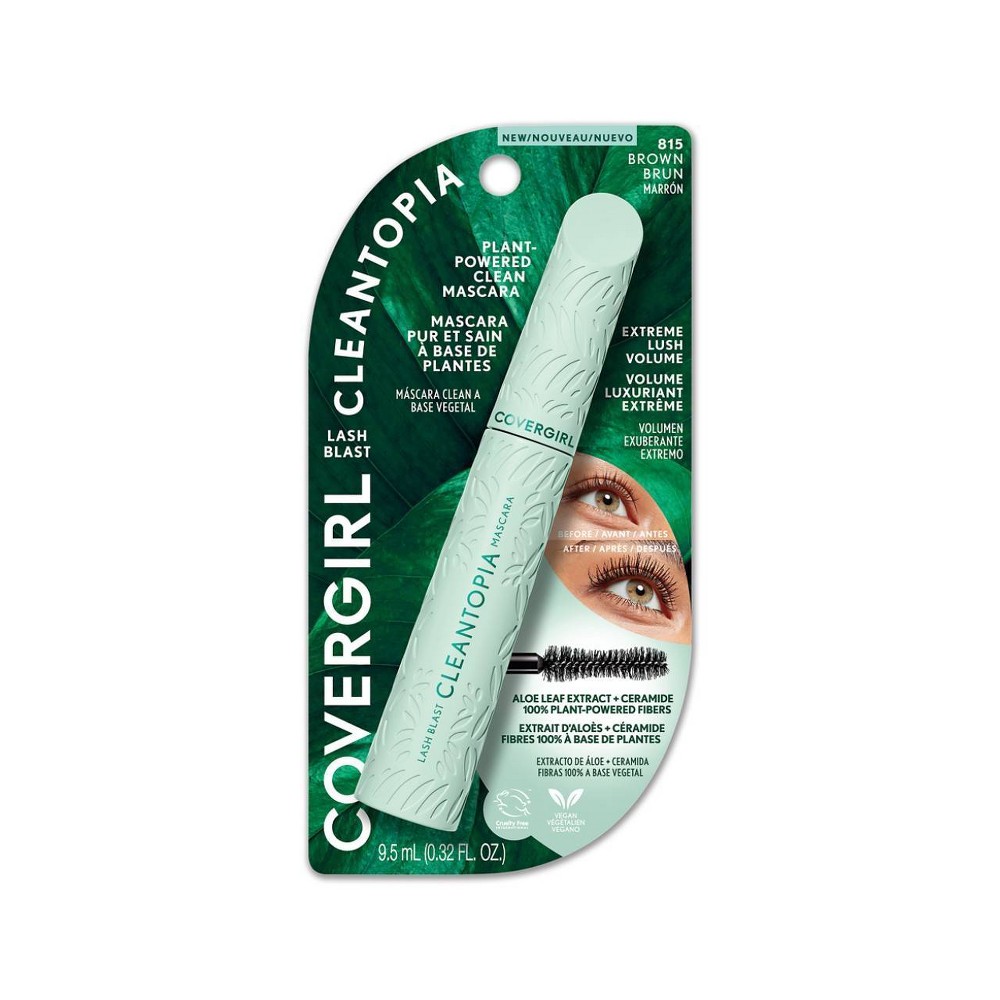
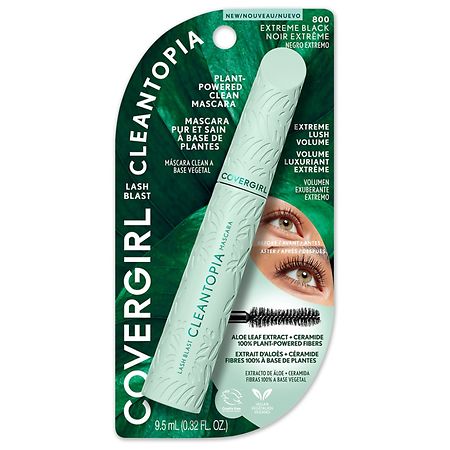
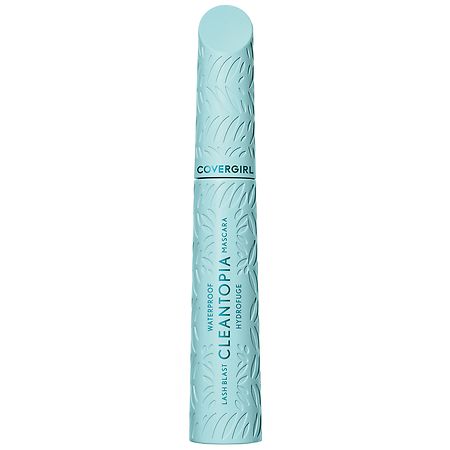
COVERGIRL Lash Blast Cleantopia Mascara - Brown - 0.32 fl oz: Thickening, Lengthening, Volumizing, Paraben-Free
Analysis updated August 2026 · How Scout scores
At a glance
Summary
This mascara features a variety of beneficial natural oils such as argan, castor, marula, jojoba, and coconut oil, which provide excellent moisturizing and conditioning properties. The formulation is free from parabens and other harsh chemicals, enhancing its safety profile. However, the presence of synthetic wax and other processed ingredients slightly reduces its overall score, despite the predominantly natural and beneficial components.
Key ingredients 39
PanthenolVery Good
Panthenol is a form of Vitamin B5 that is used as a moisturizer and skin conditioner. It is known for its ability to improve hydration and reduce inflammation. It provides significant conditioning benefits in this formulation.
Risks
There are minimal risks associated with panthenol in cosmetics.
Benefits
Panthenol helps to moisturize and soothe the skin.
Argania Spinosa Kernel OilVery Good
Argania Spinosa Kernel Oil, commonly known as argan oil, is a natural oil rich in fatty acids and Vitamin E. It is known for its moisturizing and nourishing properties. It provides significant conditioning benefits in this formulation.
Risks
There are minimal risks associated with argan oil in cosmetics.
Benefits
Argan oil helps to moisturize and nourish the skin and hair.
Ricinus Communis (Castor) Seed OilVery Good
Castor seed oil is a natural oil known for its moisturizing and conditioning properties. It is rich in fatty acids and is beneficial for skin and hair. It provides significant conditioning benefits in this formulation.
Risks
There are minimal risks associated with castor seed oil in cosmetics.
Benefits
Castor seed oil helps to moisturize and condition the skin and hair.
Sclerocarya Birrea Seed OilVery Good
Sclerocarya Birrea Seed Oil, commonly known as marula oil, is a natural oil rich in antioxidants and fatty acids. It is known for its moisturizing and nourishing properties. It provides significant conditioning benefits in this formulation.
Risks
There are minimal risks associated with marula oil in cosmetics.
Benefits
Marula oil helps to moisturize and nourish the skin and hair.
Simmondsia Chinensis (Jojoba) Seed OilVery Good
Jojoba seed oil is a natural oil that closely resembles the skin's natural sebum. It is known for its moisturizing and balancing properties. It provides significant conditioning benefits in this formulation.
Risks
There are minimal risks associated with jojoba seed oil in cosmetics.
Benefits
Jojoba seed oil helps to moisturize and balance the skin.
Cocos Nucifera (Coconut) OilVery Good
Coconut oil is a natural oil known for its moisturizing and nourishing properties. It is rich in fatty acids and is beneficial for skin and hair. It provides significant conditioning benefits in this formulation.
Risks
There are minimal risks associated with coconut oil in cosmetics.
Benefits
Coconut oil helps to moisturize and nourish the skin and hair.
Persea Gratissima (Avocado) OilVery Good
Avocado oil is a natural oil rich in fatty acids and vitamins. It is known for its moisturizing and nourishing properties. It provides significant conditioning benefits in this formulation.
Risks
There are minimal risks associated with avocado oil in cosmetics.
Benefits
Avocado oil helps to moisturize and nourish the skin and hair.
Chamomilla Recutita (Matricaria) Flower ExtractVery Good
Chamomile extract is a botanical ingredient known for its soothing and anti-inflammatory properties. It is beneficial for calming irritated skin. It provides soothing benefits in this formulation.
Risks
There are minimal risks associated with chamomile extract in cosmetics.
Benefits
Chamomile extract helps to soothe and calm the skin.
Cucumis Sativus (Cucumber) Fruit ExtractVery Good
Cucumber extract is a botanical ingredient known for its hydrating and soothing properties. It is beneficial for refreshing and calming the skin. It provides hydrating benefits in this formulation.
Risks
There are minimal risks associated with cucumber extract in cosmetics.
Benefits
Cucumber extract helps to hydrate and soothe the skin.
Passiflora Edulis Seed OilVery Good
Passion fruit seed oil is a natural oil rich in fatty acids and antioxidants. It is known for its moisturizing and nourishing properties. It provides significant conditioning benefits in this formulation.
Risks
There are minimal risks associated with passion fruit seed oil in cosmetics.
Benefits
Passion fruit seed oil helps to moisturize and nourish the skin and hair.
Aloe Barbadensis Leaf ExtractVery Good
Aloe vera extract is a botanical ingredient known for its soothing and hydrating properties. It is beneficial for calming and moisturizing the skin. It provides soothing benefits in this formulation.
Risks
There are minimal risks associated with aloe vera extract in cosmetics.
Benefits
Aloe vera extract helps to soothe and hydrate the skin.
TocopherolVery Good
Tocopherol, also known as Vitamin E, is an antioxidant that helps to protect the skin from free radical damage. It is beneficial for maintaining skin health. It provides antioxidant benefits in this formulation.
Risks
There are minimal risks associated with tocopherol in cosmetics.
Benefits
Tocopherol helps to protect and condition the skin.
ArginineGood
Arginine is an amino acid that can help to condition the skin and hair. It is generally considered safe and beneficial in cosmetics. It provides conditioning benefits in this formulation.
Risks
There are minimal risks associated with arginine in cosmetics.
Benefits
Arginine helps to condition and strengthen the hair.
KaolinGood
Beneficial ingredient — whole-food or functional value in this product class.
Risks
There are minimal risks associated with kaolin in cosmetics.
Benefits
Kaolin helps to absorb oil and improve the texture of the product.
Tocopheryl AcetateGood
Tocopheryl acetate is a form of Vitamin E used as an antioxidant and skin conditioner. It helps to protect the skin from free radical damage. It provides antioxidant benefits in this formulation.
Risks
There are minimal risks associated with tocopheryl acetate in cosmetics.
Benefits
Tocopheryl acetate helps to protect and condition the skin.
BiotinGood
Biotin is a vitamin that is often used to strengthen hair and nails. It is generally considered safe and beneficial in cosmetics. It provides strengthening benefits in this formulation.
Risks
There are minimal risks associated with biotin in cosmetics.
Benefits
Biotin helps to strengthen and condition the hair.
Ceramide NGGood
Ceramide NG is a lipid that helps to restore the skin's natural barrier. It is known for its moisturizing and protective properties. It provides barrier-repair benefits in this formulation.
Risks
There are minimal risks associated with ceramide NG in cosmetics.
Benefits
Ceramide NG helps to restore and protect the skin's barrier.
Aqua/Water/EauNeutral
Water is a common solvent used in cosmetics to dissolve other ingredients. It is generally considered safe and non-reactive. It does not provide any direct benefits or risks in this formulation.
Risks
There are no significant risks associated with water in cosmetics.
Benefits
Water helps to dissolve other ingredients and provides a base for the formulation.
Stearic AcidNeutral
Stearic acid is a fatty acid used as an emulsifier and thickener. It is generally safe and non-irritating. It does not have significant benefits or risks in this formulation.
Risks
There are minimal risks associated with stearic acid in cosmetics.
Benefits
Stearic acid helps to stabilize and thicken the formulation.
PVPNeutral
PVP is a film-forming agent that helps to hold the mascara in place. It is generally considered safe for use in cosmetics. It does not have significant benefits or risks in this formulation.
Risks
There are minimal risks associated with PVP in cosmetics.
Benefits
PVP helps to improve the longevity and hold of the mascara.
Cetyl AlcoholNeutral
Cetyl alcohol is a fatty alcohol used as an emollient and thickener. It is generally considered safe and non-irritating. It does not have significant benefits or risks in this formulation.
Risks
There are minimal risks associated with cetyl alcohol in cosmetics.
Benefits
Cetyl alcohol helps to soften and smooth the skin.
Cera Microcristallina/Microcrystalline Wax/Cire MicrocrystallineNeutral
Microcrystalline wax is used to thicken and stabilize formulations. It is generally considered safe for use in cosmetics. It does not have significant benefits or risks in this formulation.
Risks
There are minimal risks associated with microcrystalline wax in cosmetics.
Benefits
Microcrystalline wax helps to improve the texture and stability of the product.
Hydrogenated Vegetable OilNeutral
Hydrogenated vegetable oil is used as an emollient and thickener. It is generally considered safe for use in cosmetics. It does not have significant benefits or risks in this formulation.
Risks
There are minimal risks associated with hydrogenated vegetable oil in cosmetics.
Benefits
Hydrogenated vegetable oil helps to moisturize and soften the skin.
Polysorbate 20Neutral
Polysorbate 20 is an emulsifier that helps to mix oil and water-based ingredients. It is generally considered safe for use in cosmetics. It does not have significant benefits or risks in this formulation.
Risks
There are minimal risks associated with polysorbate 20 in cosmetics.
Benefits
Polysorbate 20 helps to stabilize the formulation.
Rhus Verniciflua Peel WaxNeutral
Rhus Verniciflua Peel Wax is used as a thickener and stabilizer in cosmetics. It is generally considered safe for use. It does not have significant benefits or risks in this formulation.
Risks
There are minimal risks associated with Rhus Verniciflua Peel Wax in cosmetics.
Benefits
Rhus Verniciflua Peel Wax helps to improve the texture and stability of the product.
Copernicia Cerifera Cera/Copernicia Cerifera (Carnauba) Wax/Cire de CarnaubaNeutral
Carnauba wax is used to thicken and stabilize formulations. It is generally considered safe for use in cosmetics. It does not have significant benefits or risks in this formulation.
Risks
There are minimal risks associated with carnauba wax in cosmetics.
Benefits
Carnauba wax helps to improve the texture and stability of the product.
SilicaNeutral
Silica is used as a thickener and to improve the texture of cosmetics. It is generally considered safe for use. It does not have significant benefits or risks in this formulation.
Risks
There are minimal risks associated with silica in cosmetics.
Benefits
Silica helps to improve the texture and feel of the product.
2,3-ButanediolNeutral
2,3-Butanediol is used as a solvent and humectant in cosmetics. It is generally considered safe for use. It does not have significant benefits or risks in this formulation.
Risks
There are minimal risks associated with 2,3-Butanediol in cosmetics.
Benefits
2,3-Butanediol helps to retain moisture in the product.
Stearyl StearateNeutral
Stearyl stearate is used as an emollient and thickener in cosmetics. It is generally considered safe for use. It does not have significant benefits or risks in this formulation.
Risks
There are minimal risks associated with stearyl stearate in cosmetics.
Benefits
Stearyl stearate helps to soften and smooth the skin.
Synthetic WaxNeutral
Synthetic wax is used to thicken and stabilize formulations. It is generally considered safe for use in cosmetics. It does not have significant benefits or risks in this formulation.
Risks
There are minimal risks associated with synthetic wax in cosmetics.
Benefits
Synthetic wax helps to improve the texture and stability of the product.
Candelilla Cera/Euphorbia Cerifera (Candelilla) Wax/Cire de CandelillaNeutral
Candelilla wax is used to thicken and stabilize formulations. It is generally considered safe for use in cosmetics. It does not have significant benefits or risks in this formulation.
Risks
There are minimal risks associated with candelilla wax in cosmetics.
Benefits
Candelilla wax helps to improve the texture and stability of the product.
Caprylyl GlycolNeutral
Caprylyl glycol is used as a skin conditioning agent and preservative. It is generally considered safe for use in cosmetics. It does not have significant benefits or risks in this formulation.
Risks
There are minimal risks associated with caprylyl glycol in cosmetics.
Benefits
Caprylyl glycol helps to condition the skin and extend the shelf life of the product.
HectoriteNeutral
Hectorite is a clay mineral used to thicken and stabilize formulations. It is generally considered safe for use in cosmetics. It does not have significant benefits or risks in this formulation.
Risks
There are minimal risks associated with hectorite in cosmetics.
Benefits
Hectorite helps to improve the texture and stability of the product.
SimethiconeNeutral
Simethicone is used as an anti-foaming agent in cosmetics. It is generally considered safe for use. It does not have significant benefits or risks in this formulation.
Risks
There are minimal risks associated with simethicone in cosmetics.
Benefits
Simethicone helps to reduce foaming and improve the texture of the product.
PantolactoneNeutral
Pantolactone is used as a humectant and skin conditioning agent. It is generally considered safe for use in cosmetics. It does not have significant benefits or risks in this formulation.
Risks
There are minimal risks associated with pantolactone in cosmetics.
Benefits
Pantolactone helps to retain moisture in the skin.
CelluloseNeutral
Cellulose is used as a thickener and stabilizer in cosmetics. It is generally considered safe for use. It does not have significant benefits or risks in this formulation.
Risks
There are minimal risks associated with cellulose in cosmetics.
Benefits
Cellulose helps to improve the texture and stability of the product.
Caprylic/Capric TriglycerideNeutral
Caprylic/Capric Triglyceride is used as an emollient and skin conditioning agent. It is generally considered safe for use in cosmetics. It does not have significant benefits or risks in this formulation.
Risks
There are minimal risks associated with caprylic/capric triglyceride in cosmetics.
Benefits
Caprylic/Capric Triglyceride helps to condition and soften the skin.
ParaffinBad
Processed additive flagged under Scout's ingredient doctrine.
Risks
There are minimal risks associated with paraffin in cosmetics.
Benefits
Paraffin helps to thicken the product and improve its texture.
Propylene GlycolBad
Processed additive flagged under Scout's ingredient doctrine.
Risks
There are minimal risks associated with propylene glycol in cosmetics.
Benefits
Propylene glycol helps to keep the skin hydrated.
Processing
Processed Foods
Get the full breakdown in the Scout appTake Scout shopping
Scan any product to see lab results, healthy alternatives, and your personalized analysis.
Download on theApp Store GET IT ONGoogle Play