
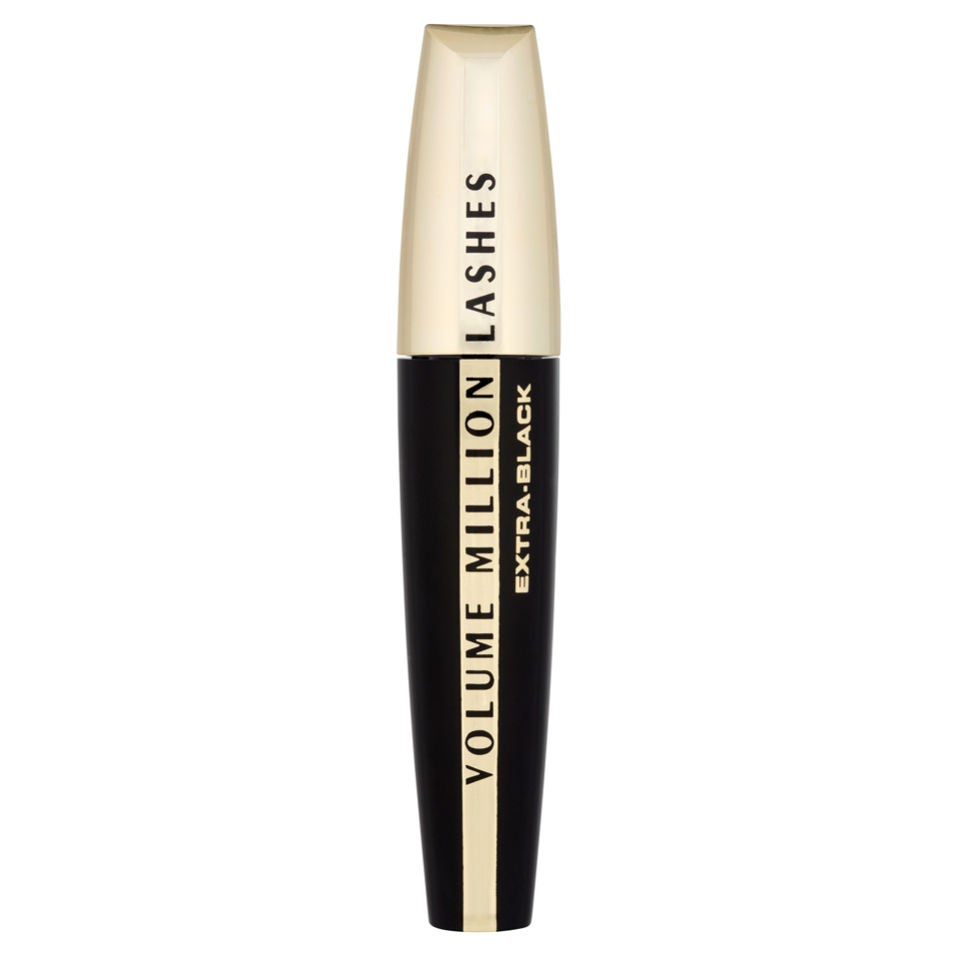

L'Oreal Paris Volume Million Lashes Mascara, Washable, Black, 10.7ml
Analysis updated September 2026 · How Scout scores
At a glance
Summary
This mascara contains several beneficial ingredients such as beeswax, carnauba wax, glycerin, and hydrogenated jojoba oil, which are known for their natural origin and skin-friendly properties. However, the presence of phenoxyethanol, a preservative with potential irritation concerns, slightly lowers the overall safety profile. The product has a balanced mix of natural and synthetic ingredients, with a moderate level of processing.
Key ingredients 34
Cera Alba / Beeswax / Cire DabeilleVery Good
Beeswax is a natural wax produced by honeybees and is used for its emollient and thickening properties. It helps to form a protective barrier on the skin. It is well-regarded for its natural origin and skin-friendly properties.
Risks
There are minimal risks, though some individuals may have allergies to bee products.
Benefits
Beeswax provides moisture retention and a protective barrier, enhancing skin hydration.
Hydrogenated Jojoba OilVery Good
Hydrogenated Jojoba Oil is a natural oil used for its emollient and moisturizing properties. It closely resembles the skin's natural sebum, making it highly compatible. It is well-regarded for its skin-friendly and hydrating benefits.
Risks
There are minimal risks associated with jojoba oil.
Benefits
It provides excellent moisturizing and emollient benefits, enhancing skin hydration.
PanthenolVery Good
Panthenol is a form of Vitamin B5 used for its moisturizing and skin-conditioning properties. It helps to improve skin hydration and elasticity. It is well-regarded for its soothing and healing benefits.
Risks
There are minimal risks associated with panthenol.
Benefits
It provides excellent moisturizing and soothing benefits, enhancing skin hydration.
GlycerinGood
Glycerin is a humectant that attracts moisture to the skin, helping to keep it hydrated. It is widely used in cosmetics for its moisturizing properties. It is well-tolerated and beneficial for all skin types.
Risks
There are minimal risks associated with glycerin.
Benefits
Glycerin provides excellent moisturizing benefits, enhancing skin hydration.
Soluble CollagenGood
Soluble Collagen is used for its moisturizing and skin-conditioning properties. It helps to improve skin elasticity and hydration. It is well-regarded for its anti-aging benefits.
Risks
There are minimal risks associated with soluble collagen.
Benefits
It provides moisturizing and anti-aging benefits, enhancing skin elasticity.
CI 77491, CI 77492, CI 77499 / Iron OxidesGood
Beneficial ingredient — whole-food or functional value in this product class.
Risks
There are minimal risks associated with iron oxides.
Benefits
They provide stable and safe pigmentation for cosmetic products.
MicaGood
Beneficial ingredient — whole-food or functional value in this product class.
Risks
There are minimal risks associated with mica.
Benefits
It provides a shimmering effect and enhances the aesthetic appeal of the product.
Aqua / Water / EauNeutral
Water is a common solvent used in cosmetics to dissolve other ingredients. It does not provide any direct benefits or risks in the formulation. It serves as a base for the product.
Risks
There are no significant risks associated with water in cosmetics.
Benefits
Water helps to dissolve other ingredients and provides a smooth application.
Potassium Cetyl PhosphateNeutral
Potassium Cetyl Phosphate is an emulsifying agent that helps to blend oil and water components. It stabilizes the formulation and improves texture. It is generally well-tolerated in cosmetic products.
Risks
There are minimal risks associated with this ingredient.
Benefits
It enhances the texture and stability of the product.
Cera Carnauba / Carnauba Wax / Cire de CarnaubaNeutral
Standard formulation ingredient — neither beneficial nor harmful at typical use.
Risks
There are minimal risks associated with carnauba wax.
Benefits
Carnauba wax provides a glossy finish and enhances the texture of the product.
Acacia Senegal / Acacia Senegal GumNeutral
Acacia Senegal Gum is a natural gum used as a thickening agent and stabilizer. It helps to improve the texture and consistency of the product. It is generally considered safe in cosmetics.
Risks
There are minimal risks associated with this ingredient.
Benefits
It improves the texture and stability of the formulation.
Cetyl AlcoholNeutral
Cetyl Alcohol is a fatty alcohol used as an emollient and thickener. It helps to improve the texture and feel of the product. It is generally considered safe and non-irritating.
Risks
There are minimal risks associated with cetyl alcohol.
Benefits
It enhances the texture and emollient properties of the product.
HydroxyethylcelluloseNeutral
Hydroxyethylcellulose is a thickening agent derived from cellulose. It helps to improve the viscosity and stability of the product. It is generally considered safe in cosmetics.
Risks
There are minimal risks associated with this ingredient.
Benefits
It enhances the viscosity and stability of the formulation.
PEG/PPG-17/18 DimethiconeNeutral
PEG/PPG-17/18 Dimethicone is a silicone-based polymer used for its conditioning and smoothing properties. It helps to improve the texture and spreadability of the product. It is generally considered safe in cosmetics.
Risks
There are minimal risks, though some individuals may experience sensitivity to silicones.
Benefits
It provides a smooth application and enhances the texture of the product.
Steareth-20Neutral
Steareth-20 is an emulsifier used to blend oil and water components in cosmetics. It helps to stabilize the formulation and improve texture. It is generally considered safe for use in cosmetics.
Risks
There are minimal risks associated with this ingredient.
Benefits
It enhances the stability and texture of the product.
Phenethyl AlcoholNeutral
Phenethyl Alcohol is used as a fragrance and preservative in cosmetics. It has antimicrobial properties that help to preserve the product. It is generally considered safe in cosmetics.
Risks
There are minimal risks, though it may cause irritation in sensitive individuals.
Benefits
It provides antimicrobial benefits and a mild fragrance.
Sodium PolymethacrylateNeutral
Sodium Polymethacrylate is a thickening agent used to improve the texture and viscosity of cosmetics. It helps to stabilize the formulation. It is generally considered safe in cosmetics.
Risks
There are minimal risks associated with this ingredient.
Benefits
It enhances the texture and stability of the product.
Hydrogenated Palm OilNeutral
Hydrogenated Palm Oil is used for its emollient properties and to improve the texture of cosmetics. It helps to create a smooth application. It is generally considered safe in cosmetics.
Risks
There are minimal risks, though environmental concerns exist regarding palm oil sourcing.
Benefits
It provides emollient benefits and enhances the texture of the product.
Pentaerythrityl TetraisostearateNeutral
Pentaerythrityl Tetraisostearate is an emollient used to improve the texture and spreadability of cosmetics. It helps to create a smooth application. It is generally considered safe in cosmetics.
Risks
There are minimal risks associated with this ingredient.
Benefits
It enhances the texture and spreadability of the product.
Polyquaternium-10Neutral
Polyquaternium-10 is a conditioning agent used to improve the texture and feel of cosmetics. It helps to enhance the smoothness and manageability of the product. It is generally considered safe in cosmetics.
Risks
There are minimal risks associated with this ingredient.
Benefits
It provides conditioning benefits and enhances the texture of the product.
SilicaNeutral
Silica is used as an absorbent and anti-caking agent in cosmetics. It helps to improve the texture and mattify the product. It is generally considered safe in cosmetics.
Risks
There are minimal risks associated with silica.
Benefits
It provides absorbent and mattifying benefits, enhancing product texture.
Silica Dimethyl SilylateNeutral
Silica Dimethyl Silylate is used as a thickening and anti-caking agent in cosmetics. It helps to improve the texture and stability of the product. It is generally considered safe in cosmetics.
Risks
There are minimal risks associated with this ingredient.
Benefits
It enhances the texture and stability of the formulation.
Sodium Chondroitin SulfateNeutral
Sodium Chondroitin Sulfate is used for its moisturizing and skin-conditioning properties. It helps to improve skin hydration and elasticity. It is generally considered safe in cosmetics.
Risks
There are minimal risks associated with this ingredient.
Benefits
It provides moisturizing and skin-conditioning benefits, enhancing skin hydration.
AtelocollagenNeutral
Atelocollagen is used for its moisturizing and skin-conditioning properties. It helps to improve skin elasticity and hydration. It is generally considered safe in cosmetics.
Risks
There are minimal risks associated with atelocollagen.
Benefits
It provides moisturizing and skin-conditioning benefits, enhancing skin elasticity.
CI 75470 / CarmineNeutral
Carmine is a natural colorant derived from cochineal insects. It provides a red pigment and is generally considered safe. It is valued for its natural origin and vibrant color.
Risks
There are minimal risks, though some individuals may have allergies to carmine.
Benefits
It provides a vibrant red pigment and is a natural colorant.
CI 77288 / Chromium Oxide GreensNeutral
Chromium Oxide Greens is used as a colorant in cosmetics. It provides a green pigment and is generally considered safe. It is valued for its stability and non-reactive nature.
Risks
There are minimal risks associated with chromium oxide greens.
Benefits
It provides stable and safe green pigmentation for cosmetic products.
CI 77289 / Chromium Hydroxide GreenNeutral
Chromium Hydroxide Green is used as a colorant in cosmetics. It provides a green pigment and is generally considered safe. It is valued for its stability and non-reactive nature.
Risks
There are minimal risks associated with chromium hydroxide green.
Benefits
It provides stable and safe green pigmentation for cosmetic products.
CI 77007 / UltramarinesNeutral
Ultramarines are used as colorants in cosmetics. They provide a blue pigment and are generally considered safe. They are valued for their stability and vibrant color.
Risks
There are minimal risks associated with ultramarines.
Benefits
They provide stable and vibrant blue pigmentation for cosmetic products.
CI 77891 / Titanium DioxideNeutral
Titanium Dioxide is used as a colorant and UV filter in cosmetics. It provides pigmentation and sun protection and is generally considered safe. It is valued for its stability and non-reactive nature.
Risks
There are minimal risks associated with titanium dioxide.
Benefits
It provides pigmentation and sun protection benefits.
CI 77510 / Ferric FerrocyanideNeutral
Ferric Ferrocyanide is used as a colorant in cosmetics. It provides a blue pigment and is generally considered safe. It is valued for its stability and vibrant color.
Risks
There are minimal risks associated with ferric ferrocyanide.
Benefits
It provides stable and vibrant blue pigmentation for cosmetic products.
ParaffinBad
Processed additive flagged under Scout's ingredient doctrine.
Risks
There is a potential risk of pore clogging in sensitive individuals.
Benefits
Paraffin provides a protective barrier and helps to retain moisture.
PhenoxyethanolBad
Phenoxyethanol is a preservative used to prevent microbial growth in cosmetics. It is effective but can cause irritation in some individuals. It is a common alternative to parabens but still has some safety concerns.
Risks
Potential risks include skin irritation and allergic reactions.
Benefits
It effectively preserves the product by preventing microbial growth.
Propylene GlycolBad
Processed additive flagged under Scout's ingredient doctrine.
Risks
Potential risks include skin irritation in sensitive individuals.
Benefits
It provides moisture retention and prevents the product from drying out.
Disodium EDTABad
Processed additive flagged under Scout's ingredient doctrine.
Risks
There are minimal risks associated with this ingredient.
Benefits
It enhances the stability and shelf life of the product.
Get the full breakdown in the Scout appTake Scout shopping
Scan any product to see lab results, healthy alternatives, and your personalized analysis.
Download on theApp Store GET IT ONGoogle PlayAmazon pricing & content
Amazon price as of . Product prices and availability are accurate as of the date/time indicated and are subject to change. Any price and availability information displayed on Amazon.com at the time of purchase will apply to the purchase of this product.
CERTAIN CONTENT THAT APPEARS ON THIS SITE COMES FROM AMAZON. THIS CONTENT IS PROVIDED “AS IS” AND IS SUBJECT TO CHANGE OR REMOVAL AT ANY TIME.