
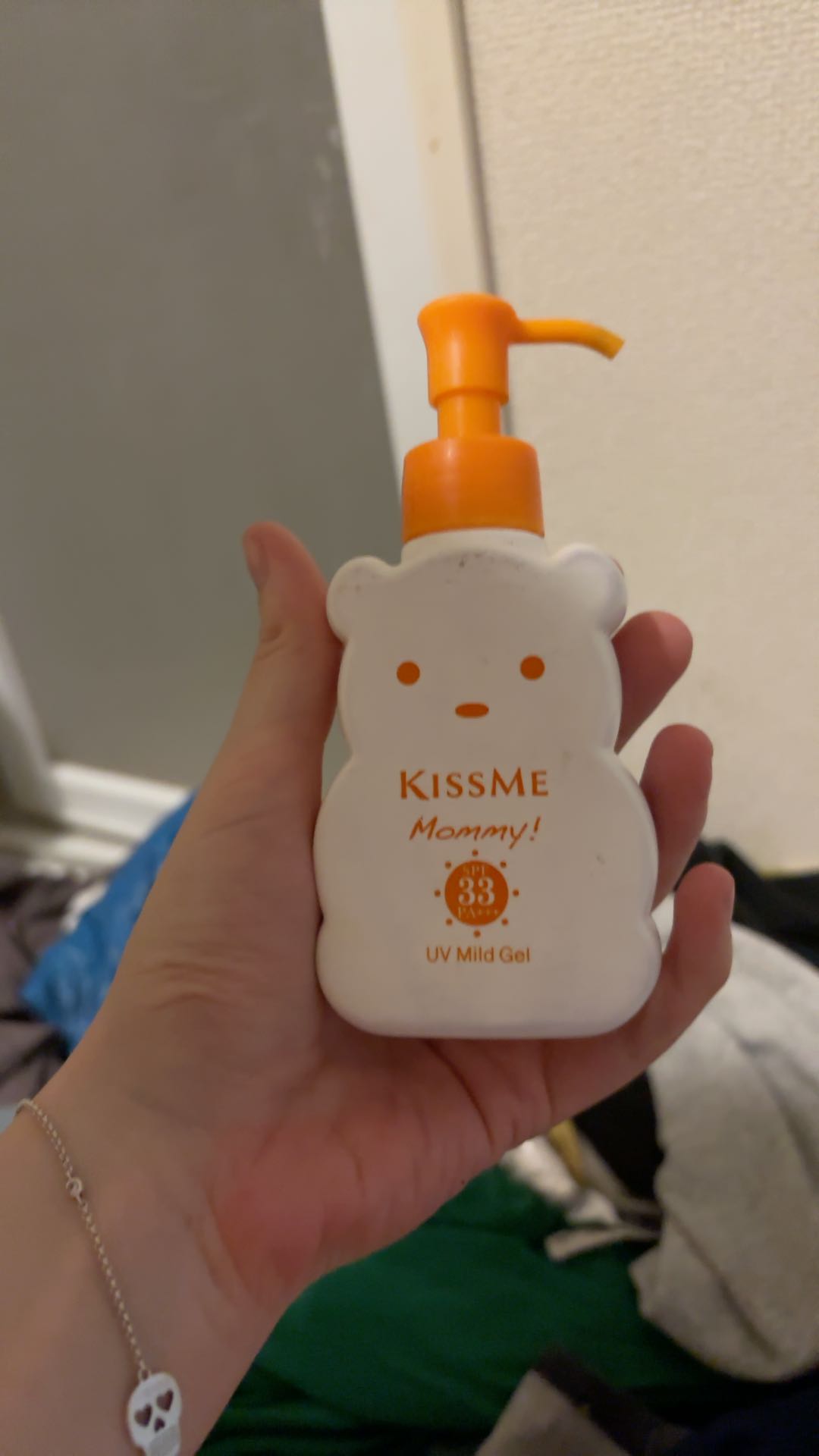
Mommy - Sunscreen Uv Mild Gel Spf33 Pa+++100g F/s From Japan

65 Fair
View on Amazon

Summary

This sunscreen contains beneficial ingredients such as macadamia seed oil, jojoba seed oil, and aloe vera leaf extract, which are known for their skin-nourishing properties. However, the presence of BHT, a synthetic antioxidant with potential health concerns, and the use of acrylate polymers contribute to a moderate processing level. The product is a mix of natural and synthetic components, which affects its overall safety profile.

At a glance

Beneficial ingredients 0
Harmful ingredients 0
Category Sunscreen

Key ingredients 17

Water

Water is a universal solvent used as a base in many cosmetic formulations. It helps dissolve other ingredients and provides a smooth texture. It is generally considered safe and non-irritating.

Risks

There are no significant risks associated with water in cosmetics.

Benefits

Water hydrates the skin and helps in the even distribution of other ingredients.

See more about Water →
PG (Propylene Glycol)

Propylene Glycol is a common humectant used to retain moisture in the skin. It also helps in the absorption of other ingredients. It is generally recognized as safe in low concentrations.

Risks

In high concentrations, it may cause skin irritation or allergic reactions in sensitive individuals.

Benefits

It helps maintain skin hydration and enhances the penetration of active ingredients.

Ethylhexyl Methoxycinnamate

Ethylhexyl Methoxycinnamate is a chemical UV filter used to protect the skin from UVB rays. It is widely used in sunscreens for its effectiveness. However, it can be a potential endocrine disruptor.

Risks

There are concerns about its potential to disrupt hormones and cause skin irritation.

Benefits

It provides effective protection against sunburn and UVB-induced skin damage.

See more about Ethylhexyl Methoxycinnamate →
Macadamia Seed Oil

Macadamia Seed Oil is a natural oil rich in fatty acids and antioxidants. It is known for its moisturizing and skin-softening properties. It is considered safe and beneficial for most skin types.

Risks

There are minimal risks, though it may cause allergic reactions in individuals with nut allergies.

Benefits

It nourishes and hydrates the skin, improving its elasticity and barrier function.

Diethylamino Hydroxybenzoyl Hexyl Benzoate

This is a chemical sunscreen agent that provides broad-spectrum protection against UVA rays. It is stable and effective in preventing long-term skin damage. It is generally considered safe for use in sunscreens.

Risks

There are minimal risks, though it may cause irritation in sensitive skin.

Benefits

It helps prevent premature aging and skin cancer by blocking UVA rays.

See more about Diethylamino Hydroxybenzoyl Hexyl Benzoate →
Trehalose

Trehalose is a sugar molecule used as a moisturizer and antioxidant in cosmetics. It helps protect the skin from dehydration and environmental stress. It is considered safe and non-irritating.

Risks

There are no significant risks associated with trehalose in cosmetics.

Benefits

It hydrates the skin and provides antioxidant protection.

See more about Trehalose →
Sodium Hyaluronic Acid

Sodium Hyaluronic Acid is a powerful humectant that attracts and retains moisture in the skin. It is known for its ability to hydrate and plump the skin. It is considered very beneficial for all skin types.

Risks

There are no significant risks associated with sodium hyaluronic acid.

Benefits

It provides intense hydration and improves skin texture and elasticity.

Jojoba Seed Oil

Jojoba Seed Oil is a natural oil that closely resembles the skin's natural sebum. It is known for its moisturizing and soothing properties. It is considered very beneficial for skin health.

Risks

There are minimal risks, though it may cause allergic reactions in rare cases.

Benefits

It helps balance oil production and provides long-lasting moisture.

Acerola Fruit Extract

Acerola Fruit Extract is rich in vitamin C and antioxidants. It is used in cosmetics for its skin-brightening and anti-aging properties. It is generally considered safe and beneficial.

Risks

There are minimal risks, though it may cause irritation in sensitive skin.

Benefits

It helps brighten the skin and reduce signs of aging.

Aloe Vera Leaf Extract

Aloe Vera Leaf Extract is a natural ingredient known for its soothing and healing properties. It is widely used in cosmetics for its ability to calm irritated skin. It is considered very beneficial for skin health.

Risks

There are minimal risks, though it may cause allergic reactions in rare cases.

Benefits

It soothes and hydrates the skin, reducing inflammation and redness.

See more about Aloe Vera Leaf Extract →
Yellowberry Extract

Yellowberry Extract is used for its antioxidant and skin-conditioning properties. It helps protect the skin from environmental damage. It is generally considered safe and beneficial.

Risks

There are minimal risks, though it may cause irritation in sensitive skin.

Benefits

It provides antioxidant protection and improves skin texture.

Acrylate/Alkyl Acrylate (C10-30) Crosspolymer

This is a synthetic polymer used as a thickening agent in cosmetics. It helps stabilize emulsions and improve product texture. It is generally considered safe for use in cosmetics.

Risks

There are minimal risks, though it may cause irritation in sensitive skin.

Benefits

It enhances the texture and stability of cosmetic formulations.

Stearyl Polyglyceryl Arinate -10

This is an emulsifier used to blend oil and water-based ingredients. It helps improve the texture and consistency of cosmetic products. It is generally considered safe for use in cosmetics.

Risks

There are minimal risks, though it may cause irritation in sensitive skin.

Benefits

It improves the texture and stability of cosmetic formulations.

Potassium Hydroxide

Potassium Hydroxide is used as a pH adjuster in cosmetics. It helps maintain the stability and effectiveness of the product. It is generally considered safe in low concentrations.

Risks

In high concentrations, it can be corrosive and cause skin irritation.

Benefits

It helps maintain the desired pH level of cosmetic formulations.

See more about Potassium Hydroxide →
EDTA-2Na

EDTA-2Na is a chelating agent used to improve the stability and shelf life of cosmetics. It binds to metal ions and prevents them from affecting the product. It is generally considered safe for use in cosmetics.

Risks

There are minimal risks, though it may cause irritation in sensitive skin.

Benefits

It enhances the stability and effectiveness of cosmetic formulations.

BHT

BHT is a synthetic antioxidant used to prevent the oxidation of oils in cosmetics. It helps extend the shelf life of the product. However, it is controversial due to potential health concerns.

Risks

There are concerns about its potential to cause skin irritation and endocrine disruption.

Benefits

It helps prevent the degradation of oils and extends product shelf life.

See more about BHT →
BG (Butylene Glycol)

Butylene Glycol is a humectant and solvent used to improve the texture and moisture content of cosmetics. It helps enhance the absorption of other ingredients. It is generally considered safe for use in cosmetics.

Risks

There are minimal risks, though it may cause irritation in sensitive skin.

Benefits

It hydrates the skin and improves the texture of cosmetic formulations.

Processing

Group 3 · Processed

Processed Foods

Get the full breakdown in the Scout app

Scan any product to see lab results, healthy alternatives, and your personalized analysis.

Download on theApp Store