
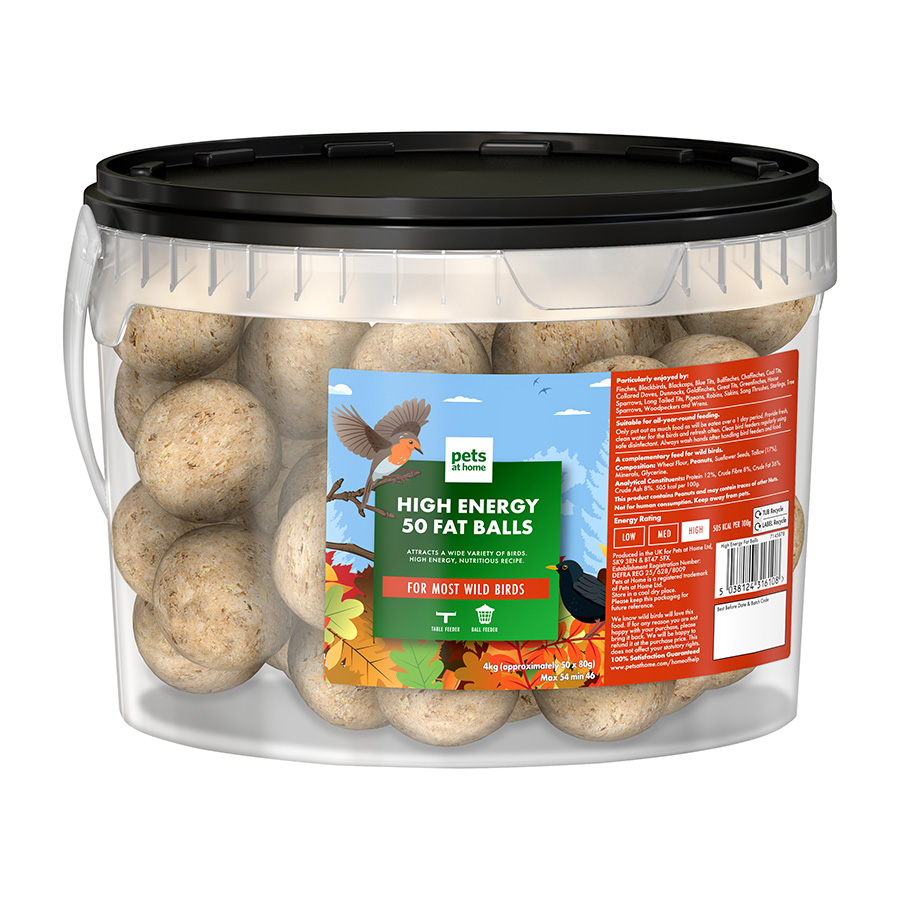


Wild bird fat balls
Analysis updated July 2026 · How Scout scores
At a glance
Summary
This product is composed primarily of natural ingredients such as seeds, nuts, grains, and dried fruits, which are minimally processed and provide a variety of nutrients. The use of suet and lard is typical for bird food, offering energy-rich fats. The absence of artificial additives or preservatives contributes to its high score, making it a wholesome option for wild birds.
Key ingredients 25
sunflower heartsVery Good
Sunflower hearts are the inner part of sunflower seeds, offering high nutritional value without the shell. They are rich in healthy fats and proteins, making them an excellent food source for birds. Sunflower hearts are easy for birds to eat and digest.
Risks
There are minimal risks associated with sunflower hearts for birds.
Benefits
They provide concentrated nutrients and energy, supporting bird health.
oatsVery Good
Minimally processed whole-food ingredient.
Risks
Oats may not provide sufficient nutrients if used as the primary ingredient.
Benefits
They can add variety to a bird's diet and provide some energy.
unsalted peanutsVery Good
Unsalted peanuts are a high-energy food source for birds, providing essential fats and proteins. They are a popular ingredient in bird feed due to their nutritional value. Unsalted peanuts are safe for birds as they do not contain harmful salt.
Risks
There are minimal risks associated with unsalted peanuts for birds.
Benefits
They offer a rich source of energy and nutrients, promoting bird health.
black sunflower seedsGood
Black sunflower seeds are a natural source of energy and nutrients for birds. They are rich in healthy fats and proteins, making them a beneficial ingredient. They are also easy for birds to eat and digest.
Risks
There are minimal risks associated with black sunflower seeds for birds.
Benefits
They provide essential nutrients and energy, supporting bird health and vitality.
chopped peanutsGood
Chopped peanuts are a high-energy food source for birds, providing essential fats and proteins. They are a popular ingredient in bird feed due to their nutritional value. Peanuts are also easy for birds to consume.
Risks
Peanuts can pose a choking hazard if not properly chopped.
Benefits
They offer a rich source of energy and nutrients, promoting bird health.
seedsGood
Seeds are a natural and nutritious food source for birds, offering essential fats and proteins. They are a staple in bird diets due to their high energy content. Seeds are also easy for birds to consume and digest.
Risks
Some seeds may be too large for small birds to eat comfortably.
Benefits
They provide essential nutrients and energy, supporting overall bird health.
suetGood
Suet is a high-energy food source made from animal fat, ideal for birds during cold weather. It provides essential fats that help birds maintain body heat. Suet is often mixed with seeds to enhance its nutritional value.
Risks
Suet can spoil in warm weather, potentially harming birds.
Benefits
It offers a concentrated energy source, crucial for survival in cold climates.
dried fruitsGood
Dried fruits offer natural sugars and nutrients, making them a beneficial addition to bird feed. They provide a sweet treat that many birds enjoy. Dried fruits can also add variety to a bird's diet.
Risks
Excessive dried fruit consumption can lead to digestive issues in birds.
Benefits
They provide vitamins and natural sugars, enhancing the diet's nutritional profile.
currantsGood
Currants are small dried fruits that provide natural sugars and nutrients. They are a popular ingredient in bird feed due to their sweet taste. Currants can add variety and nutritional value to a bird's diet.
Risks
Excessive consumption of currants can lead to digestive issues in birds.
Benefits
They provide vitamins and natural sugars, enhancing the diet's nutritional profile.
raisinsGood
Raisins are dried grapes that offer natural sugars and nutrients, making them a beneficial addition to bird feed. They are a sweet treat that many birds enjoy. Raisins can also add variety to a bird's diet.
Risks
Excessive raisin consumption can lead to digestive issues in birds.
Benefits
They provide vitamins and natural sugars, enhancing the diet's nutritional profile.
sultanasGood
Sultanas are dried white grapes that provide natural sugars and nutrients. They are a popular ingredient in bird feed due to their sweet taste. Sultanas can add variety and nutritional value to a bird's diet.
Risks
Excessive consumption of sultanas can lead to digestive issues in birds.
Benefits
They provide vitamins and natural sugars, enhancing the diet's nutritional profile.
grated appleGood
Grated apple provides natural sugars and vitamins, making it a beneficial addition to bird feed. It is a sweet treat that many birds enjoy. Grated apple can add variety and nutritional value to a bird's diet.
Risks
Excessive apple consumption can lead to digestive issues in birds.
Benefits
It provides vitamins and natural sugars, enhancing the diet's nutritional profile.
grated pearGood
Grated pear offers natural sugars and vitamins, making it a beneficial addition to bird feed. It is a sweet treat that many birds enjoy. Grated pear can add variety and nutritional value to a bird's diet.
Risks
Excessive pear consumption can lead to digestive issues in birds.
Benefits
It provides vitamins and natural sugars, enhancing the diet's nutritional profile.
milletGood
Millet is a small seed that is easy for birds to eat and digest. It provides carbohydrates and some protein, making it a beneficial ingredient in bird feed. Millet is a popular choice for small birds.
Risks
There are minimal risks associated with millet for birds.
Benefits
It provides energy and nutrients, supporting bird health.
cornGood
Beneficial ingredient — whole-food or functional value in this product class.
Risks
Corn may not provide sufficient nutrients if used as the primary ingredient.
Benefits
It can add variety to a bird's diet and provide some energy.
peanut butterGood
Peanut butter is a high-energy food source for birds, providing essential fats and proteins. It is a popular ingredient in bird feed due to its nutritional value. Peanut butter can be a tasty treat for birds.
Risks
Peanut butter can be sticky and may pose a choking hazard if not used carefully.
Benefits
It offers a rich source of energy and nutrients, promoting bird health.
cerealsNeutral
Cereals provide carbohydrates and some fiber, which can be beneficial for birds. However, they are not as nutrient-dense as seeds or nuts. They are often used as a filler in bird feed.
Risks
Cereals may not provide sufficient nutrients if used as the primary ingredient.
Benefits
They can add variety to a bird's diet and provide some energy.
lardNeutral
Lard is a type of animal fat that can be used as an energy source for birds. It is similar to suet but may not be as nutritionally beneficial. Lard is often used in homemade bird feed recipes.
Risks
Lard can spoil quickly in warm temperatures, posing a risk to birds.
Benefits
It provides a source of energy, especially useful in colder weather.
muesli mixNeutral
Muesli mix typically contains a variety of grains and seeds, offering a balanced diet for birds. It can provide carbohydrates, fats, and proteins. However, the nutritional value depends on the specific ingredients included.
Risks
Some muesli mixes may contain ingredients unsuitable for certain bird species.
Benefits
It offers a diverse range of nutrients, supporting a balanced diet.
bread crumbsNeutral
Bread crumbs are often used as a filler in bird feed, providing carbohydrates. They are easy for birds to eat but offer limited nutritional value. Bread crumbs can be a cost-effective way to bulk up bird feed.
Risks
Excessive bread consumption can lead to nutritional deficiencies in birds.
Benefits
They provide a source of carbohydrates, adding bulk to the feed.
cake crumbsNeutral
Cake crumbs are similar to bread crumbs, offering carbohydrates and some sugars. They are often used as a filler in bird feed. Cake crumbs can add variety to a bird's diet but are not highly nutritious.
Risks
High sugar content in cake crumbs can be harmful to birds if consumed in large quantities.
Benefits
They provide a source of carbohydrates and can add variety to the feed.
grated cheeseNeutral
Grated cheese can provide fats and proteins, which are beneficial for birds. However, it should be offered in moderation due to its high salt content. Cheese can be a tasty treat for birds but is not a staple food.
Risks
High salt content in cheese can be harmful to birds if consumed in excess.
Benefits
It offers fats and proteins, adding nutritional value to the feed.
uncooked mixed grainsNeutral
Uncooked mixed grains provide carbohydrates and some fiber, which can be beneficial for birds. They are often used as a filler in bird feed. Mixed grains can provide some energy but are not as nutrient-dense as seeds or nuts.
Risks
Some grains may be too hard for small birds to eat comfortably.
Benefits
They can add variety to a bird's diet and provide some energy.
wheatNeutral
Wheat provides carbohydrates and some fiber, which can be beneficial for birds. It is often used as a filler in bird feed. Wheat can provide some energy but is not as nutrient-dense as seeds or nuts.
Risks
Wheat may not provide sufficient nutrients if used as the primary ingredient.
Benefits
It can add variety to a bird's diet and provide some energy.
oatmealNeutral
Oatmeal provides carbohydrates and some fiber, which can be beneficial for birds. It is often used as a filler in bird feed. Oatmeal can provide some energy but is not as nutrient-dense as seeds or nuts.
Risks
Oatmeal may not provide sufficient nutrients if used as the primary ingredient.
Benefits
It can add variety to a bird's diet and provide some energy.
Get the full breakdown in the Scout appTake Scout shopping
Scan any product to see lab results, healthy alternatives, and your personalized analysis.
Download on theApp Store GET IT ONGoogle PlayAmazon pricing & content
Amazon price as of . Product prices and availability are accurate as of the date/time indicated and are subject to change. Any price and availability information displayed on Amazon.com at the time of purchase will apply to the purchase of this product.
CERTAIN CONTENT THAT APPEARS ON THIS SITE COMES FROM AMAZON. THIS CONTENT IS PROVIDED “AS IS” AND IS SUBJECT TO CHANGE OR REMOVAL AT ANY TIME.